
It Was a Year of Turmoil. Here Are the 11 Biggest Controversies That Rocked the Art World in 2019
This past year saw no shortage
of controversies in both the art world and the real world. And
perhaps more than ever before, the distance between those two
worlds seemed to collapse, as artists and activists began demanding
with unprecedented strength that patrons—both board members and
corporate sponsors—answer for their actions outside the confines of
the museum. We zeroed in on
11 hot-button issues that ignited heated debate in the art world
this year, and the particular questions they provoked.
It would be wise to brush up: we
expect the conversations to continue into 2020 and
beyond.
How Do You Know When a Board
Member Is Too Tainted?
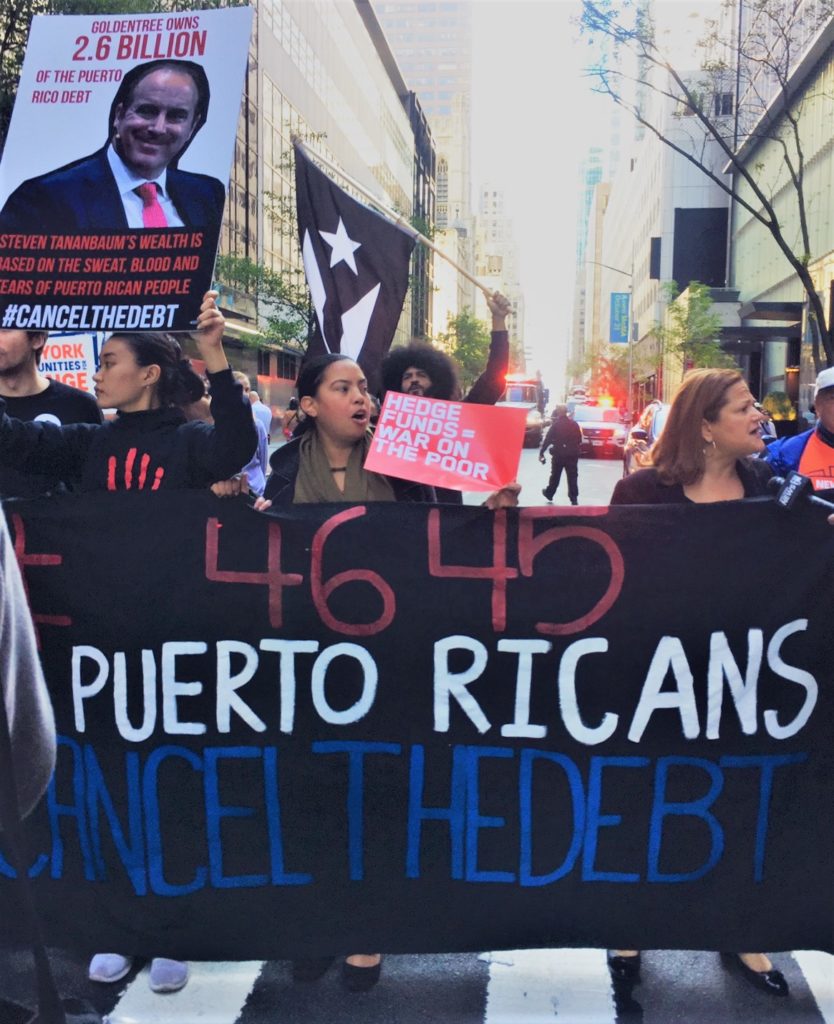
#CancelTheDebt protesters from New York
Communities for Change demonstrate against trustee Steven Tananbaum
at the October 21 opening of the expanded Museum of Modern Art.
Image: Eileen Kinsella.
When protesters gathered at the
Whitney Museum of American Art in December 2018 to protest the presence of
Warren B. Kanders, the CEO of Safariland, on its board of
trustees, few could have imagined that seven months later, Kanders would step down. Way
back in the olden days of 2018, board members seemed untouchable,
operating in a different stratosphere from grassroots demonstrators
who sought to draw attention to weapons-manufacturer Safariland’s
use of tear gas at the US border. But after weeks of regular
protests in the lobby of the Whitney led by the group Decolonize
This Place, a
forceful Artforum essay, and the decision by eight
artists to withdraw their work midway through the Whitney
Biennial, what once seemed impossible suddenly became a reality:
Kanders left the board, saying he did not “wish to play a role, however
inadvertent, in [the Whitney’s] demise.”
The uproar surrounding Kanders was the first, but hardly the
only, example of board members coming under fire for the source of
their wealth or their family’s wealth. Over the summer, Serpentine
Galleries director Yana Peel
resigned following reports alleging a connection between
her husband and a controversial Israeli cyber-weapons company. (Her
husband has denied the spyware was ever used inappropriately; Peel
said her decision was the result of “a concerted lobbying
campaign.”)
Later in the year, activists
trained their sights on
MoMA board member Steven Tananbaum who, they said, “made
his money at the cost of closing schools, cutting retirement
pensions and other services in Puerto Rico.” The group called
Tananbaum’s hedge fund, Golden Tree, “one of the most aggressive
vulture funds taking advantage of Puerto Rico’s debt crisis.” Local
politician Melissa-Mark Viverito was
arrested, along with roughly a dozen other activists, when they
refused to leave the street directly in front of the museum during
a demonstration tied to MoMA’s grand reopening. Tananbaum remains
on the board.
Has the Sackler Name Finally
Become Too Toxic for Museums?
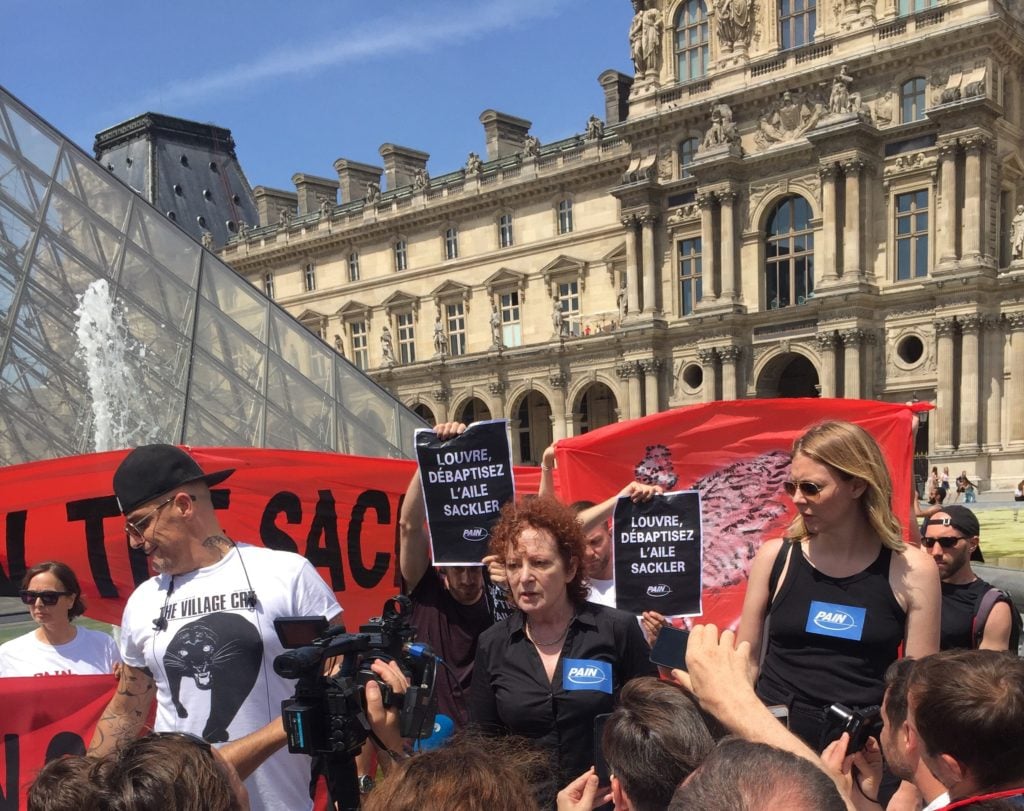
Nan Goldin speaking at the protest
outside the Louvre. Photo courtesy Sackler P.A.I.N.
The debate over the Sackler
family’s cultural philanthropy is another controversy that began
stirring in late 2018, but remained at the fringes of the cultural
conversation until it became impossible to ignore this year. In the
early months of 2019, artist Nan Goldin, who battled opioid
addiction herself, continued staging regular demonstrations at
museums that had halls named after the Sackler family, including the Metropolitan
Museum of Art. Then, in March, something that had only recently
seemed unthinkable happened: the National Portrait Gallery in
London announced it would not
accept a $1.3 million gift from the Sackler family amid
multiplying US lawsuits that alleged certain branches of the clan
had engaged in deception and misconduct to promote OxyContin
despite the public health risks associated with it.
After that first domino fell,
many others followed: the Tate, the Solomon R. Guggenheim
Museum, the Met, and other
institutions announced they would no longer accept money from the
family members involved in the lawsuits or associated with the
opioid crisis. The Sackler Trust and the Dr. Mortimer
and Theresa Sackler Foundation also announced they would stop all philanthropic
giving while the lawsuits were pending. In July, the
Louvre in Paris became the first major
museum to remove the Sackler name from its walls. Meanwhile,
others, such as the V&A in London, have declined to sever ties
with the family, which reached tentative settlements
in thousands of opioid cases this fall.
Are BP and Other Oil Companies
No Longer Desirable Sponsors?
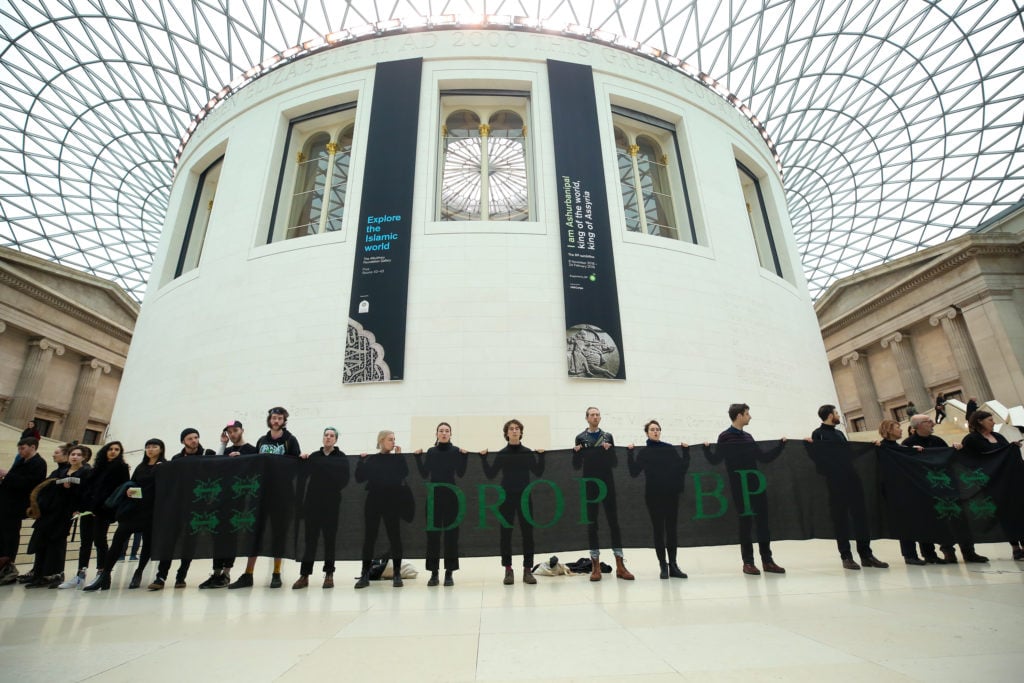
Activists are seen holding a banner
during the protest against oil company BP at the British Museum in
London, February 2019. Photo: Dinendra Haria/SOPA
Images/LightRocket via Getty Images.
Individual donors were not the
only museum patrons in the crossfire this year. Activists also
stepped up their campaign against BP and other oil-company
corporate sponsors of cultural institutions. Hundreds of protesters
associated with the group BP or Not To
BP? descended on the museum in
February to denounce the energy company’s alleged exploitation
of Iraq’s oil fields following the Iraq War. They
returned again in May, and
in November. While such
efforts have been gathering steam for years, they hit a louder note
in 2019 as museums around the world were forced to reckon with the
sources of their funding. And one of the British Museum’s
own—trustee Ahdaf Soueif—resigned from her
position in July, saying she regretted the institution’s
lack of engagement with “the legitimate and pressing concerns of
young people across the planet.” That same month, four major
cultural institutions in London, including the British Museum,
the National Portrait Gallery, the Royal Opera House and the Royal
Shakespeare Company, committed to signing a
new five-year, £7.5 million ($9.8 million) sponsorship deal with
BP.
Where in the World Is
Salvator Mundi?
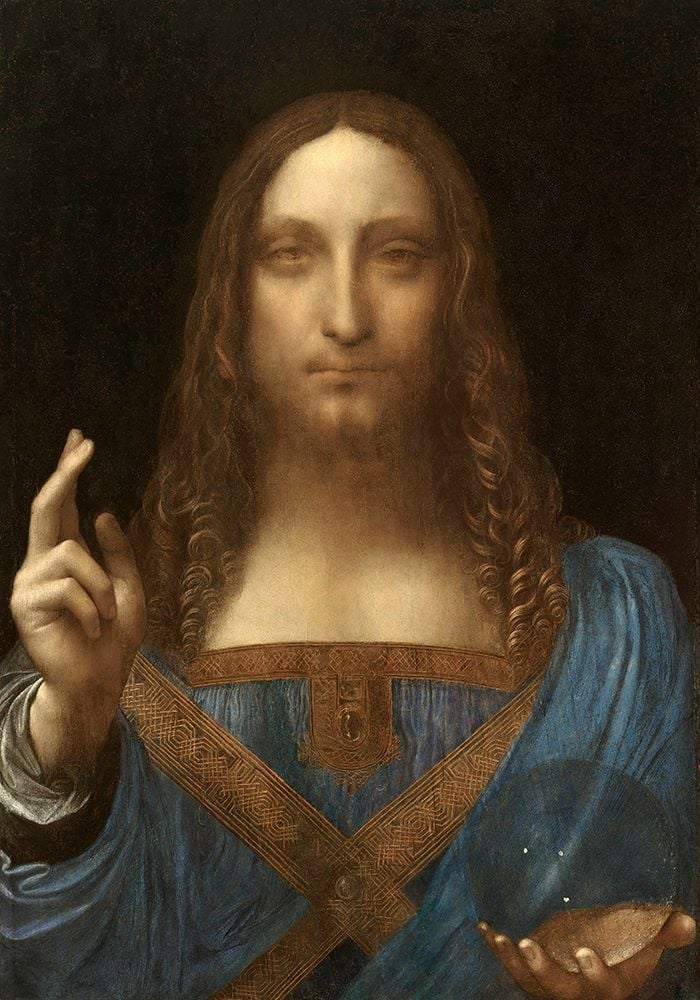
Leonardo da Vinci, Salvator Mundi
(ca. 1500). Courtesy of Christie’s Images Ltd.
The art story that just won’t
die is the saga of Salvator Mundi, the Leonardo da
Vinci painting bought for $450.3 million
at Christie’s in
2017—and promptly never seen
again. The buyer had been identified in the press as
Prince Bader bin Abdullah bin Mohammed bin Farhan Al Saud, a close associate of Saudi
crown prince Mohammed Bin Salman, who is said to have donated
the work to the Louvre Abu Dhabi as some kind extremely expensive
of diplomatic gift. But the painting never went on view in
the Emirate as scheduled.
Many Mundi heads
had high hopes that the painting would resurface this year, as it
was due to be included in the Louvre’s blockbuster
Leonardo exhibition, which opened this fall. The museum kept
its cards close to the vest, declining to confirm whether or not
the painting would be included until the day the show opened, when
it was nowhere to be
found. To this day, no
one is quite sure where the work is—though Artnet News’s intrepid
columnist Kenny Schachter reported in June that the work was
whisked away on MBS’s plane and is now on his yacht, the
Serene, which was seen traveling
off its usual course and closer to Europe around the time of
the opening of the Louvre show. Will we finally set eyes on the
painting again in 2020? Don’t hold your breath.
Is Deaccessioning the
Solution to Museums’ Diversity Problem?
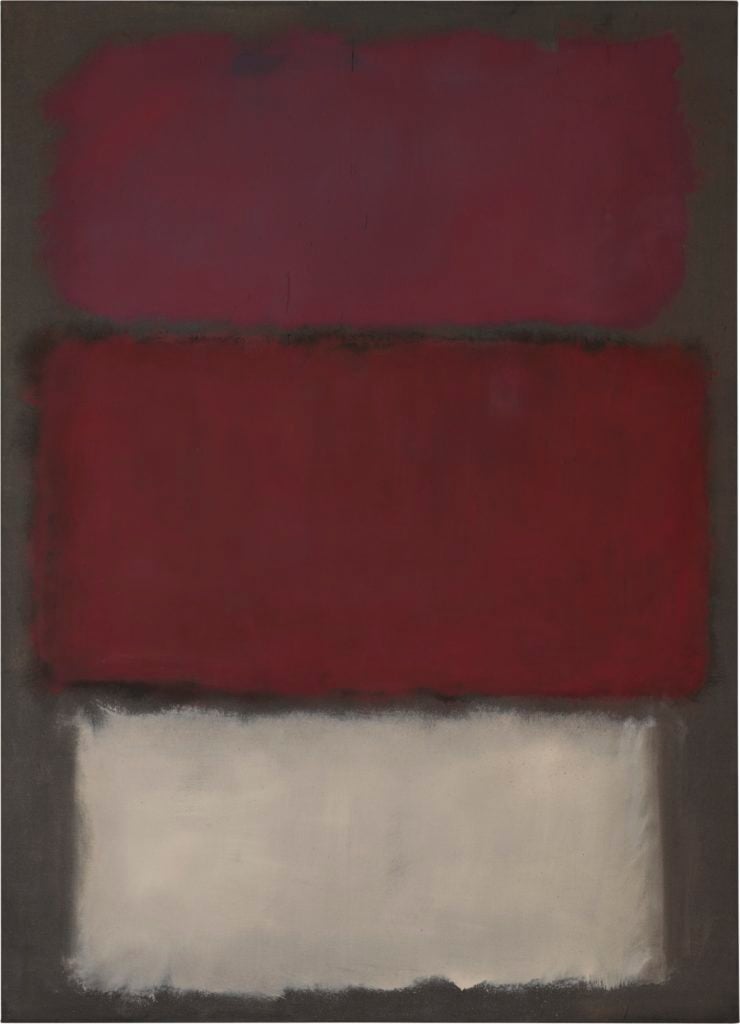
Mark Rothko, Untitled (1960).
Sold on behalf of the San Francisco Museum of Modern Art, the
painting went for $50 million. Courtesy of Sotheby’s.
As museums made belated efforts
to acquire and exhibit the work of female artists and artists of
color who they had long overlooked, a growing number of
institutions began to adopt a divisive tactic to
accomplish their goal: deaccessioning. The always-controversial
practice of a museum buying art took on a new angle when, in late
2019, the Baltimore Museum of Art broadcast its plan to
sell seven works by white, male artists for the express purpose
of diversifying its collection. Two other major institutions, the San Francisco
Museum of Modern Art and the Art Gallery of Ontario, announced
similar initiatives this year. SFMOMA’s plan to sell off a
Rothko for $50 million helped fund its
acquisition of works by Alma Thomas, Lygia Clark, Mickalene
Thomas, and more.
Is Christoph
Büchel’s Barca Nostra Provocative or Simply
Wrong?

The shipwreck being moved from a port
near Augusta, Sicily, to Venice for the biennale. The project is
being presented by artist Christoph Büchel. © Barca Nostra.
Depending on whom you talked to,
rabble-rousing artist Christoph Büchel’s provocative work for the
2019 Venice Biennale—a rusting hulk of a barge that sank in the
Mediterranean in 2015, killing 1,100 migrants fleeing North
Africa—was “absolutely vile,” or “powerful.” Opinions diverged widely over
whether Barca Nostra (Our
Boat) was a poignant
memorial paying tribute to victims of the tragedy or a vulgar photo
op that instrumentalized the death of hundreds to make a cynical
point about the art world.
Further complicating the
reception of the work? The artist insisted on having no label or
descriptive text to provide context. Biennale artistic director Ralph Rugoff
explained to one news station that historical context was provided
in the exhibition catalogue—but that did little to assuage those
who were skeptical of or offended by the work. The artist declined
to be interviewed by Artnet News.
What Happens When an Exhibition
on Censorship Is Censored?
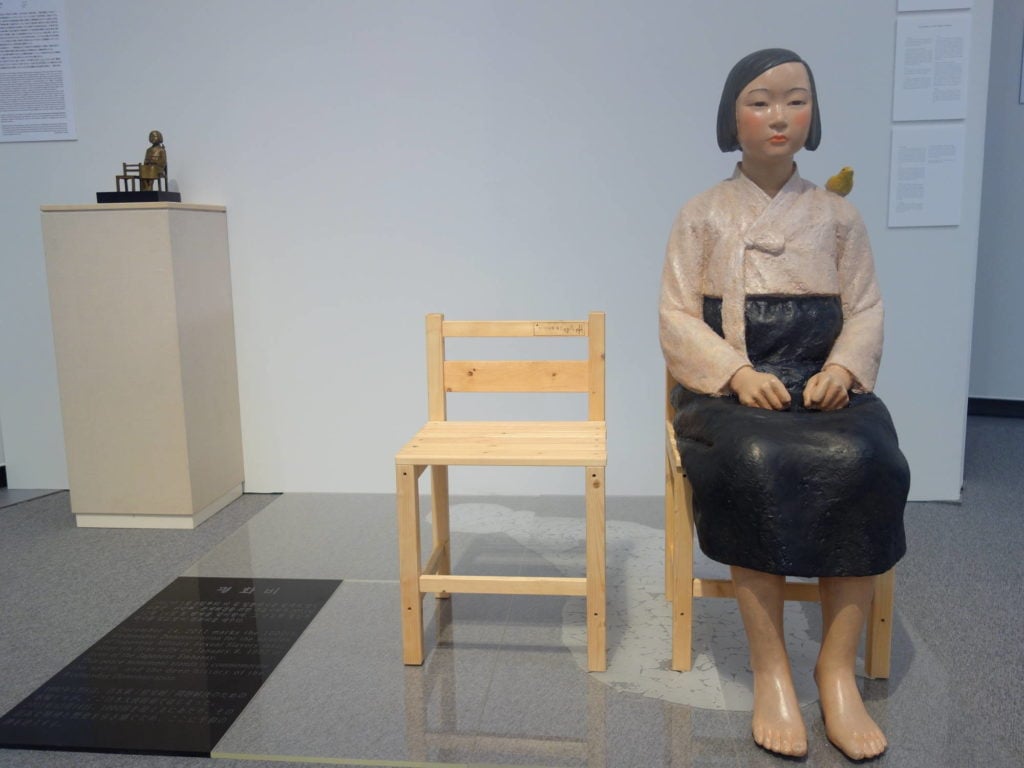
Kim Seo-kyung and Kim Eun-sung,
Statue of a Girl of Peace (2011). Courtesy of the
artists.
For an exhibition that was on public view for only three days in
August before temporarily shutting
down, the exhibition “After ‘Freedom of Expression’?” at the
2019 Aichi Triennale has received a heck of a lot of discussion.
The show, which examined censorship in Japan, was closed after
directors and curators received numerous threats—via email, phone,
and even fax—objecting to a controversial work in the show. The
piece in question was a life-size figurative sculpture by Korean
artists Kim Seo-kyung and Kim Eun-sung, Statue of
Peace (2011), that depicts a “comfort woman,”
or ianfu—one of the thousands of Asian women forced
into sexual slavery by the Japanese military during World War II.
The curators of the exhibition called the
move a “historic outrage” in a statement. “This will be the worst censorship
incident in Japan’s postwar period,” they said. After the decision
to remove the work was challenged in the courts and a group of
artists, including Claudia Martínez Garay, Tania Bruguera, and Pia
Camil, demanded their own art be
pulled from view in solidarity, the exhibition eventually reopened in
October. But the aftershocks will be felt for a while: the
Triennale is investigating exactly
what went wrong, while the offending sculpture has been acquired for a
forthcoming museum of banned art.
Should the Art World Be Working
With Saudi Arabia?
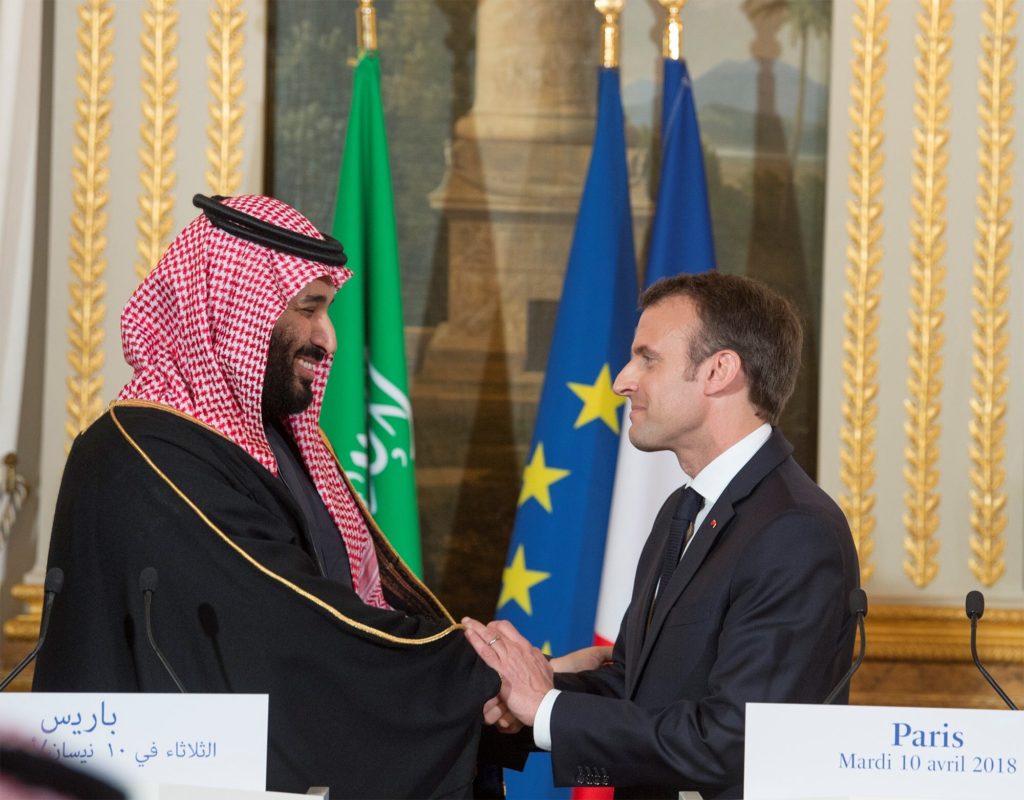
Crown Prince of Saudi Arabia Mohammed
bin Salman Al Saud (L) and French President Emmanuel Macron (R)
hold a joint press conference at the Elysee Palace in Paris, France
on April 10, 2018. Photo by Bandar Algaloud / Saudi Kingdom Council
/ Handout/Anadolu Agency/Getty Images.
The art world has also had to
reckon with its associations with repressive governments in 2019.
In October, exactly one year after the murder of dissident Saudi
journalist Jamal Khashoggi at a consulate in Istanbul, organizers
of the California biennial Desert X said they were launching a new
edition next year: in Saudi Arabia. Not surprisingly, the reaction was swift:
three of 14 board members resigned in protest, including artist Ed
Ruscha, curator Yael Lipschutz, and philanthropist Tristan
Milanovich. (The CIA has
accused Saudi crown prince Mohammed Bin Salman, known as MBS, of
ordering the killing, and the kingdom has been accused of numerous
other human rights violations.)
“I resigned because I felt like
Desert X no longer reflected my humanitarian values,” Lipschutz
told Artnet News at the time. “I don’t want to aid in rebranding
Saudi Arabia as a somehow enlightened, credible
government.”
This wasn’t the first time
associations with Saudi Arabia proved toxic. In March, news broke that
Endeavor, the majority owner of the Frieze Art Fair, had quietly
returned a hefty investment from the Kingdom. Meanwhile, we
reported in January that a number of high profile figures—including
Allan Schwartzman, the co-chairman of Sotheby’s fine art division;
Irina Bokova, the former Director-General of UNESCO; and Jack Lang,
the former culture minister of France—remained on the advisory
board for the Saudi Royal Commission of Al-Ula, a region about
200 miles north of Medina that is home to a number of important
historical and archaeological sites that Saudi Arabia hopes to
transform into a tourist hub.
Should This Mural of George
Washington Remain at a San Francisco School?
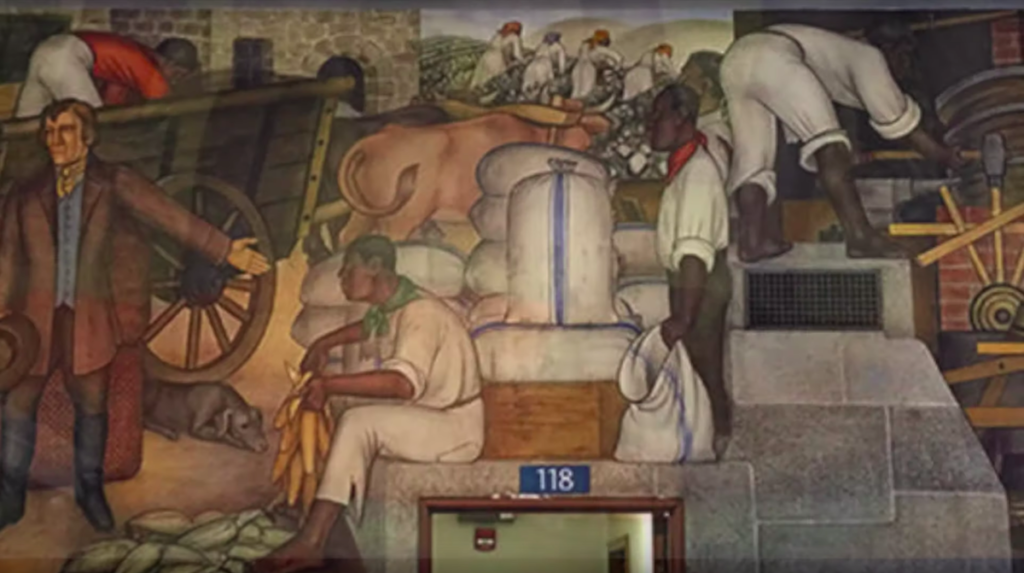
Detail of Victor Arnautoff, The Life
of George Washington (1934). Screenshot from GWHS Alumni Assn
SF CA on YouTube.
A debate over a set of murals at
a San Francisco High School captured the attention of the country,
stirring up big questions like: should images of our harmful past
be preserved to learn from, or removed so as not to be venerated?
What’s more, does it help or hurt students to witness challenging
material that may make them uncomfortable in the
classroom?
After years of heated debate
over these issues, the San Francisco Board of Education voted
unanimously to cover up the murals at George Washington High
School, a 13-panel painting that shows the violent treatment of
Native Americans and slaves. The 90-year-old work was painted by
artist Victor Arnautoff, who happened to be a bold critic of the
whitewashing of US history. The debate ensnared hundreds of academics and
scholars, as well as Pulitzer Prize-winning author and activist
Alice Walker. But in
the end, the school board decided in
a 4-to-3 vote to cover the murals with paneling, keeping them
intact while hiding them from the eyes of high
schoolers.
Who Should Replace New York’s
Monuments to Shameful Men?
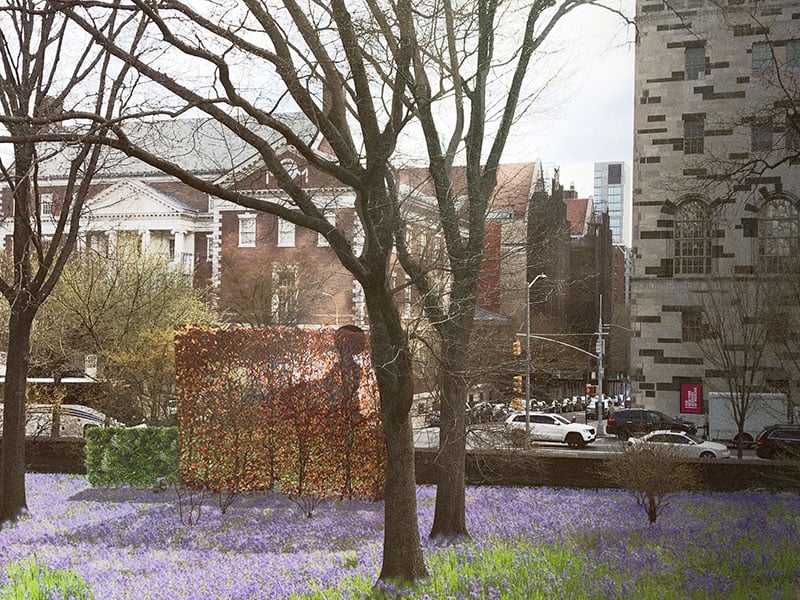
Simone Leigh, After Anarcha, Lucy,
Betsey, Henrietta, Laure, and Anonymous (rendering). A panel
of experts chose this piece from four proposals being considered
for an artwork to replace the monument to J. Marion Sims, the
19th-century doctor who experimented on slaves. Courtesy of the
artist.
One would have thought that
activists who had campaigned for years to remove a New York City
monument to Marion J. Sims—the 19th-century doctor who
conducted experiments on enslaved black women—would have been
celebrating its removal. Instead, the event touched off a tempest
about what would replace it. A panel of experts voted for a piece
designed by artist Simone Leigh, whose work has been shown at the
Guggenheim Museum as well as in the recent Whitney Biennial.
Leigh’s work—a large statue titled Brick House—beat out
numerous other artists who
competed for the gig. But locals protested the process,
throwing their support behind the work of little-known
Yonkers-based artist Vinnie Bagwell. Following the contentious
vote, culture commissioner Tom Finkelpearl reassured those
assembled that the panel’s opinion was advisory, not binding. In
October, Leigh withdrew her proposal following the backlash, and
the city announced
Bagwell would be designing the new monument. The turbulence
spurred a hearing of the city
council, and debates over the city’s public art are said to
have contributed to the departure of
Finkelpearl, who resigned abruptly this fall.
Can the Turner Prize Really Be
for Everyone?
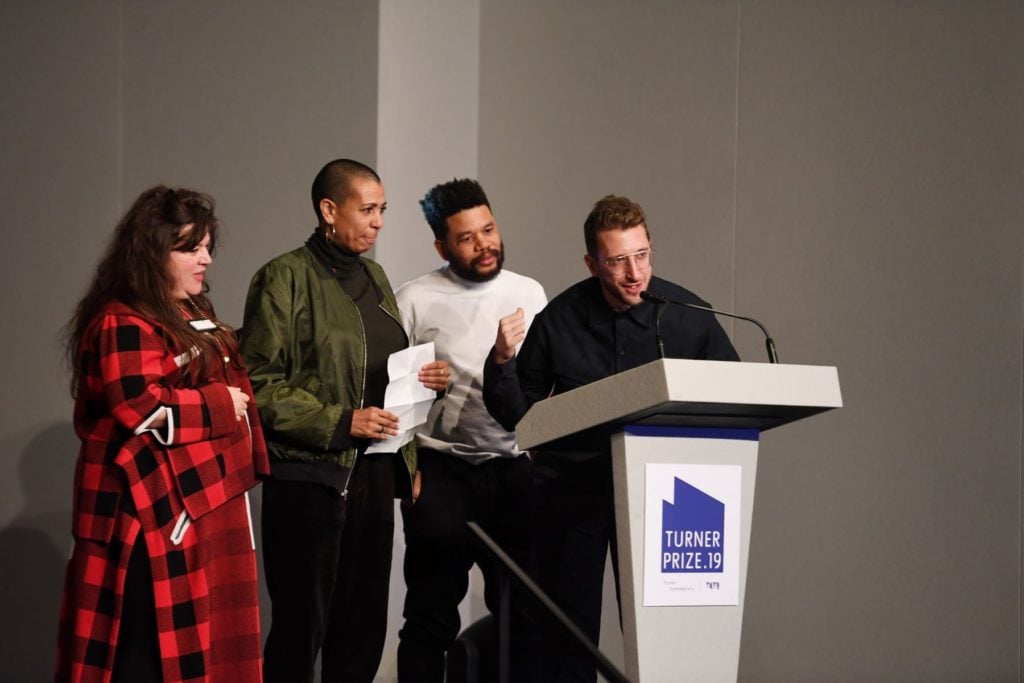
Tai Shani, Helen Cammock, Oscar Murillo
and Lawrence Abu Hamdan celebrate after being announced as the
joint winners of Turner Prize 2019 by Edward Enninful,
Editor-in-Chief of British Vogue in Margate. Photo by Stuart C.
Wilson/Stuart Wilson/Getty Images for Turner Contemporary.
In a move that was celebrated and derided in
equal measure, the 2019 nominees of the prestigious Turner
Prize successfully petitioned for an extremely unexpected outcome:
they all won. The
artists presented the move as a politically engaged gesture of solidarity in
the shadow of Brexit and the UK general election.
Before the winner was announced,
Lawrence Abu Hamdan, Helen Cammock, Oscar Murillo, and Tai Shani
wrote to the Turner Prize jury asking to accept the prize as a
collective in order “to make a statement in the name of
commonality, multiplicity and solidarity—in art as in society.” The
judges accepted the artists’ wishes in a unanimous decision. The
four artists agreed to share the pooled prize money, each receiving
£10,000 ($13,000).
Some said the move represented
the end of the Turner Prize—but others disagreed. “Artists whose
works and attitudes have nothing to do with one another are often
pitted against one another for no good reason,” Guardian critic
Adrian Searle wrote. “It is the beginning of, rather than
an end to, the discussion of this year’s prize. Good for
them.”
The post It Was a Year of Turmoil. Here Are the 11 Biggest
Controversies That Rocked the Art World in 2019 appeared first
on artnet News.
Further reading


Leave a comment