
Here Are 10 Amazing Secrets About the Metropolitan Museum of Art, From Its Florist-in-Residence to Its Hippo Mascot
“Its scope is mind-boggling. The
Metropolitan Museum of Art is a repository for more than two
million art objects created over the course of 5,000 years,” wrote
Michael Gross in Rogue’s
Gallery his sensational
and highly readable history of the US’s largest
museum.
The museum looms large in the
cultural imagination too: cinematic hits
like Manhattan, The
Thomas Crown Affair,
and When Harry Met
Sally all filmed scenes
in its storied halls. But even a museum so well known holds a few
secrets—from financial up-and-downs to sculptural
chicanery.
For instance, until Wangechi
Mutu’s new humanoid sculptures were installed in the niches on the
museum’s facade just this week, very few people realized those
spaces laid empty for more than 100 years simply because the museum
had run out of funding.
So before your next cocktail
party, test your Met Museum knowledge, with this list of
little-known facts.
1. The Met’s First Home Was Not On
Fifth Avenue
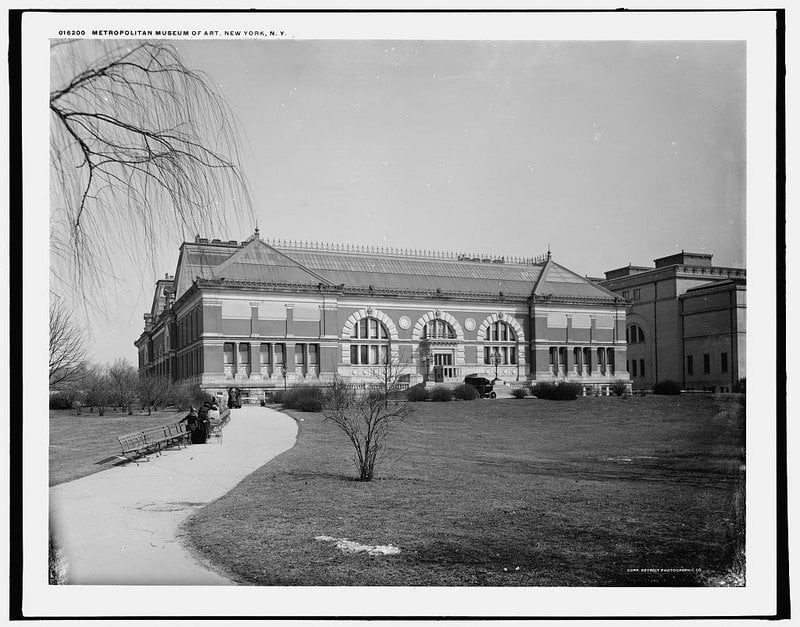
Metropolitan Museum of Art (1893).
Courtesy of Library of Congress.
Now
synonymous with its sprawling digs on Fifth Avenue, the Met didn’t
actually get its start there. The museum was incorporated in 1870
by a group of forward-thinking financiers, philanthropists, and art
enthusiasts, and opened two years later in a comparatively
diminutive building
at 681 Fifth Avenue. There
it housed fewer than
200 European paintings and its first acquisition—a Roman
sarcophagus that is still on view. But the
collection grew while the building did not and the museum then
briefly resided in the Douglas Mansion estate on West 14th Street
until its Fifth Avenue home was completed in 1879.
2. The
Met’s Original Fifth
Avenue Structure Is Barely Visible
Today
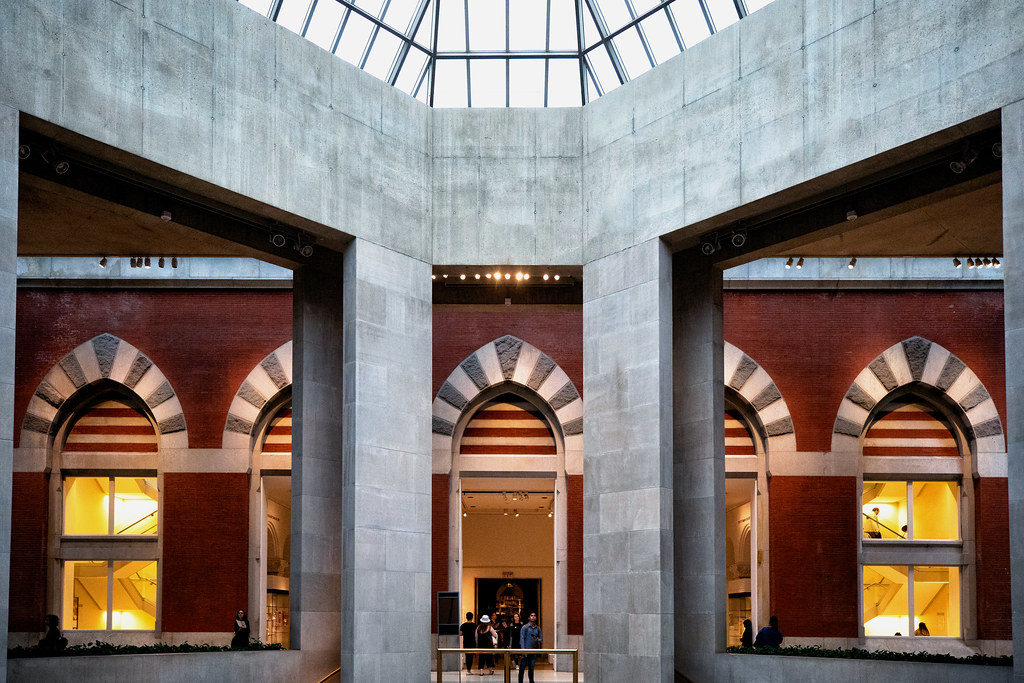
The Robert Lehman Wing is one of the few
places where visitors can see the museum’s original red-brick
facade. Courtesy of Flickr.
In 1880, 10 years after it was incorporated, the museum opened
its doors at its current location on Fifth Avenue and Central Park.
But the building today would be unrecognizable. The Ruskian Gothic
original was designed by Calvert Vaux (a designer of Central Park)
and Jacob Wrey Mould and characterized by its red-brick facade.
Expansions began soon after the building was completed, however
(the earliest beginning as soon as 1888), and today almost all of
the original structure has been encompassed by expansions. but for
those eager to see a glimpse of what was, the west facade of the
original building is still visible in the Robert Lehman Wing.
It’s also important to note that the Fifth Avenue of the 1880s
was far from the hoity-toity Upper East Side that it is today.
Instead it was considered a kind of cultural nowheres-ville,
surrounded by farmland and far from the gilded mansions of
downtown. In The Age of Innocence, the consummate New York
sophisticate Edith Wharton describes the remote museum as
“mouldered in unvisited loneliness.”
3. The Museum’s First
Director Mixed-and-Matched Parts of Ancient
Sculptures
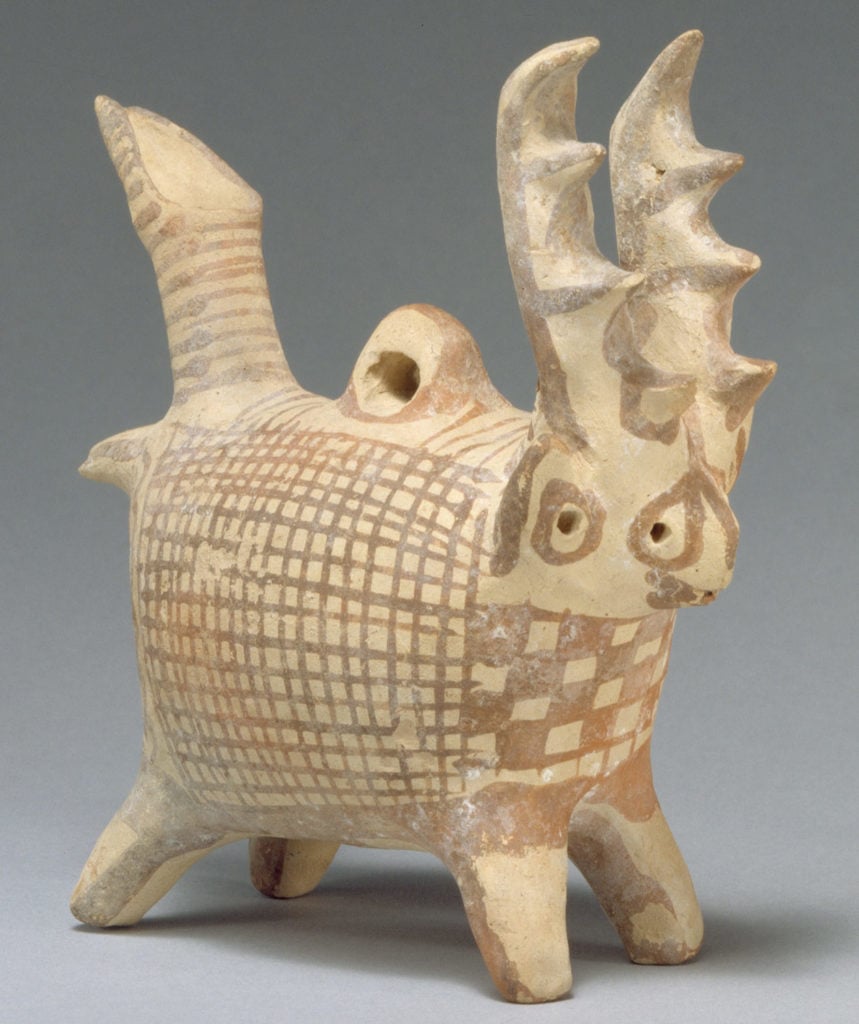
A terracotta zoomorphic askos (vessel)
with antlers. Middle Cypriot III, ca. 1725–1600 BC. The Cesnola
Collection. Courtesy of the Metropolitan Museum of Art.
During his years as the US consul to Cyprus during the 1860s to
1870s, the grandstanding eccentric Luigi Palma di Cesnola acquired
what was thought of as the superlative collection of Cypriot art
and objects, numbering at approximately 35,000. In the mid-1870s,
Cesnola agreed to sell the collection to the fledgling Met for
$60,000… and a catch. Along with the purchase, Cesnola demanded to
be named the museum’s first director, a post he held from 1870
until his death, in 1904.
Cesnola’s thirst for the limelight had other, more
art-historically relevant consequences. In turned out that Cesnola
had gone about melding arms, legs, torsos, and other fragments of
disparate sculptures to create a rather imaginative Frankensteins
of Cypriot. He’d also told his fair share of mistruths about where
he’d acquired his works.
For years after his tenure, the museum found itself uncertain of the appropriate path
to take and his collection languished in storage. That is until
2000, when the museum faced the facts and put almost 600 works from
his collection on view with didactics that told the truth of
Cesnola’s inventive, fabulist creations.
4. The Museum is Home to a
Resident Florist
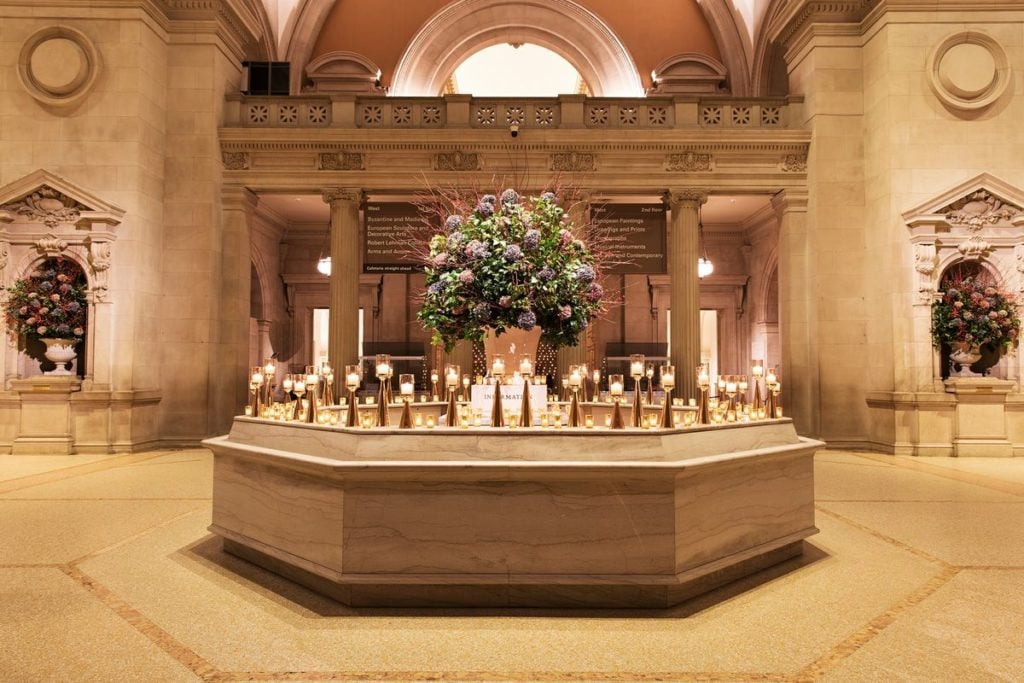
Courtesy of Van Vliet & Trap.
The art is what’s meant to keep
our attention, but sometimes visitors should stop and smell the
roses (or whatever flowers are in the jaw-dropping bouquets) in the
Great Hall of the Met. First things first: these towering floral
displays are most certainly real and, since 2003, the hand behind
these living still lifes is none-other than the Met’s in-house
resident florist, Remco van
Vliet.
The Dutch-born florist was born
into the trade generations ago: His great-grandfather was part of
Holland’s famed floral industry and his father and grandfather ran
a booming floral business called Den Helder, which saw the likes of
Queen Beatrix as regular clients. Now Van Vliet spends his weeks
arranging the centerpiece museum goers all know and come to
expect—the 10- to 12-foot-tall arrangement that anchors the lobby’s
information desk. He also builds the bouquets on view from the
nearby sandstone alcoves. Van Vliet has said that his arrangements
are often inspired by the museum’s art works.
Oh, and another fun fact: those
flower pots? They were endowed by Lila Acheson Wallace, the heir to the
Readers Digest fortune, in 1970, who wished visitors to be
greeted by fresh flowers.
5. A TSA Screening Facility Lives Deep
Within the Museum
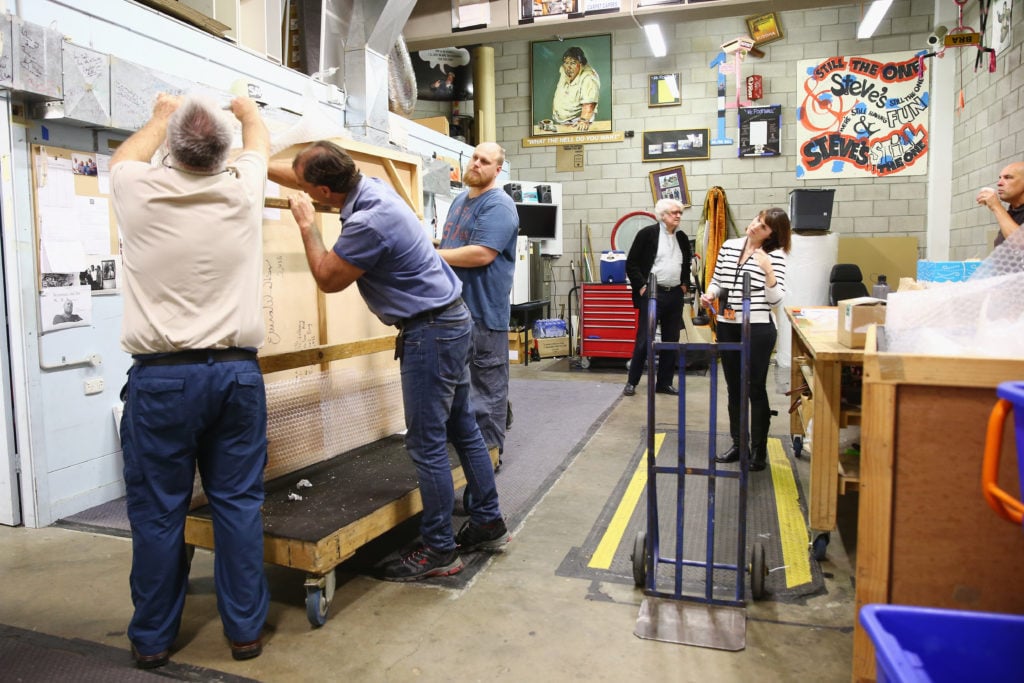
This is not the actual TSA-approved
screening facility at the Met, which we imagine is way more
high-tech. Courtesy of Mark Kolbe/Getty Images.
Transportation Security
Administration agents rifling through a museum’s carefully packed
artworks is the stuff of a registrar’s nightmare. But it was one
that could very easily have become a reality. Back in 2009,
Homeland Security mandated
anything shipped as cargo on a commercial flight would be open to
search by the TSA. To give an idea of the art-shipped scope, a
New York Times article from 2010 estimated that almost 20
percent of art is crated this way.
And while human safety is first
priority, the idea of TSA agents scooping out packing peanuts,
shifting tightly arranged pallets, and man-handling priceless
antiquities and artworks was too much for the museum to bear. The
Met, along with other mammoth institutions including MoMA, the
Getty, and the National Museum, all enrolled in a federal screening
program that allows them to operate secure screening facilities
within their own buildings and thereby minimize the re-screening of
their works.
6. Thieves Ran Rampant in
the Museum’s Halls
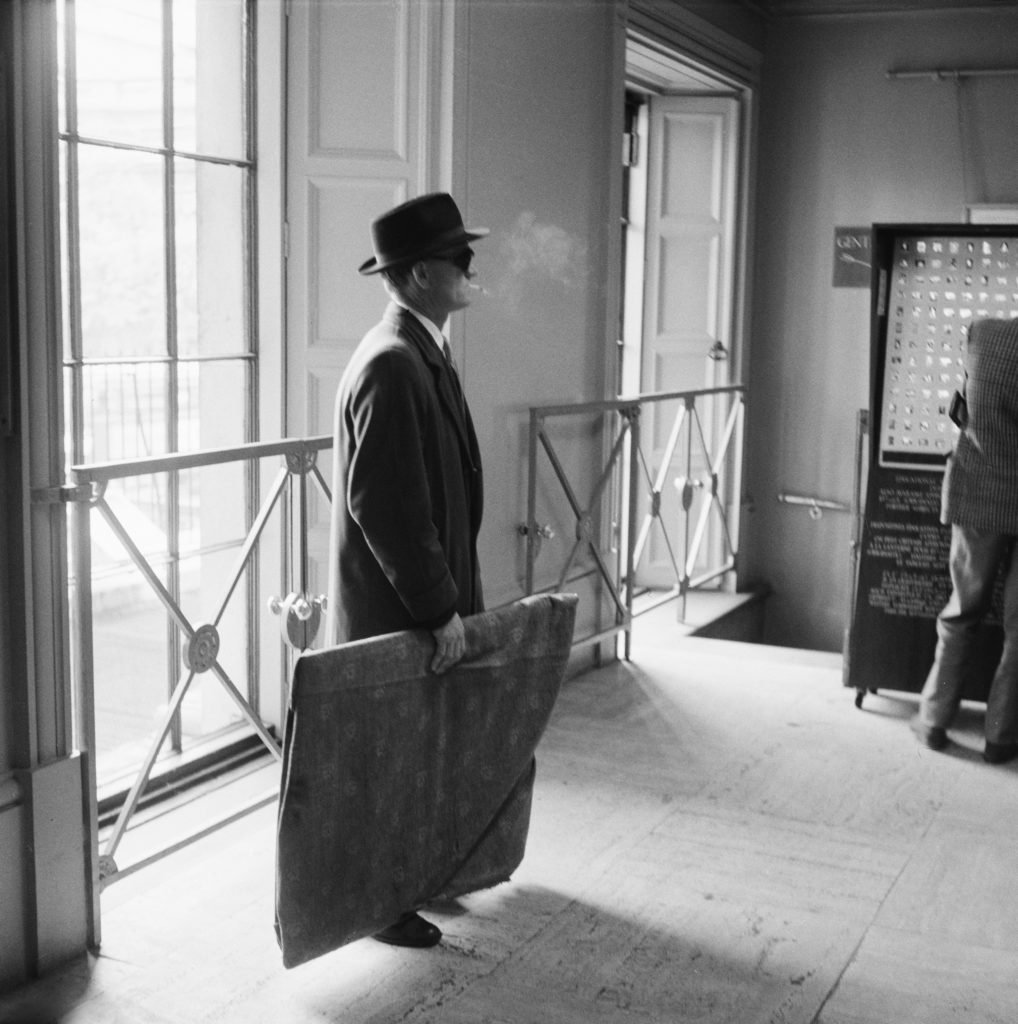
A new book Stealing the Show by
the Met’s former head of security tells the tales of many a
robbery, both botched and successful. Courtesy of Keystone/Hulton
Archive/Getty Images.
The digital age has brought many
changes to the art world, among them a sharp uptick in security
capabilities. Until recent decades, museums including the Met
wrestled between allowing the public fairly uninhibited viewing
experiences and maintaining adequate measures of safe-keeping.
Oftentimes, unfortunately, would-be thieves came out
winning. In 1979,
a 23-pound marble
sculpture of the Greek god Hermes from the fifth century, valued at
$150,000, was pulled from a wooden pedestal. Soon after it was
reported stolen, its
whereabouts were called in—but with the mysterious addition of a
heart carved onto its visage. This and other tales of thievery are
recounted in Stealing the
Show, a recently released
book written by
John Barelli, the Met’s
chief security officer until 2016.
7. A Medieval Garden
Awaits
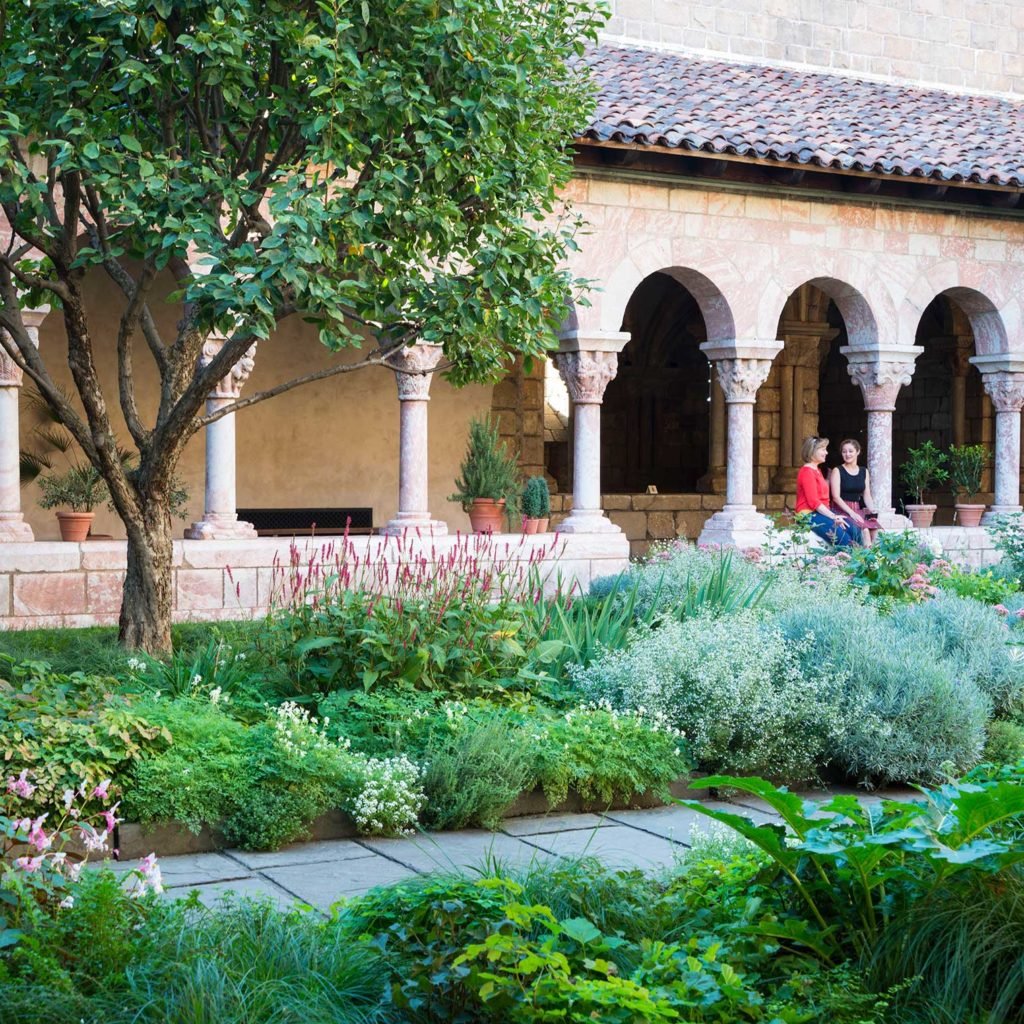
The gardens of the Cloisters are filled
with plants documented in Medieval times. Courtesy of The
Metropolitan Museum of Art.
As many visitors know, the Met
sprawls beyond its Fifth Avenue location. It also encompasses the
Cloisters in Fort Tyron park in northern Manhattan, and (for the
time being) the Met Breuer, on 75th Street and Madison. Visitors to
the Cloisters will be pleased to discover three gardens (each
planted in 1938, the year it opened) based on Medieval gardening
traditions. Among these
the Bonnefont Cloister garden will especially appeal to any
millennial witches out there—it runneth over with nearly 300
species of plant, many of which were used in Medieval times, for
magic, as well as medicine, food, and artistic purposes. You’re not
allowed to touch, but keep your eyes open for such potent plants as
Deadly Nightshade.
8. The Entrance Hardly
Anybody Uses
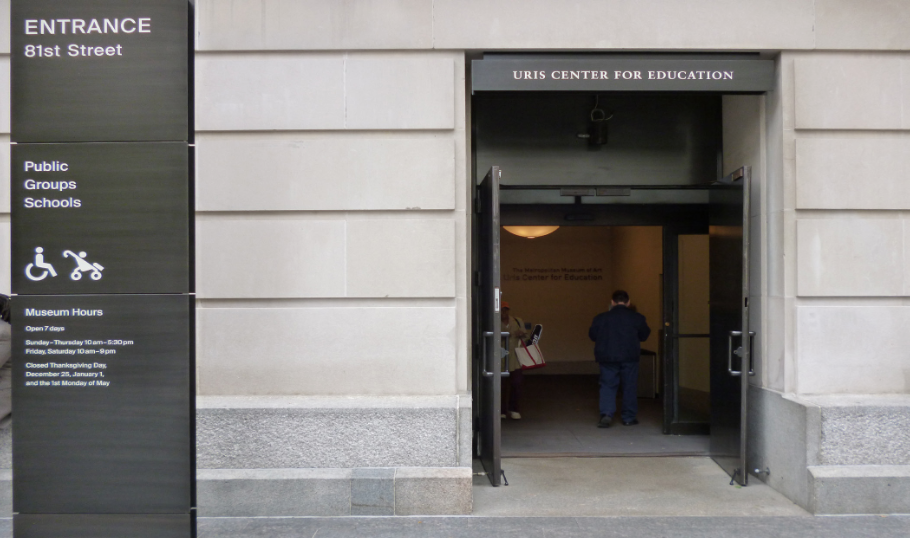
The 81st Street entrance to the Met is a
sure-fire time saver that hardly anybody uses. Courtesy of the
Metropolitan Museum of Art.
Undoubtedly one of the great
pleasures of the museum’s stunning lobby, known as the Great Hall,
but waiting in interminable lines of tourist throngs at the main
entrance is not what most of us would deem an enjoyable experience.
What insiders know is that the best entrance to avoid the masses is
at 81st Street (before the stairs) at the Uris Center for Education
Entrance. This is also the spot to go for accessibility. Here
you’ll find shorter lines, a gift shop, less-frequented bathrooms,
and elevators that will bring you to the Great Hall with your
tickets already in hand.
9. An Ancient Egyptian
Hippopotamus Named William is the Museum’s Mascot
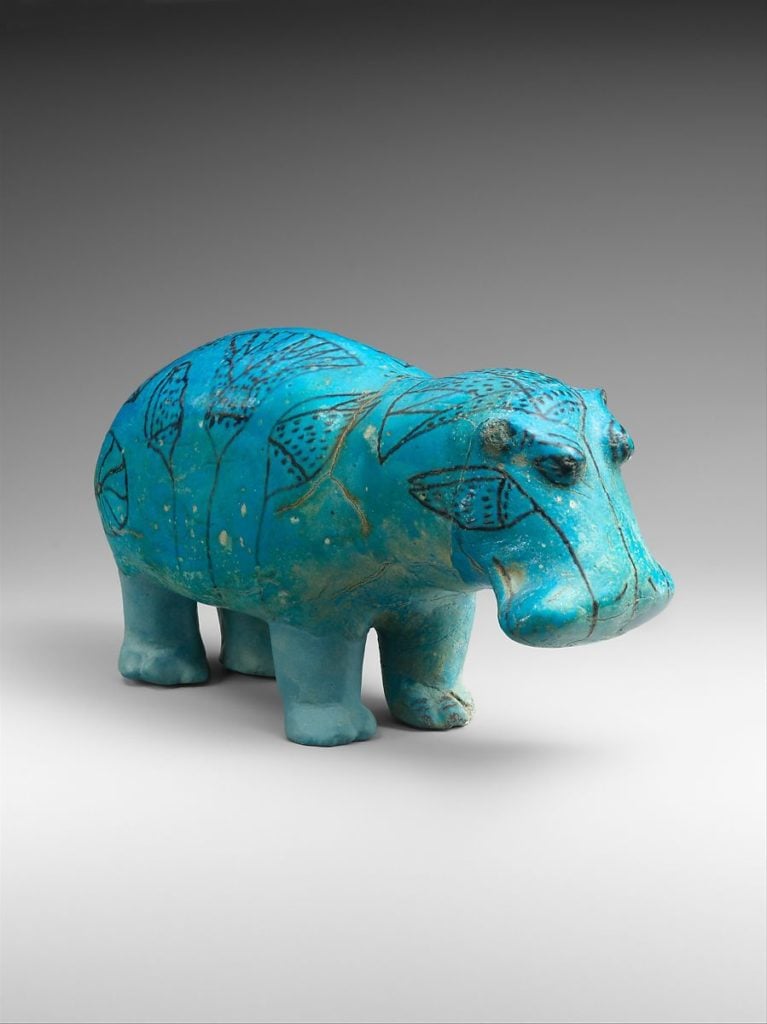
Hippopotamus (“William”), ca. 1961–1878
B.C. Courtesy of The Metropoliatan Museum of Art.
Though this blue statuette of a
hippopotamus is undeniably adorable, for ancient Egyptians the
gargantuan creature was a real threat even in the afterlife, liable
to trample fisherman in the marshes of the Nile or those on the
journey in the afterlife. This blue-glazed lotus-decorated little
guy was found in the outer-workings of a tomb in Upper Egypt with
three of its legs broken (now repaired), likely a measure to keep
it from harming the deceased in the afterlife. William garnered his
nickname in a 1931 humor magazine, which referred to him as an
oracle. Ever since, he’s been the museum’s mascot of sorts—which
has got us wondering about the mascots of other museums in the
city…
10. An Artist Will Be
Living In the Museum for Nine Days This Month
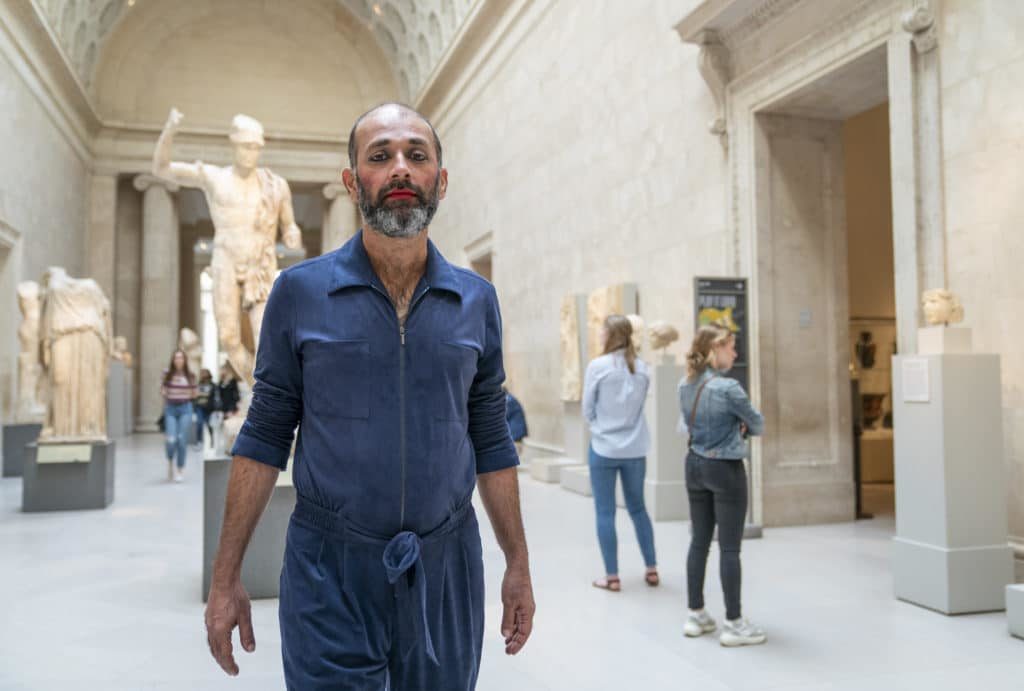
For nine days, Indian artist Nikhil
Chopra will perform a range of various personae as he interacts
with objects in The Met collection. Courtesy of The Metropolitan
Museum. Photgraph by Stephanie Berger.
Now here’s a first: The Met’s 2019–2020 artist in residence
Nikhil Chopra will be taking that title very literally for nine
days this month. From September 12 to September 20, the artist will
be living in the museum, in the longest durational performance
piece he’s done to date. Titled Lands, Waters, Skies,
Chopra’s performance will be a nomadic itinerary of his own
creation throughout the museum. He’ll be venturing through the
Temple of Dendur, the Medieval Sculpture Hall, and the Sol LeWitt
Wall Drawing #370 installation, among other stops, and
inhabiting a sweeping range of costumed characters and personae as
he does so, even playing music on the way.
We know what you’re wondering: Yes, he’ll be sleeping in the
museum too. While we’re not sure where Chopra will be catching his
winks, we can only hope it’s in one of the museum’s more lavish
period rooms.
The post Here Are 10 Amazing Secrets About the Metropolitan
Museum of Art, From Its Florist-in-Residence to Its Hippo
Mascot appeared first on artnet News.
Read more https://news.artnet.com/art-world/secrets-of-the-metropolitan-museum-1645864
Further reading


Leave a comment