
What Was the Most Influential Exhibition of the Decade? We Asked Dozens of Art-World Experts for Their Pick
As the turbulent and event-filled 2010s come to an end, we
asked more than 100 artists, curators, gallerists, and other
art-world figures to tell us their picks of the most influential
art and art-makers of the decade. Here is a selection of their
responses.
“Marina Abramović: The
Artist is Present”
Museum of Modern Art, 2010
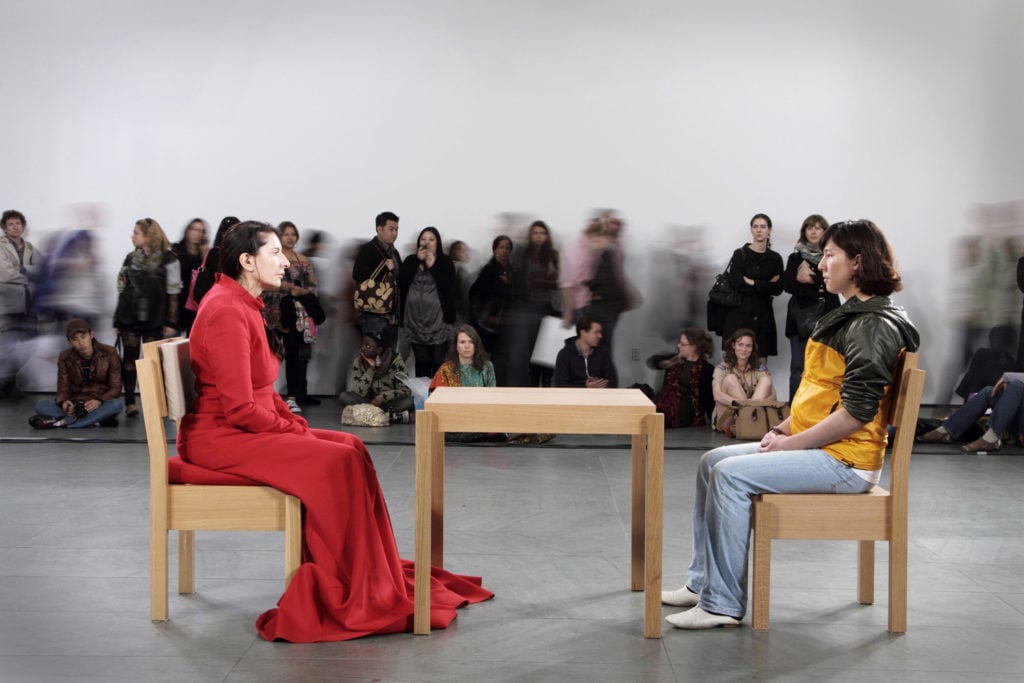
Marina Abramović, The Artist is
Present (2010). Courtesy of the artist and Sean Kelly
Gallery.
Marina’s exhibition allowed us
to appreciate performance art through the idea of restaging works
that we once may have thought of as ephemeral and one-time events,
only experienced after the event through photographs. The MoMA
exhibition changed our idea of performance art as a medium that
could evolve beyond that first performance with the
artist.
—Melissa Chiu, director of the Hirshhorn Museum and
Sculpture Garden
Marina Abramović offering the
audience a seat at the proverbial table in “The Artist Is
Present” kicked off the ethos of the decade—even for those who
watched from afar, like me.
—Carmen Hermo, associate curator at the Brooklyn
Museum
I would say Marina
Abramović’s “The Artist Is Present” at MoMA kicked off the decade in 2010 and
redefined the genre of career retrospectives and spectacle. The
press and public reached a new level of engagement, and never have
I seen such an audience so driven to visit and revisit the show,
either before or since.
—Elizabeth Dee, co-founder and CEO, Independent Art
Fair
“Ghana Freedom” at the 58th
Venice Biennale
Ghana Pavilion, 2019
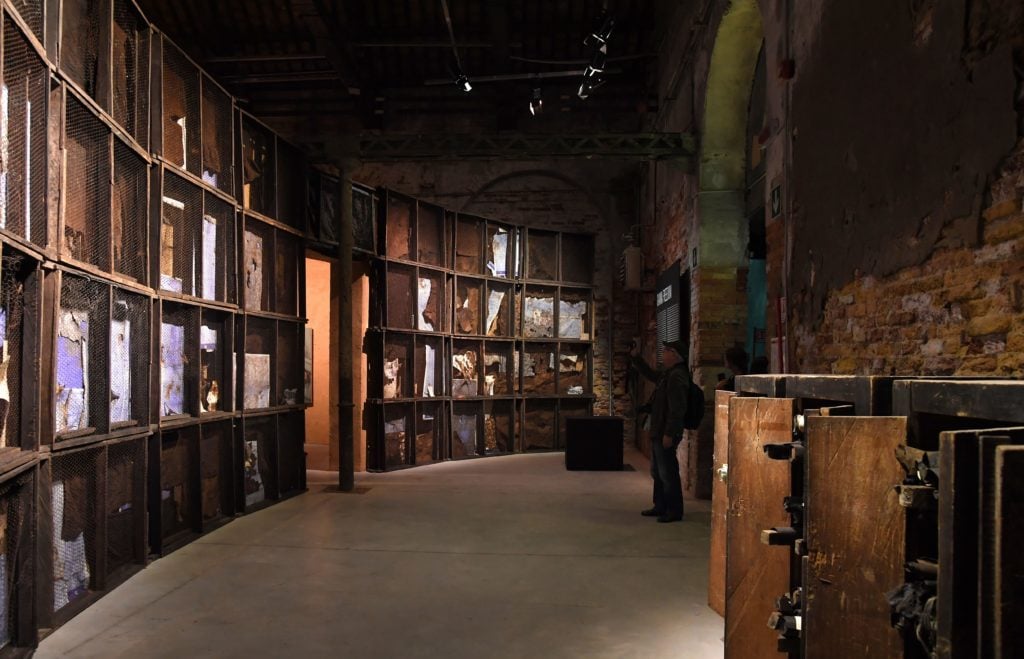
A Straight Line Through the Carcass
of History by Ibrahim Mahama at the Ghana Pavilion. Photo:
Tiziana Fabi/AFP/Getty Images.
The “Ghana Freedom” exhibition
at Ghana’s Pavilion at the 58th Venice Art Pavilion 2019 presented
works by some of the most important artists and architect of our
times: Felicia Abbas, John Akomfrah, Lynette Yiadom-Boakye, Ibrahim
Mahama, and El Anatsui in an installation by David Adjaye. Curated
by Nana Oforiatta Ayim, it was a game changer.
—Julia Peyton-Jones, senior global director at Thaddaeus
Ropac
“All the Worlds Futures” at the 56th Venice
Biennale
Arsenale, 2015
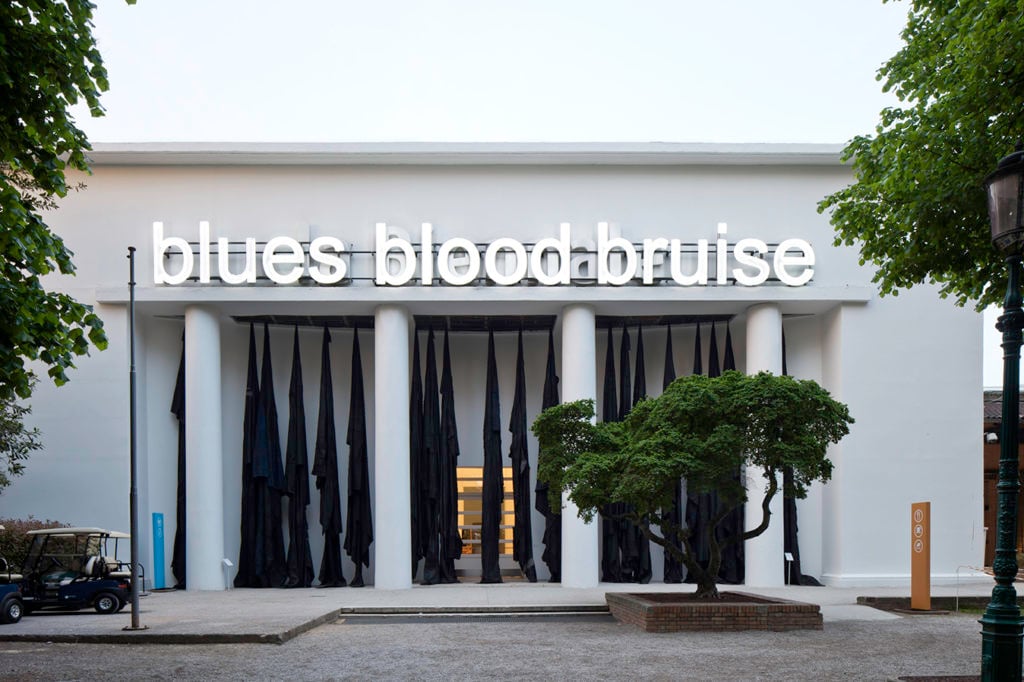
View of the central pavilion, “All the
World’s Futures,” at the 2015 Venice Biennale.
Okwui Enwezor’s impressive and
deeply moving exploration of artists’ attempt to address social and
political conflicts compelled the art world to think
globally.
—Coco Fusco, artist and activist
“Alexander McQueen: Savage
Beauty”
Metropolitan Museum of Art, 2011
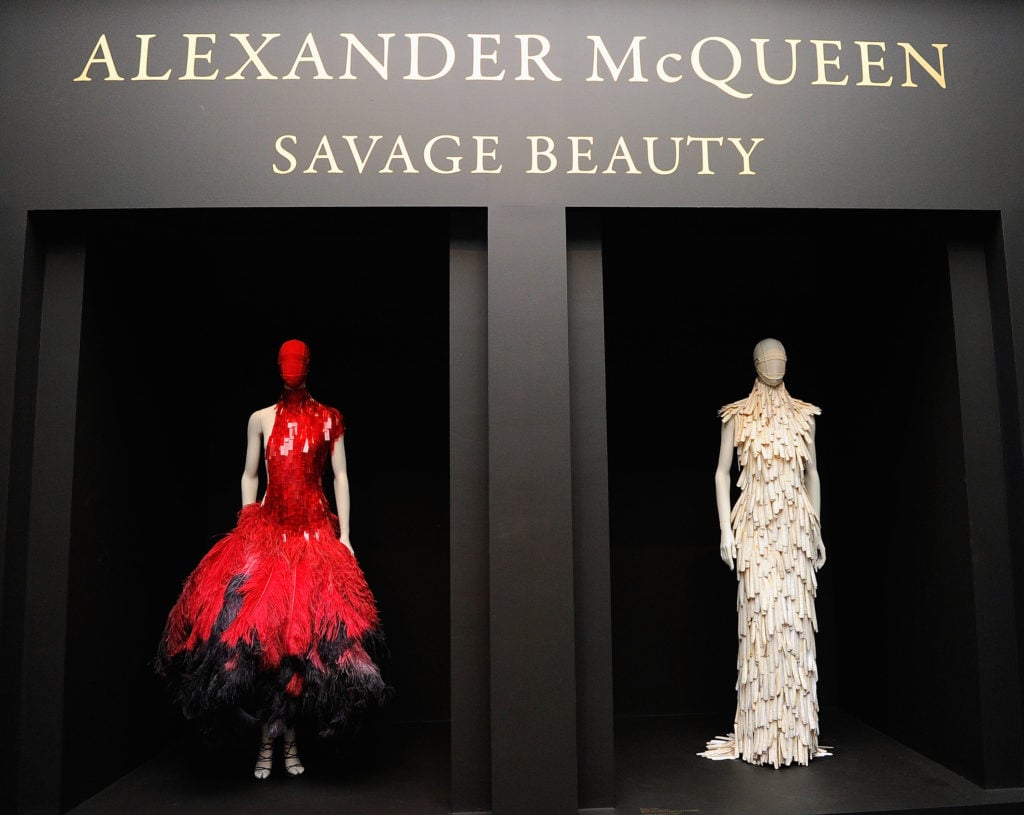
Installation view of “Alexander McQueen:
Savage Beauty” Costume Institute exhibition at the Metropolitan
Museum of Art on May 2, 2011, in New York City. Photo by Andrew H.
Walker/Getty Images.
Alexander McQueen at the
Metropolitan Museum of Art, because it demonstrated how the work of
a fashion designer could be treated as an immersive art form, which
has led to fashion being treated much more broadly and
internationally as an art.
—Charles Saumarez Smith chairman of the Royal Drawing
School and Watercolor World
“New Museum Triennial:
Songs for Sabotage”
New Museum, 2018
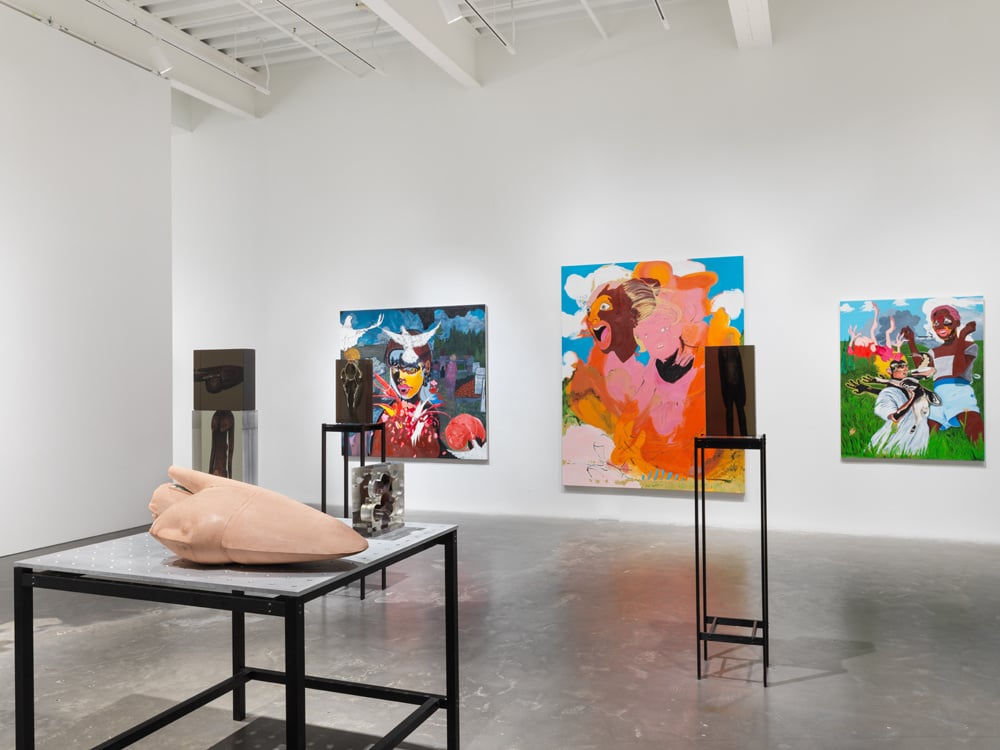
Installation view of “Songs for
Sabotage” at the New Museum. Photo: Maris Hutchinson/EPW Studio,
courtesy of the New Museum.
The New Museum’s group
exhibition Songs for
Sabotage brought to the
forefront artists like Manuel Solano and Diamond Stingily, both
artists that I had been collecting and admired, but this exhibition
put them into dialogue with their contemporaries.
—Javier Peres, founder of Peres Projects
“Howardena Pindell: What
Remains to Be Seen”
Museum of Contemporary Art Chicago, 2018
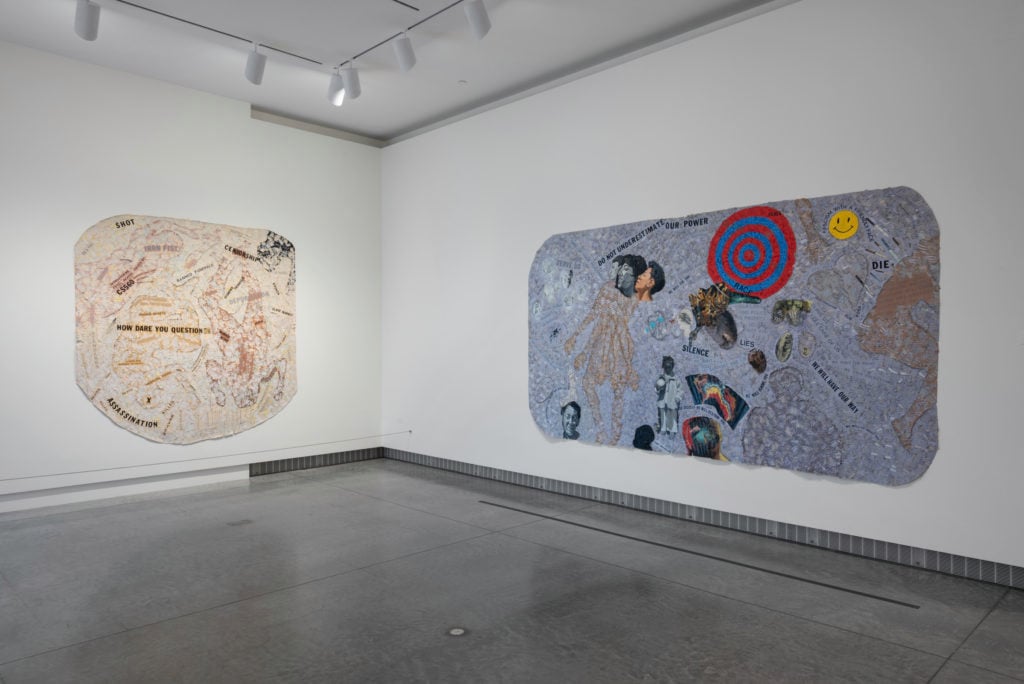
Gallery views of “Howardena Pindell:
What Remains To Be Seen” 2018.
Photo: David Stover © Virginia Museum of Fine Arts.
“Hilma af Klint: Paintings for
the Future” at the Guggenheim and “Howardena Pindell: What Remains to Be
Seen” both brought the
work of important, under-recognized women artists to the fore,
something that is near and dear to the Aldrich’s heart.
—Cybele Malone, executive director of the Aldrich
Contemporary Art Museum
“Hilma af Klint: Paintings
for the Future”
The Guggenheim, 2019
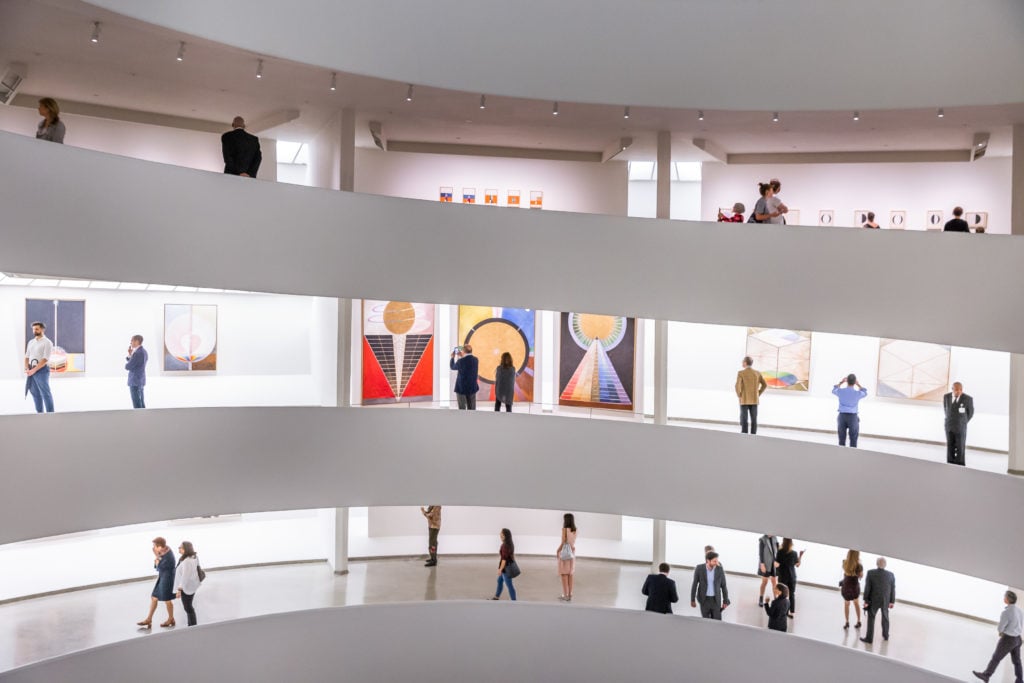
Opening for “Hilma af Klint: Paintings
for the Future.” Photo: Paul Rudd © Solomon R. Guggenheim
Foundation.
“Hilma af Klint: Paintings for
the Future” at the Guggenheim. It seems to me that Frank Lloyd
Wright’s spiral was waiting for many decades for the arrival of af
Klint’s work and that they made legible again key aspects of the
building’s original aspiration. The show changed the perception of
the Guggenheim and MoMA had to react too.
—Daniel Birnbaum
Hilma af Klint at the Guggenheim
was the show I found most inspiring and influential this past
decade. Curator Tracey Bashkoff brought our attention to an artist
who was largely ignored during her own lifetime and after
(partially due to her own reclusiveness). Her work transcends
painting and encapsulates tenets of spirituality and meditation,
without sacrificing aesthetics in the least.
—Alexander S.C. Rower, president of the Calder
Foundation
“Postwar: Art Between the
Pacific and the Atlantic, 1945–1965”
Haus der Kunst, Munich, 2017
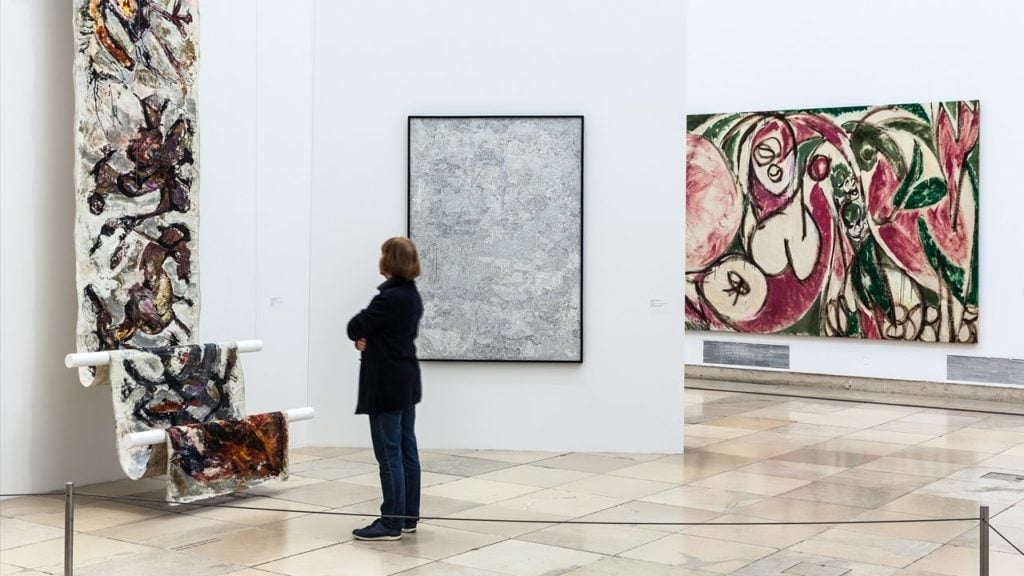
Installation view of “Postwar: Art
Between the Pacific and the Atlantic, 1945–1965” at the Haus der
Kunst. Image courtesy of Haus der Kunst.
The most influential show of the
decade was “Postwar: Art Between the Pacific and the Atlantic,
1945–1965“ curated by Okwui Enwezor for the Haus der Kunst in
Munich. The exhibition presented so many great artist from the
postwar period and made once more clear that art despite the
eurocentric view of many institutions is and was always a global
phenomenon.
—Yilmaz Dziewior, director of Museum Ludwig,
Cologne
The late, great Okwui Enwezor’s
grand swan song, this exhibition examined art during this key
20-year period from a truly global perspective, defining a
multiplicity of converging and diverging modernisms feeding off a
social world in the grip of great tumult and change following and
era of war. A bold, intellectually capacious exhibition of
generational import featuring more than 350 works by 218 artists
from 65 countries, its reverberations will be felt and examined for
decades.
—Christopher Bedford, director of the Baltimore Museum of
Art
“Forensis, the Architecture
of Public Truth”
Haus der Kulturen der Welt, Berlin, 2010
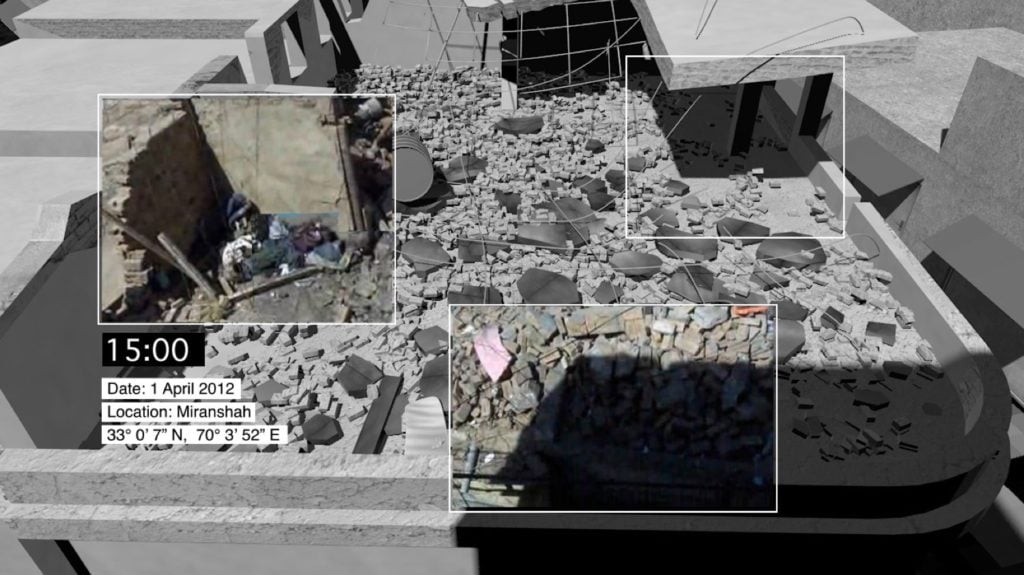
Forensis | Forensic Architecture in
collaboration with SITU Research, DRONE STRIKES: UNMANNED AERIAL
VIOLENCE | “The Architecture of Memory.” Visualization: © Forensic
Architecture and SITU Research.
An exhibition which changed my
idea of what an
exhibition can do forever is “Forensis, the Architecture of Public
Truth“ at Haus der Kulturen der Welt, Berlin, curated by Anselm
Franke and Eyal Weizman. It followed investigative sciences and their aesthetics and
created new possibilities of how complex, brilliant, and precise an exhibition can
be.
—Nina Zimmer, director of the Zentrum Paul Klee and the
Museum of Fine Arts Bern
“Cady Noland”
Museum MMK für Modern Kunst, 2019
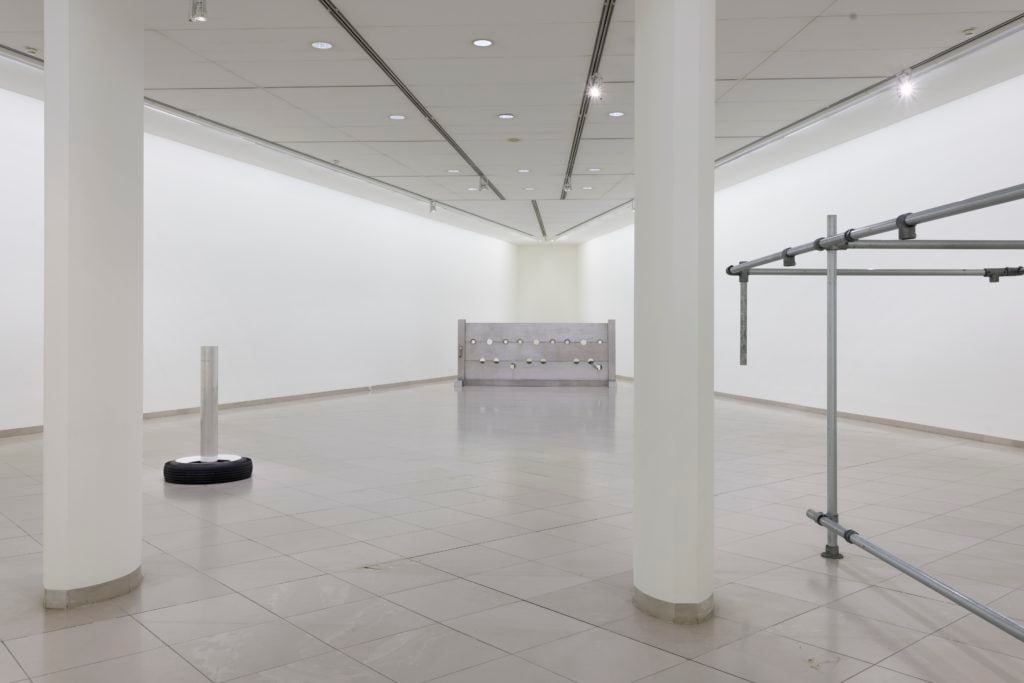
Cady Noland at Museum MMK für Modern
Kunst, Photo: David Griffin
Susanne Pfeffer’s first
exhibition at MMK in Frankfurt became a real pilgrimage in which
she managed to present, for the first time in decades, the work of
the highly influential artist Cady Noland, which could have not
been more poignant, both in content but also in form. Pfeffer and
Noland used the collection of MMK to built a retrospective of sorts
while simultaneously putting the Hollein building on display. A
perfect marriage, on all levels.
—Krist Gruijthuijsen,
Director, KW Institute for Contemporary Art
“Philippe Parreno:
ANYWHERE, ANYWHERE OUT OF THE WORLD”
Palais de Tokyo, Paris, 2013
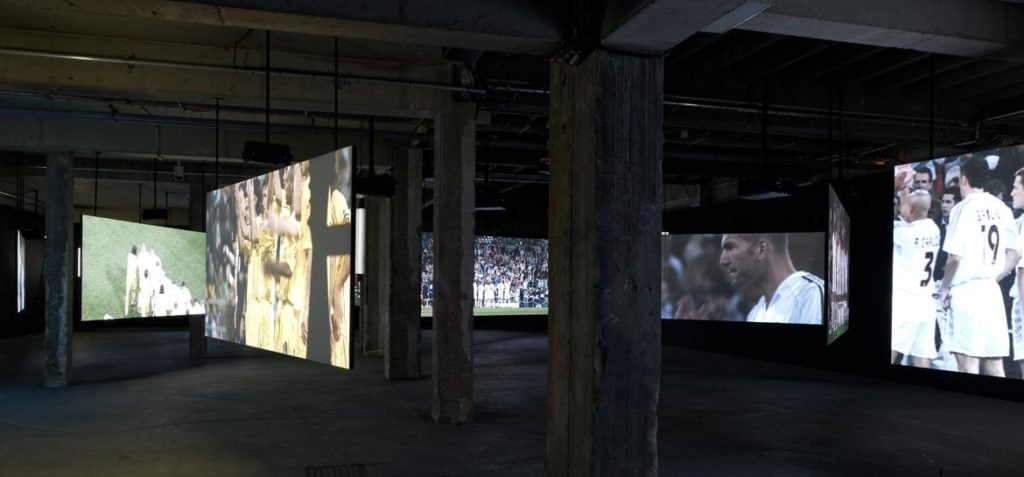
Installation view of Philippe Parreno,
“ANYWHERE, ANYWHERE OUT OF THE WORLD” (2013). Courtesy of the
Palais de Tokyo.
Philippe Parreno’s “ANYWERE,
ANYWHERE OUT OF THE WORLD” at the Palais de Tokyo, Paris,
2013 Parreno’s
masterful syncopation of light, architecture, and sound across the
public and private spaces of the Palais de Tokyo signaled a new
form of multi-sensory exhibition as well as a fresh approach to the
artistic retrospective. It stands out in a decade obsessed with the
immersive installations.
—Olga Viso, independent curator
“Zak Ové: Get Up, Stand Up
Now”
Somerset House, 2019
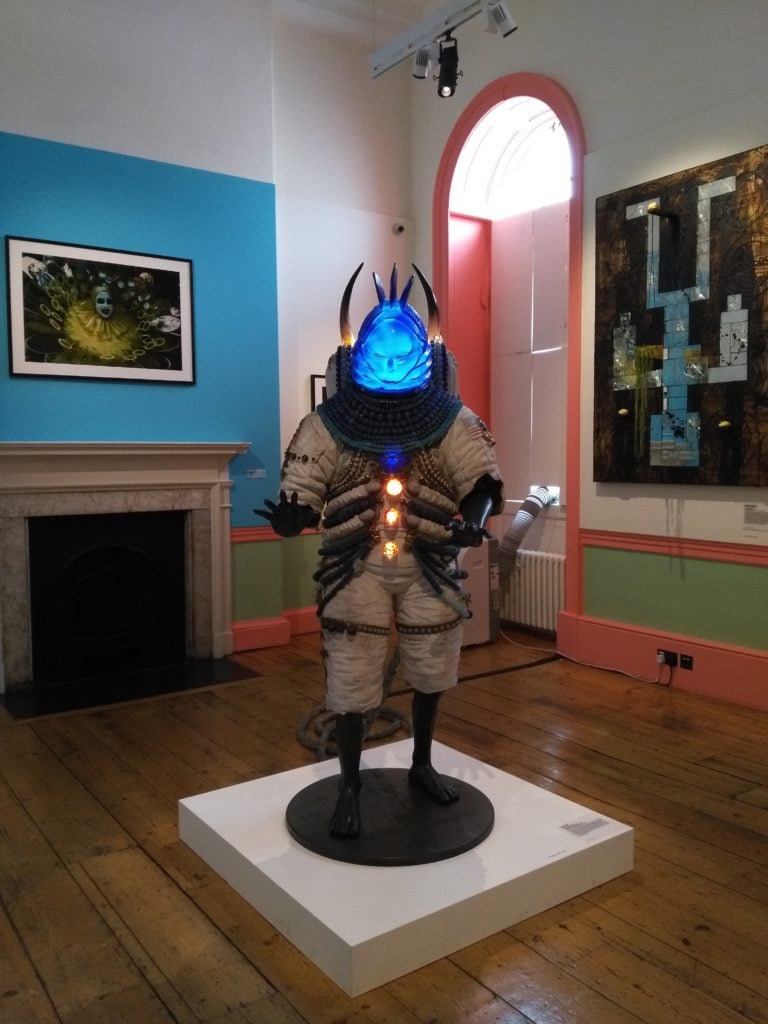
Zak Ové’s “Get Up, Stand Up Now” at
Somerset House in London, 2019. Courtesy of Somerset House.
In the UK I would say Zak Ové’s
“Get Up, Stand Up
Now,” a recent exhibition
and, although we are yet to see the lasting impact it will have on
the cultural scene, I have no doubt that it will. In the phenomenal
exhibition 50 years of Black creativity was celebrated, bringing
together the work of more than 100 interdisciplinary
artists.
—Touria El Glaoui, founding director of the 1-54
fair
“The Anthropocene
Project”
Haus der Kulturen der Welt, 2013
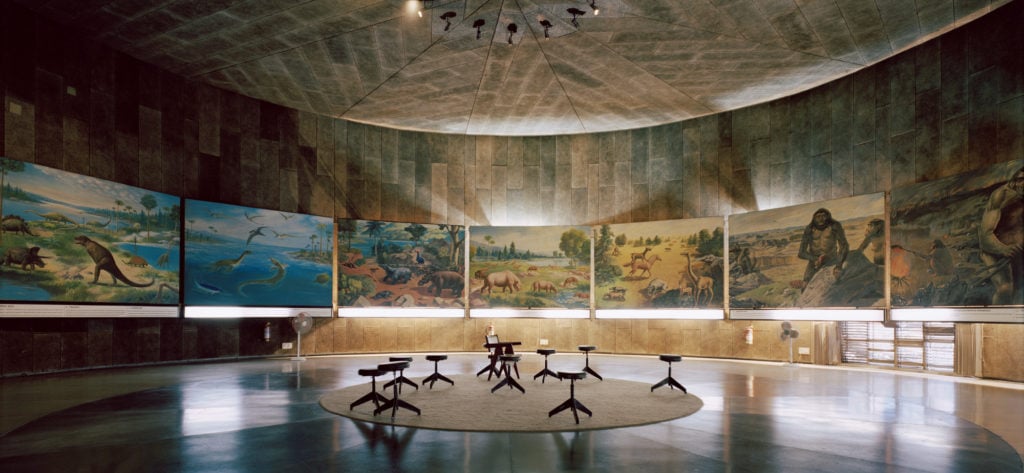
Museum of Evolution of Life, Chandigarh,
India, 2014 | © Armin Linke/ Anthropocene Observatory
Not a show per se but a
curatorial initiative that includes exhibitions, public programs,
publications, and much more, the Anthropocene Project at Haus der
Kulturen der Welt, launched in 2013, has critically explored the
most pressing environmental and ecological issues of our time in a
sustained and intersectional manner.
—Alexis Lowry, curator at Dia Art Foundation
“Radical Women: Latin
American Art 1960-1985”
Hammer Museum, 2017
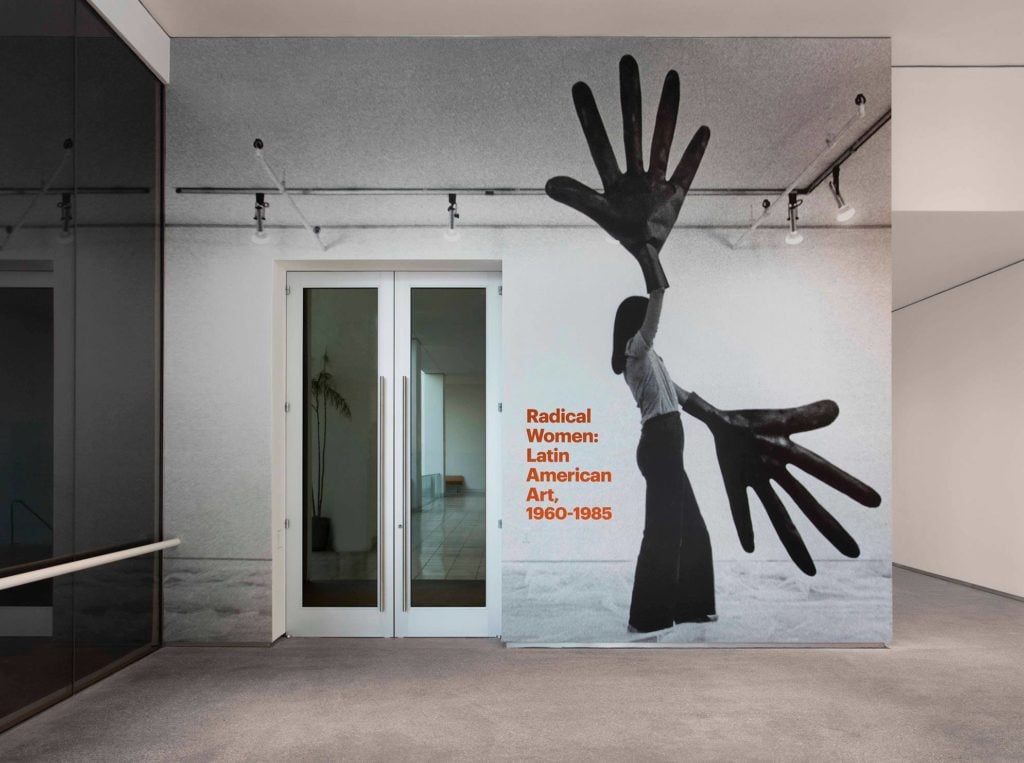
The entrance to “Radical Women: Latin
American Art, 1960–1985” at the Hammer Museum at UCLA, one of the
Getty Pacific Standard Time: LA/LA exhibitions. Photo courtesy of
the Hammer.
The exhibition presented the
work of a whole generation of Latin American women artists. The
work of the more than 120 Latin American and Latina artists and
collectives is being reappraised and the focus of individual and
group shows. As pioneers in many fields, including performative
practice, the artists are being understood for their prescient work
during politically and socially turbulent times.
As a group of shows, the art
fairs have really transformed the way art is purchased and even
made and experienced. The prominence of the digital experience,
either through pre-fair offerings, or the Instagrammable allure of
a work, adds to the rushed evaluation or quasi-appreciation of
works many times being the first venue where they are
exhibited.
Similarly, in terms of breaking
barriers of how the art canon is perceived, Alexander McQueen’s
show at the Met was very influential in terms of bringing fashion
and celebrity culture into museums.
“Posing Modernity: The Black
Model from Manet and Matisse to Today,” curated by Denise Murrell, turned the tables on
exploring familiar material through a different lens, that of the
black model.
Finally, the Tate’s Turbine Hall
and the Paris Grand Palais’s large-scale installation exhibition
series early in the decade were also very influential in terms of
transforming the scale of art works at museums and institutional
venues, bringing in larger audiences with
them.
—Estrellita Brodsky, collector and art historian
“Francis Picabia: Our Heads our Round So Our Thoughts Can
Change Direction”
Museum of Modern Art, 2017
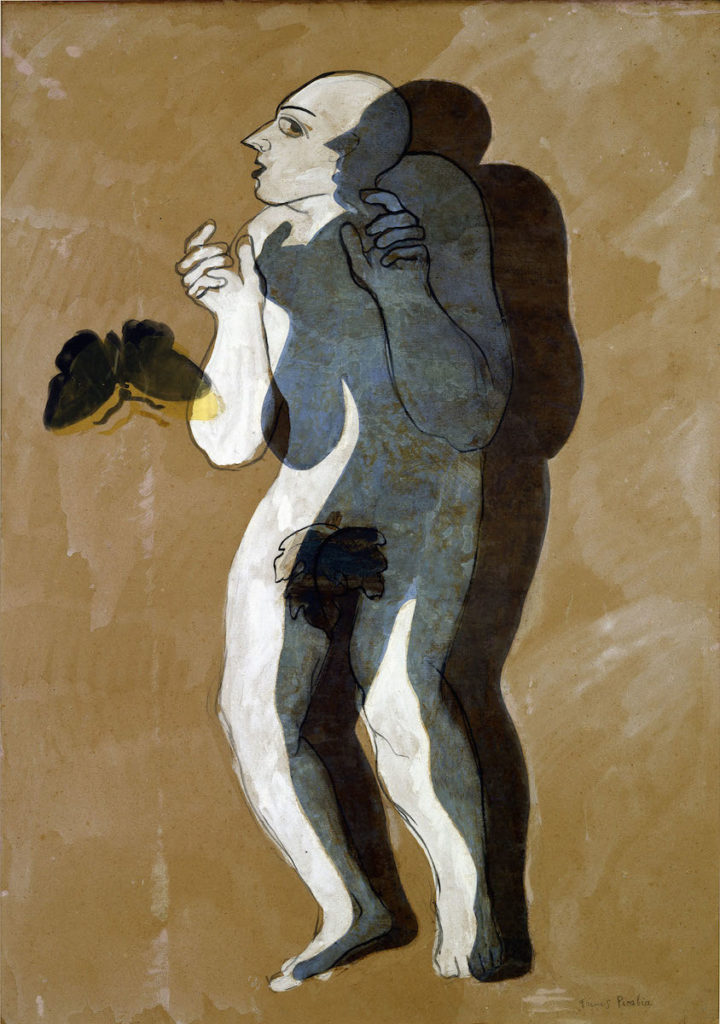
Francis Picabia, L’Ombre
(1927-28). Image ©ADAGP, Paris and DACS, London 2017.
An incredible show articulating
the rhetorical gesture and foresight of the artist. There is a
pleasure in the false starts mixed with an indexical humor. The
resistance of the artist in the age of the machine. This direction
and attitude is now everywhere. The subjective is now everywhere
and yet uniformly distrusted. He maps this out with delicacy and
relish.
—Sarah Morris, artist
“NKAME:
A Retrospective of Cuban Printmaker Belkis Ayón“
El Museo del Barrio, 2017
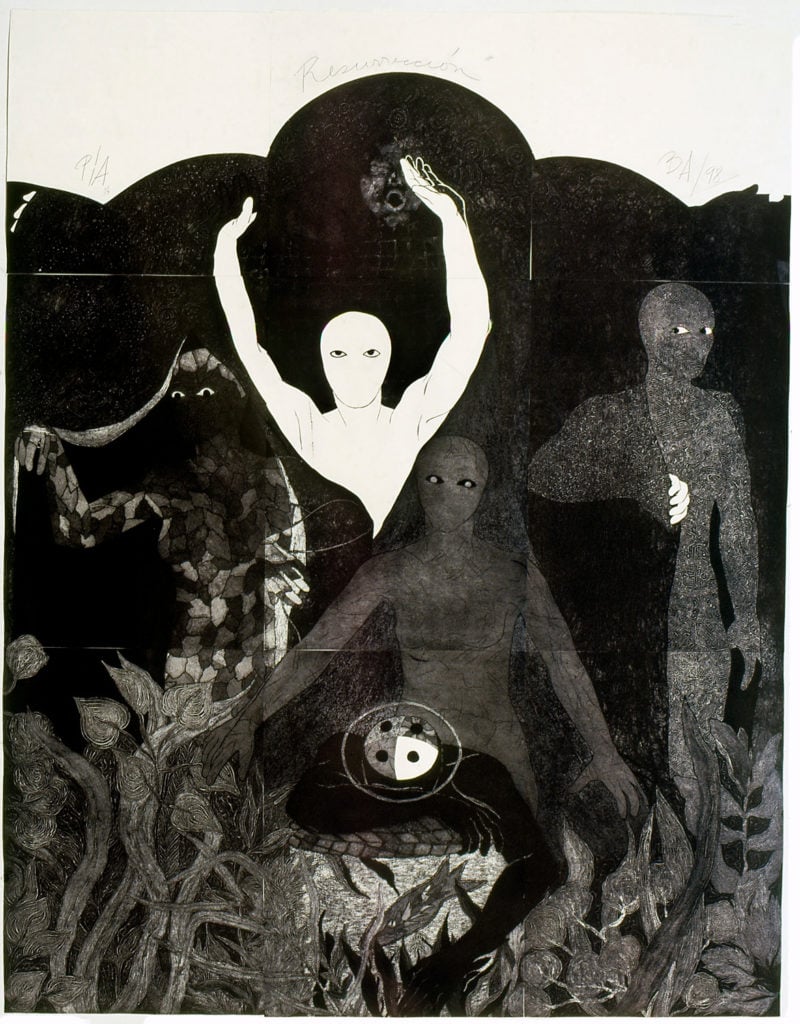
Belkis Ayón, Resurrection
(1998), in “NKame: A Retrospective of Cuban Printmaker Belkis
Ayón,” at El Museo del Barrio. Collection of the Belkis Ayón
Estate.
Ever since seeing it in summer
2017, NKAME: A Retrospective of Cuban Printmaker Belkis Ayón,
curated by Cristina Vives for El Museo del Barrio, has been on my
mind. The grace and care of the exhibition was at once an elegy to
this gone-too-soon, seen-too-rarely artist, and an astoundingly
beautiful exploration of her practice. Balancing a studious look at
Ayón’s unique and textural approach to collography, with a riveting
introduction to her re-imaginings of the male myths of Abakuá, it
navigated complex subjects with an accessible, visually arresting
approach, one that should serve curators well as major museums
begin to give under-known women artists like Ayón a wider
audience.
—Carmen Hermo, curator at the Brooklyn Museum
“Maria Lassnig—Ways of Being“
The Albertina Museum, 2019
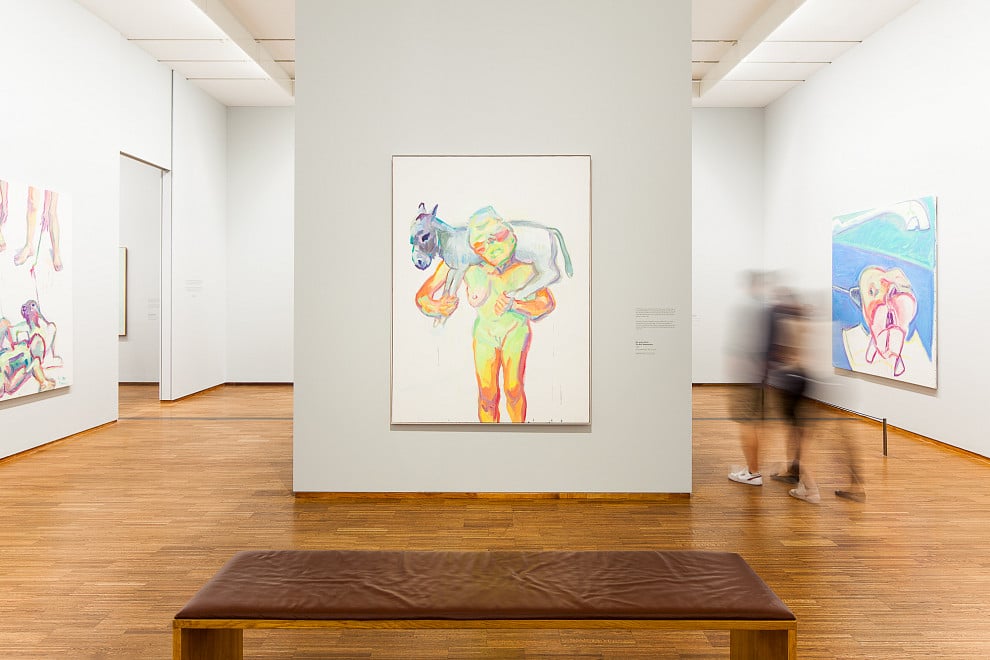
Installation view of “Maria Lassnig” at
the Albertina. Photo: © Robert Bodnar.
The exhibition, “Maria Lassnig—Ways of Being” at the Albertina
Museum, Vienna, and the Stedelijk Museum, Amsterdam, which marked
the artist’s centenary this year, was simply astounding. I
discovered new aspects to her creative vision, and seeing such a
comprehensive body of works was intensely powerful and moving.
—Manuela Wirth, co-owner Hauser and Wirth
“Seth Siegelaub”
Stedelijk Museum, 2015
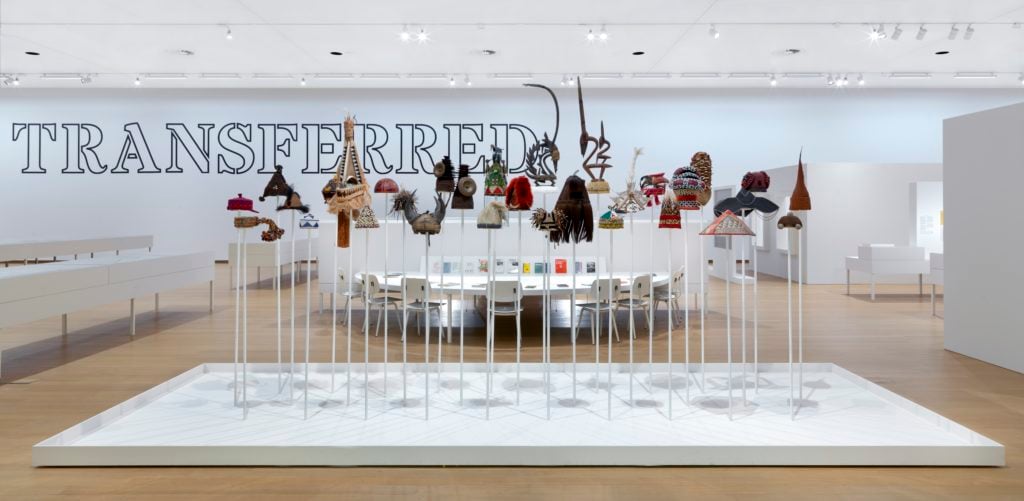
Installation view of “Seth Siegelaub” at
the Stedelijk Museum, 2015.
The “father of Conceptual art,”
who redefined the exhibition space, was also a distinguished
collector who gathered a
unique ensemble of books on the social history of textiles and a
mesmerizing textile collection comprising more than 750 items from
all parts of the world.
—Marc-Olivier Wahler, director of the Geneva Museum of
Art and History
“David
Hammons”
Hauser & Wirth, 2019
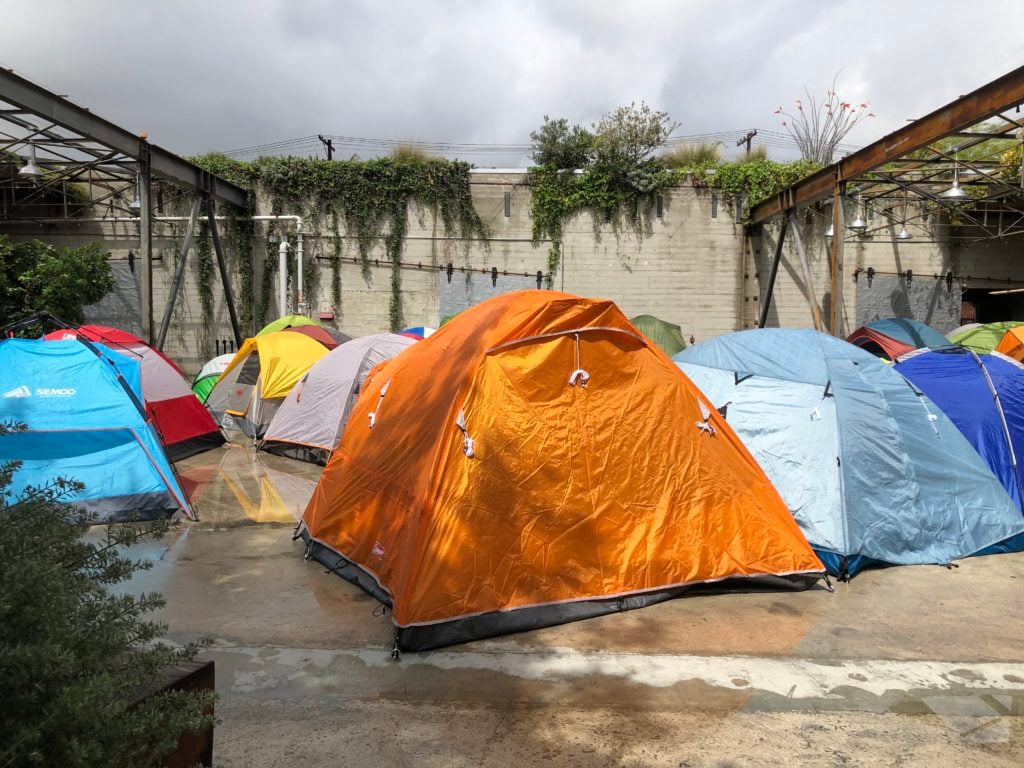
Installation view of “David Hammons” at
Hauser & Wirth, Los Angeles. Photo: Janelle Zara.
Regarding Hammons: those who really know, don’t tell—and follow
Hammons by keeping the provocative secret to themselves. This
exhibition more than any other allowed viewers a window into the
influence of an artist who has been called a shaman and a showman.
Plus, this sprawling exhibition of high ambition was dedicated to
the inimitable free jazz artist Ornette Coleman, whose inventions
in music are somewhat akin to Hammons’ inventions in art.
—Arnold Kemp, dean of graduate studies, School of the Art
Institute of Chicago
Prospect New
Orleans
2010, 2011, 2014, 2017
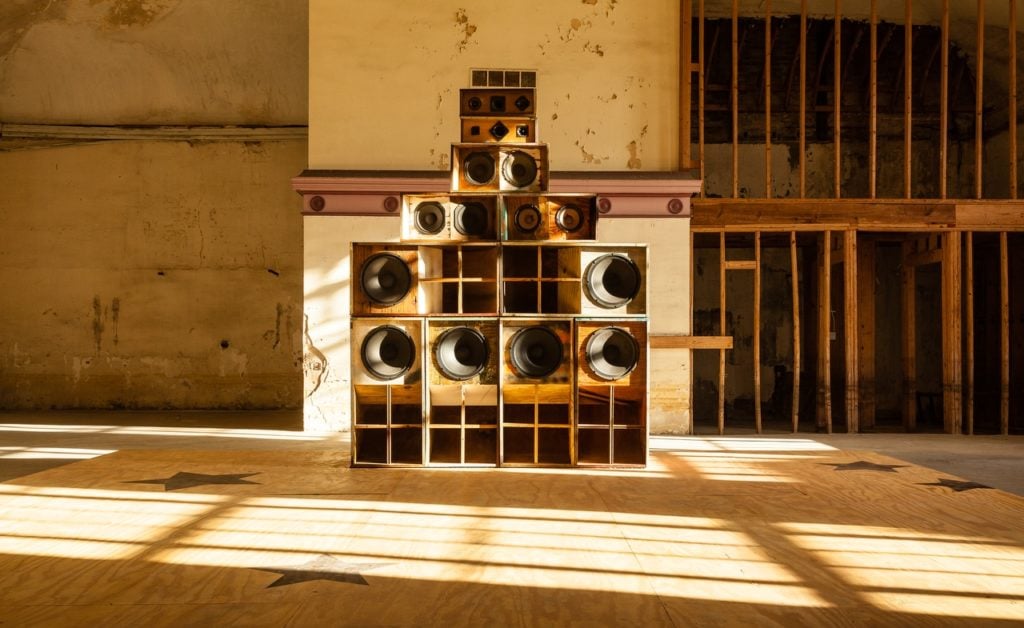
Gary Simmons, Recapturing Memories
of the Black Ark (2014), installation view during “Prospect.3:
Notes for Now,” a project of Prospect New Orleans. Photo:
©Scott McCrossen/FIVE65 Design, courtesy of the artist and Metro
Pictures, Anthony Meier, Simon Lee, and Regen Projects.
There are many highlights, from
ambitious research shows like “Radical Women: Latin American Art,
1960-1985,” “Postwar: Art between the Pacific and the Atlantic,
1945-1965,” and “We Wanted a Revolution: Black Radical Feminism
1965-85,” to prescient shows such as “Outliers and the American
Vanguard Art and Triggered: Gender as a Tool and a Weapon.” But,
collectively, Prospect in New Orleans exerted sustained influence
throughout the decade. The Prospect exhibitions have come to
represent some of the biggest changes in art this decade. It
shifted attention from the established artistic centers to the
American South; it championed local artists alongside global ones;
created meaning and projects on a shoestring budget (in caparison
with its European biennial counterparts); tackled the lasting
legacy of colonialism and slavery; and became a proving ground for
some of the most exciting artistic voices today, including John
Akomfrah, Firelei Baez, Allora & Calzadilla, Nick Cave, Njideka
Akunyili Crosby, Nicole Eisenman, Theaster Gates, Jeffrey Gibson,
Camille Henrot, Isaac Julien, William Pope L., Wangechi Mutu, Amy
Sillman, and Hank Willis Thomas, to name just a few. And with an
all-female team heading the next Prospect, I have no doubt it will
continue to be a show to watch.
—Eva Respini, chief curator at ICA Boston
The post What Was the Most Influential Exhibition of the
Decade? We Asked Dozens of Art-World Experts for Their Pick
appeared first on artnet News.
Read more https://news.artnet.com/art-world/most-influential-show-of-the-decade-1728396
Further reading


Leave a comment