
A.I. Has the Potential to Change the Art Business—Forever. Here’s How It Could Revolutionize the Way We Buy, Sell, and See Art
A version of this story first
appeared in the spring 2020 Artnet Intelligence
Report and is part of our cover package on Artificial
Intelligence. For more, read our glossary of A.I.
terminology and our survey of the
challenges of A.I. art authentication.
Artificial intelligence has asserted itself as perhaps the
single most consequential technology in molding our future—and our
present. In fact, rather than some far-off sci-fi concept, machine
learning and A.I. (check out our handy glossary if
you’re unsure about the distinction) have already become invisibly
braided into our daily lives. If you’ve ever called an Uber, sent
an autocorrected text, or enjoyed Spotify’s “Made for You”
playlists, guess what? You’ve let machines do the thinking for
you.
Although the art business has often lagged behind the cutting
edge of technology, a software-savvy vanguard is working to
integrate machine learning and A.I. into multiple aspects of our
tradition-minded, white-glove trade. Some advances have already
been achieved. In areas ranging from logistics, to authentication,
to market forecasting, innovations dangle the prospect of
tremendous cost savings, huge efficiency gains, and—perhaps most
intriguingly—the opportunity to even the playing field between
forward-thinking smaller players and their behemoth upmarket
rivals.
In these pages, we lay out seven practical ways A.I. could
transform the market—and that’s just the beginning. Don’t fear the
future, though. It could be your greatest ally… unless you ignore
it.
1. Hmm, Nice Artwork. I
Wonder Who It’s By…
Illustration © Artnet.
HOW A.I. CAN HELP
This tool allows you to find out essential information about a
work of art simply by uploading an unlabeled image of it.
HOW IT WORKS
Algorithms use pattern recognition—the bedrock of machine
learning—to cross-reference newly received images of artworks
against a database of previously identified pieces. If there is a
match, the tool can instantly and automatically surface vital
information like the artist, title, date, and even the reported
price of the work in question. Sophisticated recognition engines
could also flag objects believed to be lost or looted, or expose
fakes by linking to individual artists’ online catalogues
raisonnés.
WHO IT’S FOR
Practically every art professional and casual fan in this
fast-moving, information-scarce field. Who wouldn’t want to
effortlessly and instantly know more about what they’re seeing?
WHEN IT WILL BECOME REALITY
It may already be here, at least in some form. Described by
creator Magnus Resch as “Shazam for art,” the free-to-download
Magnus app was hit in 2016 by multiple legal challenges from
companies that accused it of stealing their images and data. But it
has since resolved those disputes and now promises to match users
with 12 million works, some complete with prices gathered through
crowdsourced reporting.
2. I Love David Hockney’s
Pool Pictures. What Else Would I Like?
Illustration © Artnet.
HOW A.I. CAN HELP
Just as Netflix algorithmically extracts traits from the content
you’ve already watched to offer similar fare, an
artwork-recommendation engine analyzes your prior preferences and
purchases to propose artworks you might like.
HOW IT WORKS
Machine learning breaks down the defining visual and thematic
features of an artwork—or even an entire collection—to serve up
other pieces with some of the same aesthetic attributes.
WHO IT’S FOR
Sellers, buyers, and middlemen alike. Galleries hoping to build
a coherent, unified exhibition program could use algorithms to
scour the infinite reaches of the internet in search of emerging or
undiscovered talent that chimes with their existing program.
Advisors, dealers, and auction-house specialists could analyze
their clients’ tastes to determine not only which other artists
might activate their checkbooks but even which individual pieces by
a particular artist would appeal most. Collectors could rely on
machine learning to supplement the guidance of trusted advisors—or
eliminate the need for those people entirely.
WHEN IT WILL BECOME REALITY
At least a few early-stage examples exist now, but adoption is
limited. A.I. startup Artrendex’s ArtPI product enables licensees
to embed a widget on their websites that pulls up available works
similar to any user-supplied or user-selected image. Although its
most visible applications so far have been in the nonprofit sector,
highlighted by a partnership to draw out aesthetic connections
between works in the Barnes Foundation’s collection, Artrendex
counts some for-profit companies among its customers, including
blockchain-registry platform Verisart. In another development,
Sotheby’s acquired artwork-recommendation engine Thread Genius in
2018, although the house has said little publicly about how, and
how much, the technology factors into its business.
3. I’m a Female Millennial
Startup Founder. What Art Would I Like?

Illustration © Artnet.
HOW A.I. CAN HELP
Instead of recommending artworks based solely on visual
similarities, this application would also take into account
similarities between buyers, suggesting, for example, that a young
Connecticut hedge funder dabbling in postwar abstraction might be
interested in artists Steve Cohen acquired early on.
HOW IT WORKS
Algorithms could construct rich statistical models of individual
collectors that incorporate multiple personal and professional
attributes—age, line of work, estimated net worth, annual art
budget, years spent collecting, and much more—in addition to the
works they’ve already acquired and then leverage the parallels that
emerge to better predict what clients might want using what their
closest matches bought at similar points in their own collecting
careers. (If you think this concept sounds dystopian, keep in mind
it’s been crucial to the business models of Amazon, Google, and
Facebook for years.)
WHO IT’S FOR
The sell side of the trade. Realistically, however, each
business is likely to mine its own internal data rather than
sharing such sensitive information with others in the field, or
with a third party. You could also argue that collectors who “buy
with their ears, not their eyes,” as the old maxim goes, have been
doing an analog version of this practice for decades, meaning they
might be interested in the algorithmic evolution if it were
commercially available.
WHEN IT WILL BECOME REALITY
At least one New York-based startup is pursuing this technology
already. Arternal, which builds workflow software to help galleries
better manage client relationships, aims to launch a beta version
of this concept in early 2021, then release a more robust iteration
in time for the fall art season.
4. I Love This Artwork. But
How Do I Know It’s Not a Fake?
Illustration © Artnet.
HOW A.I. CAN HELP
Software would detect otherwise-invisible warning signs about a
work’s authenticity, providing another layer of security on top of
traditional materials analysis and scholarship.
HOW IT WORKS
Machine-learning algorithms study as many of an artist’s works
as possible—or at least, high-resolution digital reproductions of
them—to establish a vocabulary of techniques that act as the
artist’s aesthetic fingerprint. Each model would consist of
granular traits, such as the pressure exerted on the paper at each
point in the artist’s line drawings; what direction the pen
actually moved to create every mark; and which of those marks
flowed directly into others. The algorithms would then compare the
artist’s historically verified stylistic patterns to those used to
make a work whose authenticity is in question.
WHO IT’S FOR
Authenticators, insurers, dealers, auction houses, and
collectors seeking maximum peace of mind in a market full of
skilled forgers.
WHEN IT WILL BECOME REALITY
A few entrants are active now. Art Recognition, a Swiss startup,
offers A.I.-powered authentication rulings on paintings within days
based on photographic reproductions. Another Artrendex product,
called Art Verified by A.I., is commercially available to examine
line drawings by (or alleged to be by) 10 canonical masters, with
more use cases in development.
5. I Want to Put on an
Exhibition. How Do I Design It?
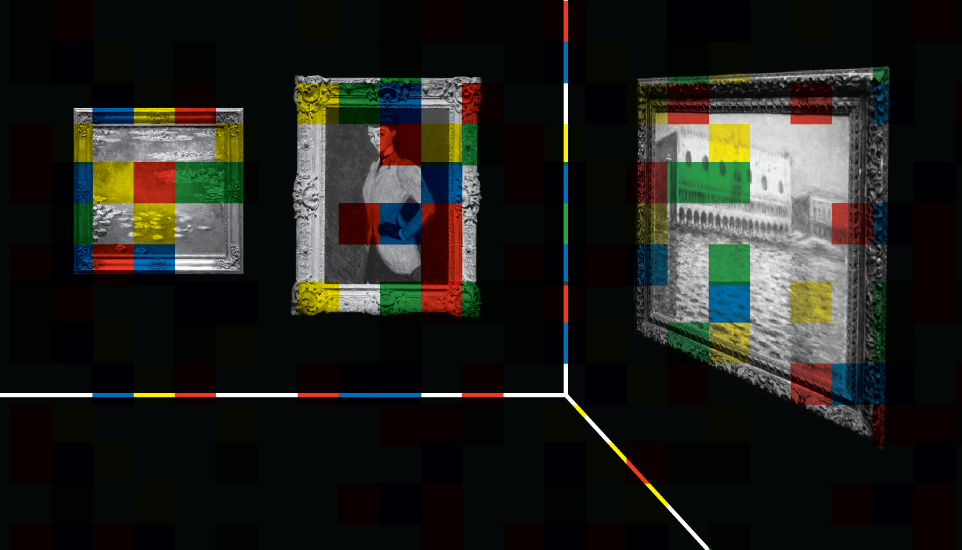
Illustration © Artnet.
HOW A.I. CAN HELP
This is the robot curator you never knew you needed. It can
provide potential exhibition designs tailored to your collection,
your space, and your budget with a few clicks of a mouse (and a ton
of automated analysis).
HOW IT WORKS
Artificial intelligence examines a set of data points, including
the specific works to be shown, the available wall and floor space,
lighting options, technical requirements (do any of the pieces need
electricity or their own darkened room?), and other installation
elements, then generates numerous possibilities for how the puzzle
pieces might best be arranged. Works could even be categorized
using nontechnical information, such as shared themes, to augment
the algorithms’ ability to optimize proposed layouts. Such layouts
could be implemented as they are, or used as building blocks for
hybrid human-machine exhibition designs.
WHO IT’S FOR
Dealers and nonprofit spaces, particularly smaller ones with
limited staff resources and budgets too meager to hire renowned
exhibition designers for Gagosian-level hangs.
WHEN IT WILL BECOME REALITY
Commercial products should be available soon, because the
concept has already been executed as an artwork. The 2019
exhibition “Entangled Realities: Living With Artificial
Intelligence,” at Basel’s House of Electronic Arts, featured
Atomized (curatorial) Functioning, a work by Swiss art
collective fabric | ch that leveraged algorithms to produce a
steady stream of layout variations for the very show in which it
appeared.
6. I Want to Buy This
Sculpture. How Much Will Shipping Cost?
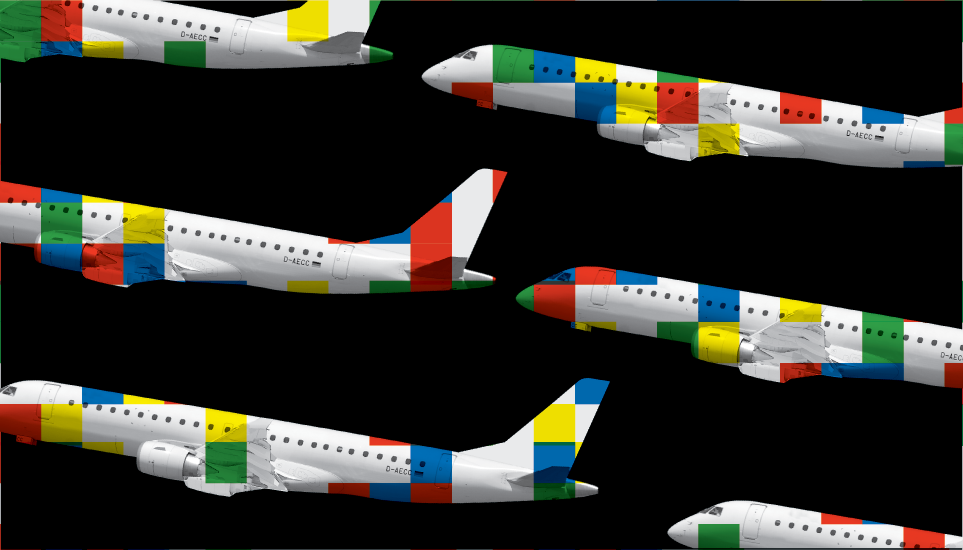
Illustration © Artnet.
HOW A.I. CAN HELP
This application, known as predictive pricing, provides cost
estimates for logistics in a fraction of the time needed to secure
quotes the old-fashioned way (also known as wasting away on the
phone with vendors and burying yourself in emails).
HOW IT WORKS
Machine learning mines thousands of historical estimates and
invoices for services such as packing, shipping, installation, and
storage of artworks of varying weights and dimensions, then
determines patterns that take into account different seasons,
routes, vendors, modes of transport, and other factors—all in order
to deliver highly reliable cost estimates at lighting speed.
WHO IT’S FOR
Registrars—and the people who need registrars but don’t have
them. Automating the estimate process for art services would
maximize efficiency, minimize costs, and even allow for the
reallocation of staffing in ways that could pay tremendous
dividends. For instance, every hour a gallery saves on estimate
sourcing could instead be put toward serving artists or cultivating
collectors.
WHEN IT WILL BECOME REALITY
The future is now. Logistics startup ARTA already offers automated
quotes for packing, shipping, and installing artworks (other than,
say, Richard Serra monoliths or other pieces requiring similarly
specialized handling) in as little as four minutes—a massive
advantage over wait times of up to two weeks when a human is tasked
with the job.
7. How Much Will My New
Painting Increase in Value?
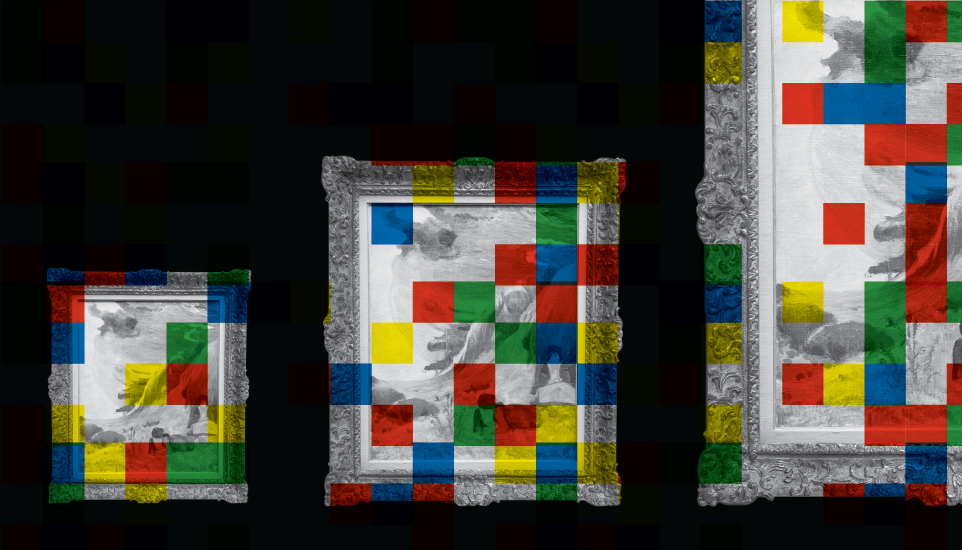
Illustration © Artnet.
HOW A.I. CAN HELP
A.I. provides a tool for valuation forecasting—predicting how
the value of a particular artwork will change over time—also known
as the Holy Grail for the art market.
HOW IT WORKS
It’s complicated. Algorithms would start by building analytical
profiles of individual artists that would echo the
collector-matching profiles discussed earlier—profiles that would
likely account for such variables as educational background,
gallery representation, institutional résumé, auction-price
history, collector base, and social network, to say nothing of the
traits and quantity of the artwork produced. A.I. would then
simulate interactions between those profiles and a statistical
model of larger market conditions, just as quants in the financial
markets have been doing for years. These simulations would produce
high-level, data-backed predictions for how much given works by
particular artists are likely to be worth over various time
horizons, from a few months to multiple years. Even if the end
product improved accuracy by only a modest amount, it could be a
“killer app” in an arena where any slight edge can translate into
millions of dollars.
WHO IT’S FOR
Any art buyer or seller who has ever considered the potential
return on investment before closing a deal.
WHEN IT WILL BECOME REALITY
Again, it’s complicated. Gallerist turned startup entrepreneur
Carlos Rivera deployed algorithmic valuation forecasting through
his platform ArtRank all the way back in 2014. However, after
attracting much fanfare (and plenty of criticism) in the years
following its launch, the platform produced the last public update
to its artist indices in December 2017, and a note on the website
states that no others are planned. A handful of like-minded
startups have emerged since then. But as tantalizing as genuinely
reliable A.I.-powered valuation predictions are, the challenges that
remain make it reasonable to ask whether this Holy Grail can
ever be reached by even the most intelligent machines.
A version of this story first appeared in the spring
2020 Artnet Intelligence Report. To
download the full report, which has juicy details on a young art
dealer turned criminal on the run, what art top collectors are
buying (and why), and how titans of the finance industry are
infiltrating the auction houses, click here.
The post A.I. Has the Potential to Change the Art
Business—Forever. Here’s How It Could Revolutionize the Way We Buy,
Sell, and See Art appeared first on artnet News.
Read more https://news.artnet.com/market/ai-art-business-intelligence-report-2020-1812288
Further reading


Leave a comment