
Dr. Seuss Dreamed Up a Guide to Art History That Was Never Published—Until Now
Parents, art fans, and horse
lovers everywhere all have something to rejoice about: There’s a
helpful new museum guide, ready to teach us about art history
from ancient Chinese art to the Italian Renaissance to modernism.
He is a talking horse.
This is Dr. Seuss’s Horse
Museum, the
newest—and likely last—book from the beloved (and long dead)
children’s author, whose real name Theodor Seuss Geisel. The highly anticipated
book comes out next Tuesday, September 3.
After he died in 1991, Geisel’s
manuscripts, sketches, letters, and other professional artifacts
were donated to the
University of California, San Diego, where they live. However, six
years ago, the author’s widow Audrey Geisel came across an
overlooked box in their
former home in La Jolla, California that housed two long-forgotten,
unpublished manuscripts.
Ms. Geisel phoned her husband’s
longtime publisher, Beginner Books, and it’s then-president, Cathy
Goldsmith. Goldsmith, who had formed a close relationship with the
Geisels as a young designer in the late ’80s and early ’90s, was on
a plane three days later.
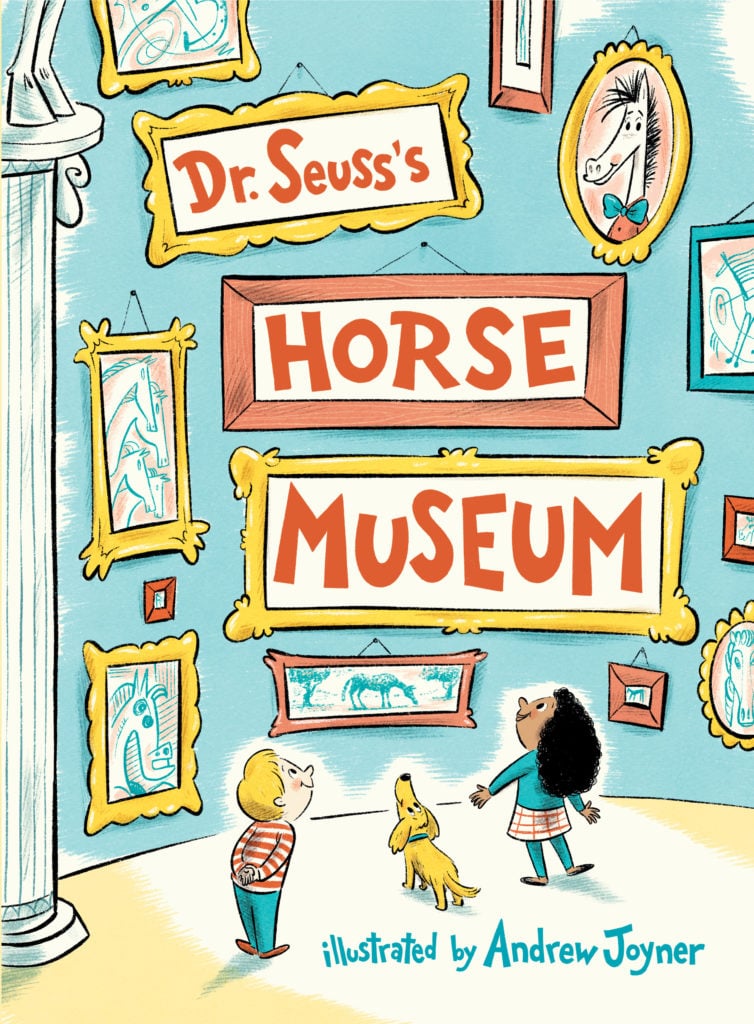
Dr. Seuss’s Horse Museum,
illustrated by Andrew Joyner, 2019. Courtesy of Beginner Books.
The first of the two manuscripts
was a nearly complete version of the story What Pet Should I Get?, which the publisher put out in 2015 and
quickly became a #1
New York Times bestseller. The second was a rougher, largely picture-less
outline. Adopting the voice of an equine narrator, it charted the
evolution of art history through works of art that included horses
as subjects—Franz Marc’s Blue Horse
I (1911), for
instance, or Edvard Munch’s Horse
Team (1919).
Though there was no official date
attached to the manuscript, Goldsmith believes that it was likely
done in the mid-1950s. At that same time, she explains, Geisel had
starred in a short-lived children’s TV show called
Modern Art on
Horseback. Sadly, the
footage of the show has been lost.
“I think Ted was probably more
interested in art than most people realize,” Goldsmith tells artnet
News. “But I really think that, while the book is about art, it’s
also about creativity of any kind. He was trying to give people
permission to realize that their personal vision is their personal
vision and there’s no right or wrong about it.”
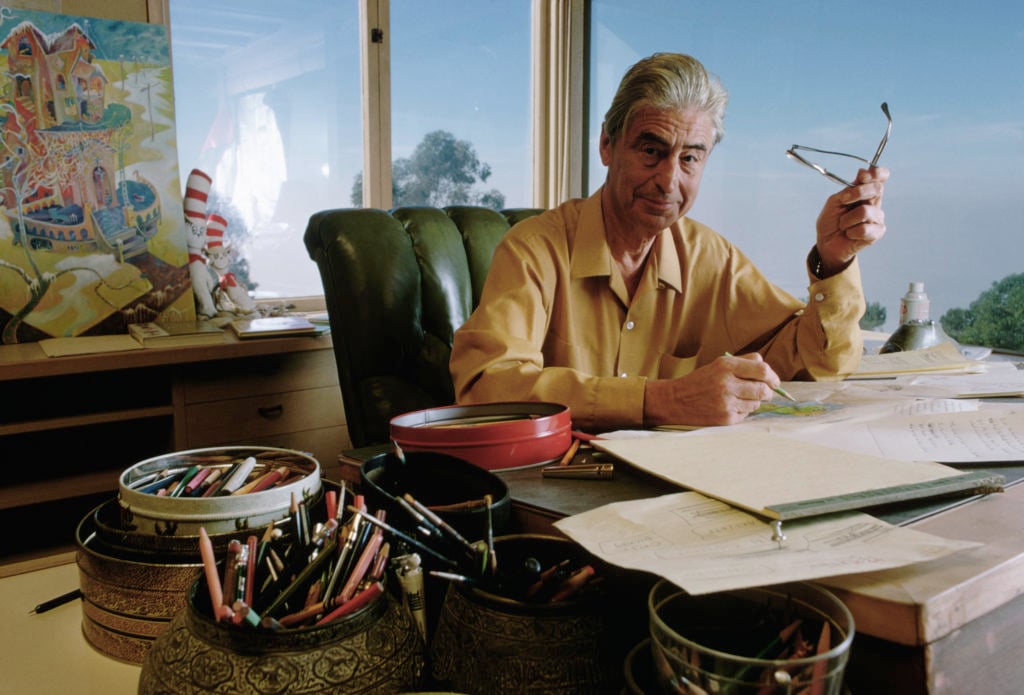
Dr. Seuss Drawing at His Desk. Photo:
James L. Amos/Corbis via Getty Images.
Why Geisel didn’t finish the
project, we’ll never know (the Seuss-ian illustrations are
filled in by Andrew Joyne, who’s also done kids books like The Pink Hat and Romeosaurus and Juliet
Rex). The publisher speculates that a non-fiction text on
art history might have been a hard sell at the time. Goldsmith also
notes that, if indeed it was done in the mid-’50s as she suspects,
it would have been right before the publishing of
The Cat in the
Hat, an instant classic
that catapulted him to literary stardom. Suddenly the world of
Kandinksy and Calder might not have seemed as interesting as the
products of his own imagination, such as the Sneeches or residents
of Whoville.
Geisel himself was an
accomplished artist, often working on paintings, drawings, and
paper-mache sculptures in the evenings after days spent
illustrating his books. His work has been shown in numerous gallery
shows since his death. In 2017 a museum dedicated to
his work opened in his
hometown of Springfield, Massachusetts.
For Goldsmith, who is one of the
last remaining people in the business to have worked with Geisel
directly, the book isn’t necessarily the last chapter of the Seuss
story; it’s more like an “addition to his library,” she says. Not
lost on her, though, is the fact that the titular horse, a
whimsical character guiding readers through an alternate world of
imagination and fantasy, can be read as a metaphor for Geisel
himself.
“I love the fact that once again
it’s Ted or Ted’s character gesturing with their hand and saying,
‘Come with me,’” she says. “I always think of Ted as being, on one
hand, a teacher, but on the other hand, a slightly anarchic friend
who likes to take you on a little journey to someplace you’ve not
been before. I think we all felt the potential in this project from
the time we first looked at what we found in the box.”
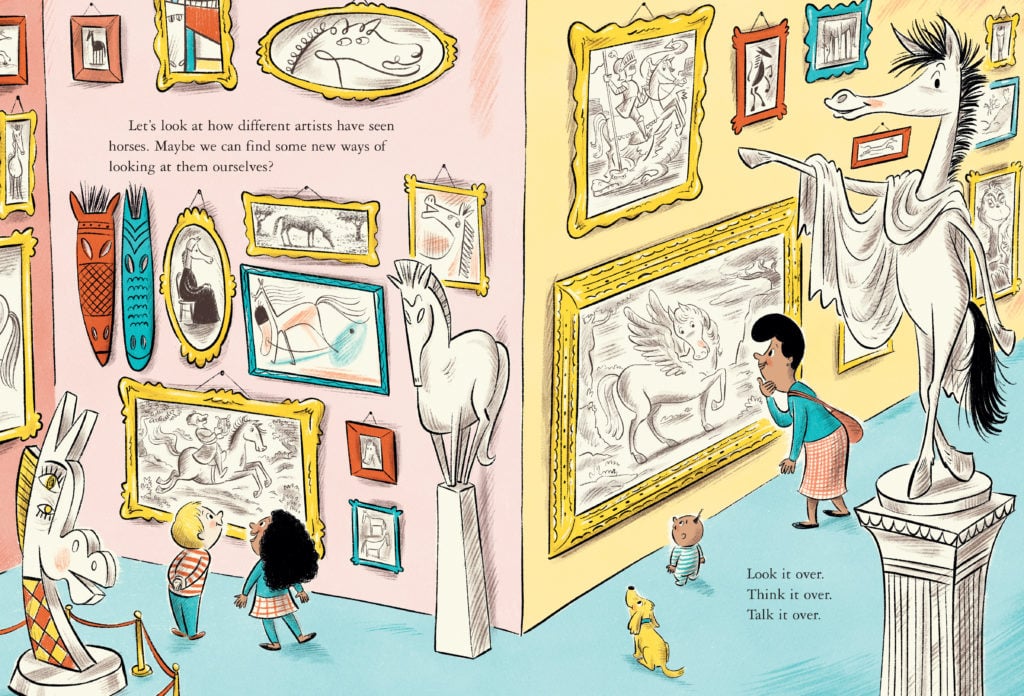
A page from Dr. Seuss’s Horse
Museum, illustrated by Andrew Joyner. Courtesy of Beginner
Books.
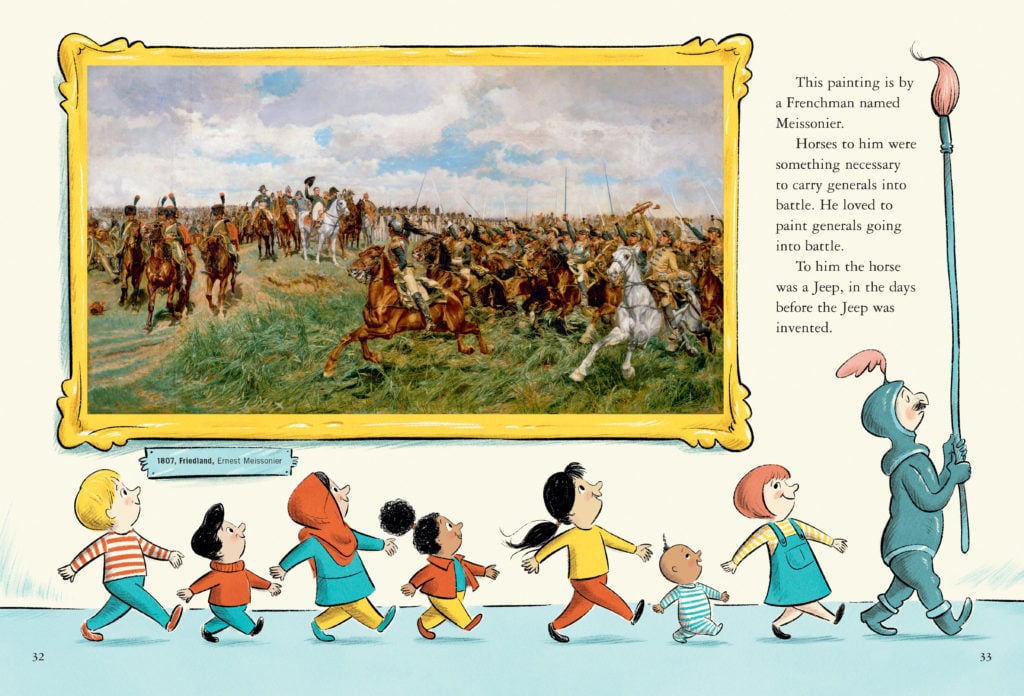
A page from Dr. Seuss’s Horse
Museum, illustrated by Andrew Joyner. Courtesy of Beginner
Books. On the wall is Ernest Meissonier’s Friedland (c.
1861–1875). Image © The Metropolitan Museum of Art / Art Resource,
NY.
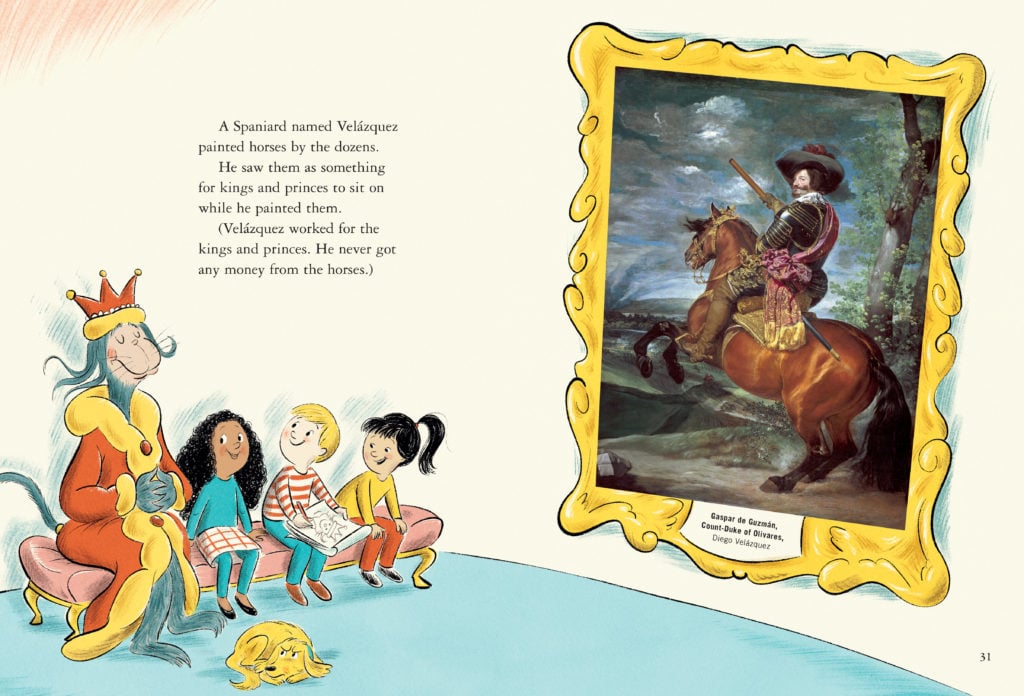
A page from Dr. Seuss’s Horse
Museum, illustrated by Andrew Joyner. Courtesy of Beginner
Books. On the wall is featuring Diego Rodriguez Velázquez’s
Gaspar de Guzmán, Count-Duke of Olivares (1635). Image ©
Museo Nacional del Prado / Art Resource, NY.
Dr. Seuss’s Horse Museum
comes out Tuesday, September 3,
2019. You can order your copy here.
The post Dr. Seuss Dreamed Up a Guide to Art History That
Was Never Published—Until Now appeared first on artnet
News.
Read more https://news.artnet.com/art-world/dr-seusss-horse-museum-1639723
Further reading


Leave a comment