
‘He Was a Great Intellectual Force’: Christo, Miuccia Prada, and Other Art-World Figures Remember the Late Curator Germano Celant
Germano Celant, the widely influential Italian art historian,
critic, and curator who coined the term Arte Povera to describe the
radically economical art of Jannis Kounellis, Mario and Marisa
Merz, and Giuseppe Penone, among others, died on April 29 at age 80 in Milan due to
complications from the coronavirus.
We asked some of his friends and colleagues for their
remembrances.
Bice Curiger,
curator
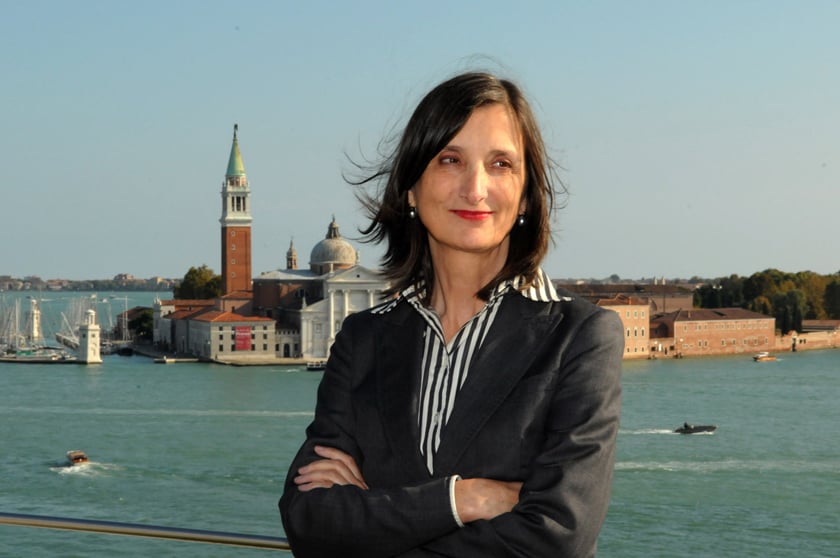
Bice Curiger. Courtesy Venice
Tourism.
What an outstanding curator he
was! A great intellectual force, a scion of the enormously rich
artistic and cultural life of the 1960s in Italy, an important
companion and protagonist of the internationalization of local
European scenes.
I experienced this awakening as
a student. People in Switzerland were very Italo-phile at the time,
and greedily absorbed everything that spilled over to us. Without
Celant, perhaps there would never have been “When Attitudes Become Form,” the mythical exhibition that Harald Szeemann
presented with great aplomb in 1969.
The beginnings [of Arte Povera]
alone would have been enough to make Germano Celant go down in art
history as an outstanding figure. But perhaps the richness and
complexity of his legacy as an author of numerous exhibitions and
publications is yet to be discovered.
His closeness to artists and to
current events continued unbroken until the end. What counted most
was also his specific background—his being anchored in the history
of his country. In
times of accelerated mercantile globalization, his reflections
and gestures nourished an understanding of internationalism as a
polyphony, and a productive non-simultaneity of events. Yes, to
defend it against the tendency towards a ubiquitous, flat
monoculture.
When I cofounded
Parkett magazine in the 1980s, we met again and
again. He wrote for our publication as an author (for instance, in
a 1988 issue dedicated entirely to the artist duo Peter Fischli and
David Weiss). With Peter Fischli, Germano also had a completely new
project up his sleeve for the Fondazione Prada in Venice, where
Fischli was curating a painting exhibition. This has now been
postponed because of the coronavirus—the virus that Germano sadly
succumbed to.
Iwan Wirth, art
dealer

Iwan Wirth. Photo courtesy of Wikimedia
Commons.
Germano was a giant, a north star in 20th-century art history,
and his legacy will undoubtedly
influence generations to come. He created the
context for Arte Povera, and translated the ideas
of a group of artists in a way that made them truly
understood around the world.
He combined great warmth with an impressive intellect, and
his passion for art was so genuine and
so complete that he was loved by artists, fellow
curators, and gallerists everywhere. His death comes
as a shock, but his spirit and influence will be very much alive
for years to come. Today I feel deeply grateful to have met him
almost 30 years ago, and to have had the privilege to work with him
on various exhibitions that are among my most memorable
experiences. Today our deepest sympathy goes to his wife, Paris,
and their son and family.
Christo,
artist
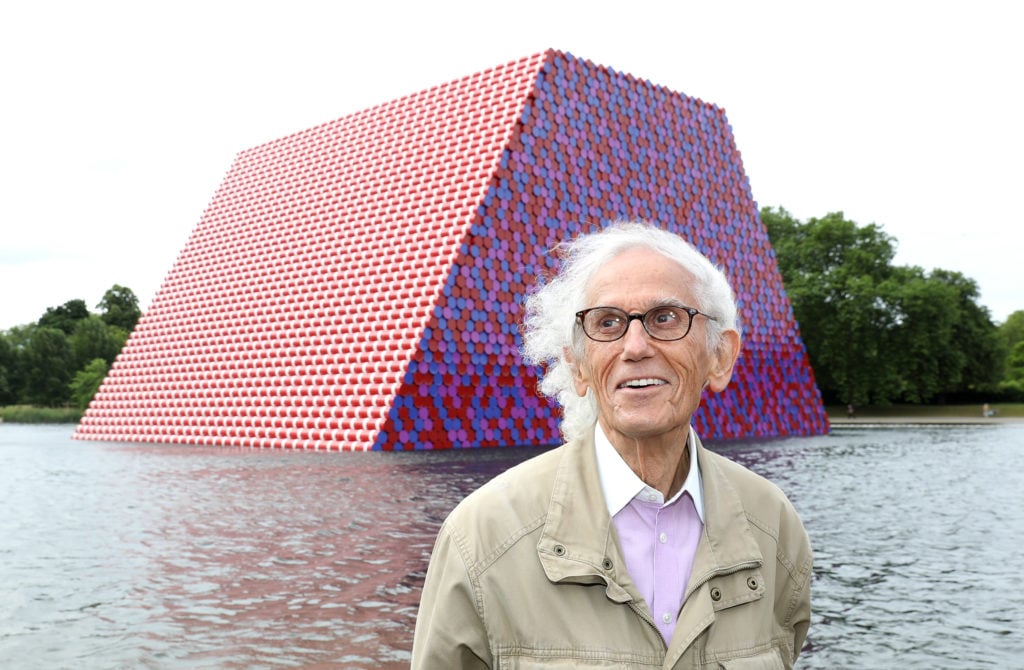
Christo. Photo by Tim P. Whitby/Tim P.
Whitby/Getty Images for Serpentine Galleries.
When Jeanne-Claude and I met Germano for the first time in the
late ’60s, we were all very young. Ours was a friendship that grew
with the passing of the years. We aged together. Each time
Germano was in New York, we always tried to see each other. He
curated our Valley Curtain exhibition at the Rotonda
della Besana in Milan in 1973, and in 2016, he was our project
director for The Floating Piers. He was always very
fond of our work. Germano wrote some of the most influential pages
in the history of contemporary art, and the art world will miss
him. I already miss him.
Thaddaeus Ropac, art
dealer
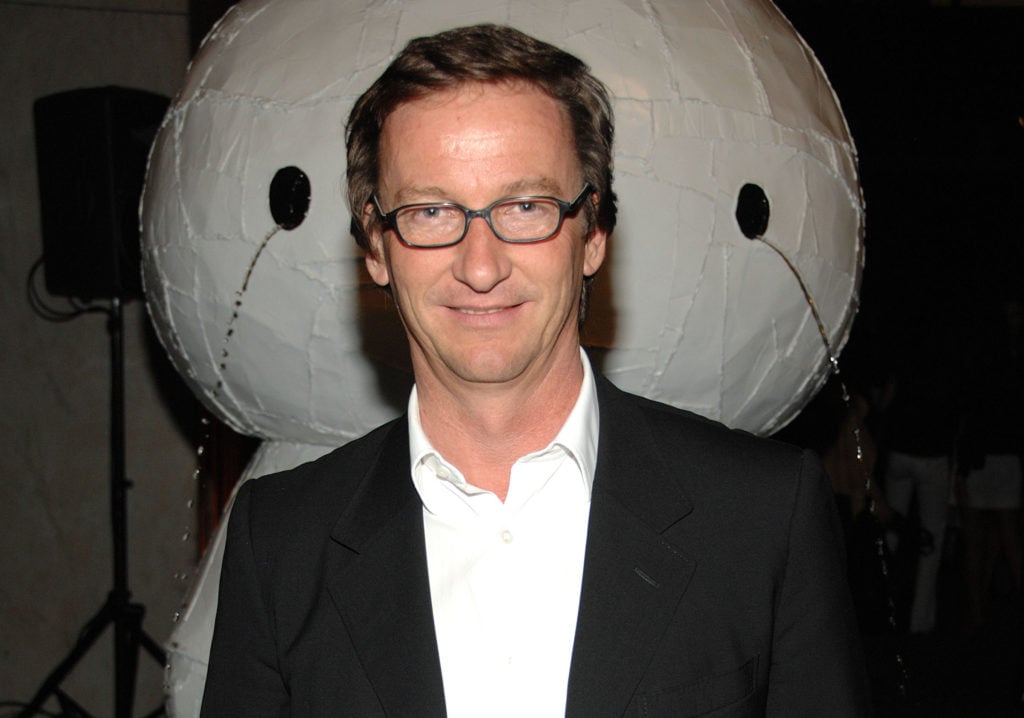
Thaddeus Ropac. Photo © Patrick
McMullan.
I first met Germano Celant 30 years ago and we gradually became
friends. I not only respected his views, but I learned tremendously
from his incredible knowledge about art. We first worked closely
together on the occasion of the Tom Sachs exhibition at the
Fondazione Prada in 2006, and on the Anselm Kiefer survey he
curated at the Guggenheim Museum in Bilbao in 2007. Most recently,
we collaborated on the Emilio Vedova centennial exhibition at the
Palazzo Reale in Milan last year. This is a terrible loss for the
art world, I’m missing a dear friend and my thoughts go out to his
family and friends.
Beatrice Merz,
president, Fondazione Merz
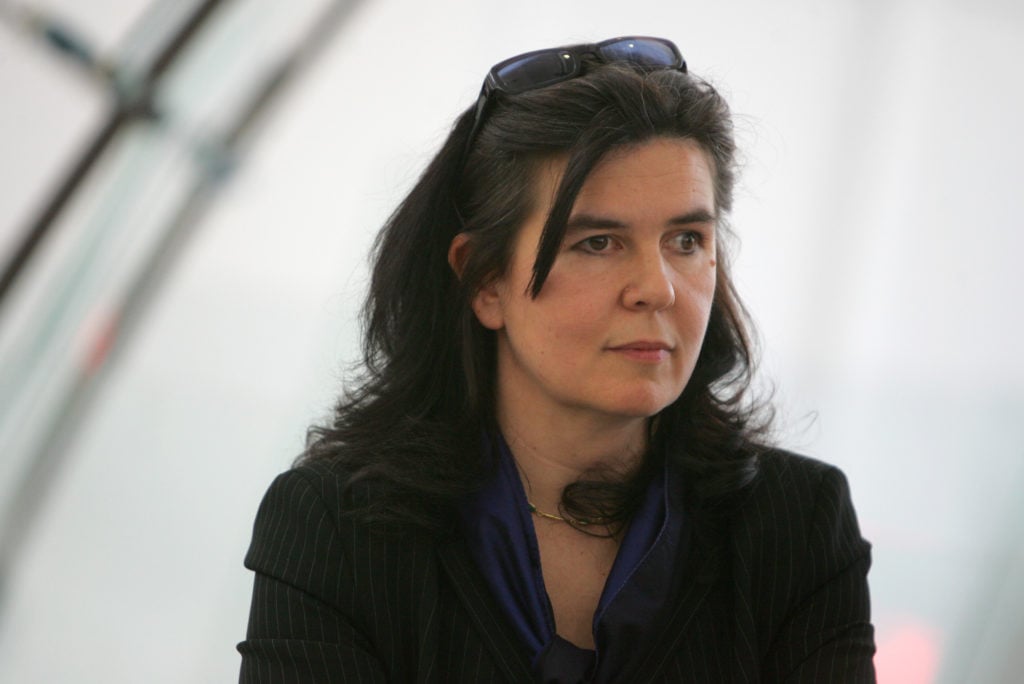
Beatrice Merz. Photo by Andrea Guermani,
courtesy Fondazione Merz.
“A little thought for Celant: The pieces of broken glass are the
violinists, the spears are the organ, the branches have a wonderful
sound, so what more could you want? Of course, you have to believe
that the streets and houses are full of people.” Mario Merz,
1969
I like to remember Germano with this phrase by Mario because I
believe that it accompanied him over time. Many memories of him
re-emerge for me from when I was a child. I learned from observing,
listening, and participating in many conversations in our house in
Turin. As our relationship grew, this experience transformed into a
dialogue. He was a friend and companion throughout our lives, who
always followed and supported the artists and people close to them
with a critical and affectionate sensibility. Recently with
Germano, we started to work together on a project by Michal Rovner
for the foundation. We will miss him.
Dominique Lévy, art
dealer
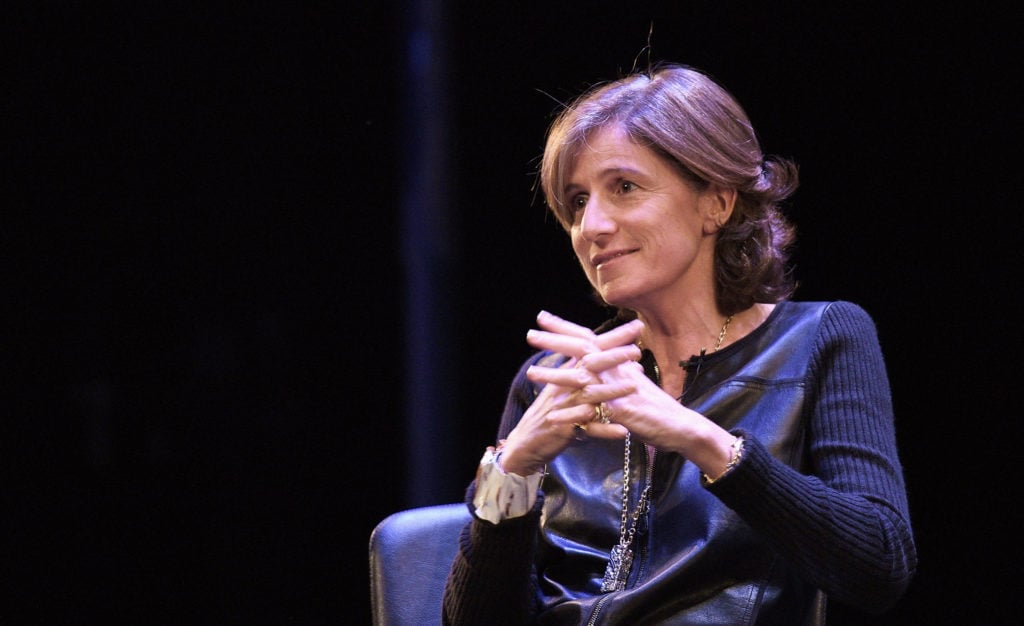
Dominique Lévy. Photo by Grant Lamos
IV/Getty Images.
Germano was larger than
life—from his smile and his hugs, to his vision and generosity, to
his optimism and unwavering commitment to his friends and artists.
There was simply no one in the world like him and never will be.
Dearest Germano, you will be missed. The hugs and togetherness may
return to our community in time. But they will not be the same
without your presence.
Patrizio Bertelli and
Miuccia Prada, presidents of the Fondazione Prada
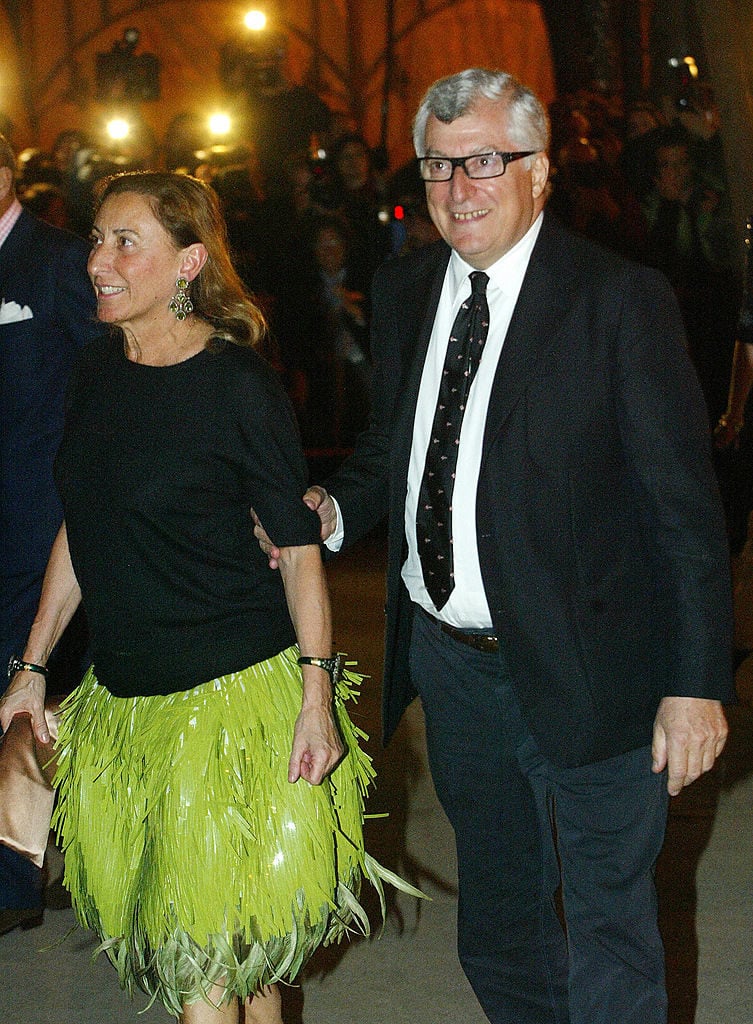
Patrizio Bertelli (right) and Miuccia
Prada. Photo: Rafa Rivas/AFP/Getty Images.
We are deeply saddened for the loss of a friend and traveling
companion. Germano Celant was one of the central figures in the
learning and research process that art has represented for us since
the early times of the foundation. The many experiences and intense
exchanges we shared with him over the years have helped us rethink
the meaning of culture in our present. Intellectual curiosity,
respect for the work of artists, and the seriousness of his
curatorial practice are lessons that we consider essential for us
and younger generations.
The post ‘He Was a Great Intellectual Force’: Christo,
Miuccia Prada, and Other Art-World Figures Remember the Late
Curator Germano Celant appeared first on artnet
News.
Read more https://news.artnet.com/art-world/germano-celant-tributes-1848804
Further reading


Leave a comment