
‘It Will Not Be a Passing, Fashionable Moment’: Goodman Gallery’s Liza Essers on Why the Art World’s Axis Is Tipping Toward Africa
In maps rendered “south-up,” the world as we have come to
picture it is flipped on its head. Where England and France are
usually found, you see Angola and Zambia; South Africa is located
where you expect to find Norway. The practice of flipping the map
underscores how deeply bias pervades the way we see the world and
how often we devalue the “Global South,” a term used to refer to
countries in Asia, Africa, Latin America, and the Caribbean. Why
does the north always have to be centered when the world is a
sphere?
For Goodman Gallery, the “south-up” map is the default. The
gallery has been championing artists from the Global South since it
was founded in 1966 by Linda Givon (then Goodman) in apartheid-era
Johannesburg as a “resolutely non-discriminatory space” for
black and white artists alike. (The FT notes
that, in the early days of the gallery, black guests at openings
would have to pretend to be waiters if security forces dropped
in.)
Since Liza Essers, an independent filmmaker turned art dealer,
took ownership of the gallery in 2008, Goodman has expanded its
international program, with a particular dedication to artists
concerned with social change. This week, Goodman is opening its
third location—and its first outside South Africa—in London. The
gallery’s highly anticipated 22-person inaugural group show at Cork
Street brings together work that examines social healing, including
Alfredo Jaar’s 1996 light piece Teach Us to Outgrow Our
Madness and works by Carrie Mae Weems, William Kentridge,
and El Anatsui.
Essers stepped away from the putting the final touches on the
London gallery to speak to artnet News about why Brexit and rising
European nationalism made it the perfect time to open in London,
why art fairs can feel “totally soul-destroying,” and why it’s just
the beginning for the art market in Africa.
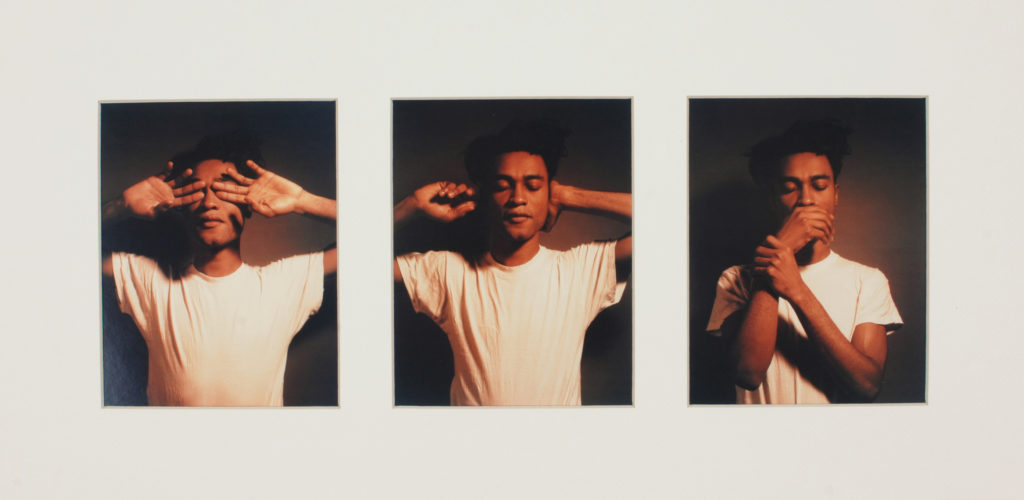
See No Evil Hear No Evil Speak No
Evil by Carrie Mae Weems. Courtesy Goodman Gallery.
You’re introducing yourself to a different audience than the
dedicated one you have developed in South Africa. What
considerations must you take into account when building your
inaugural program in London?
Goodman Gallery’s program has
been an international one. That was important to me when I took
over the gallery in 2008. We had been working with artists from all
over the continent, as well as international artists from the US
and from the Global South. We hope that it will become clear what
we stand for: We work with artists who are interested in social
change and artists that confront entrenched power structures, no
matter where they are from. This will continue to be the focus of
the program in London.
The opening group show takes its title from artist
Gabrielle Goliath’s work about gender-based violence in South
Africa, I have grown roses in this garden of mine. You will
be bringing up issues that might not be top of mind for people in
London.
South Africa has seriously
unfortunate statistics with regard to gender-based violence. There
is a huge awareness that is happening there, and our reality is a
very, very tough one. Women are standing up to gender-based
violence, and, of course, it is echoed through movements like
#MeToo worldwide. But in South Africa, we have been grappling with
urgent questions around social repair for many years, and I think
it is something that is relevant globally in terms of our history
as a society.
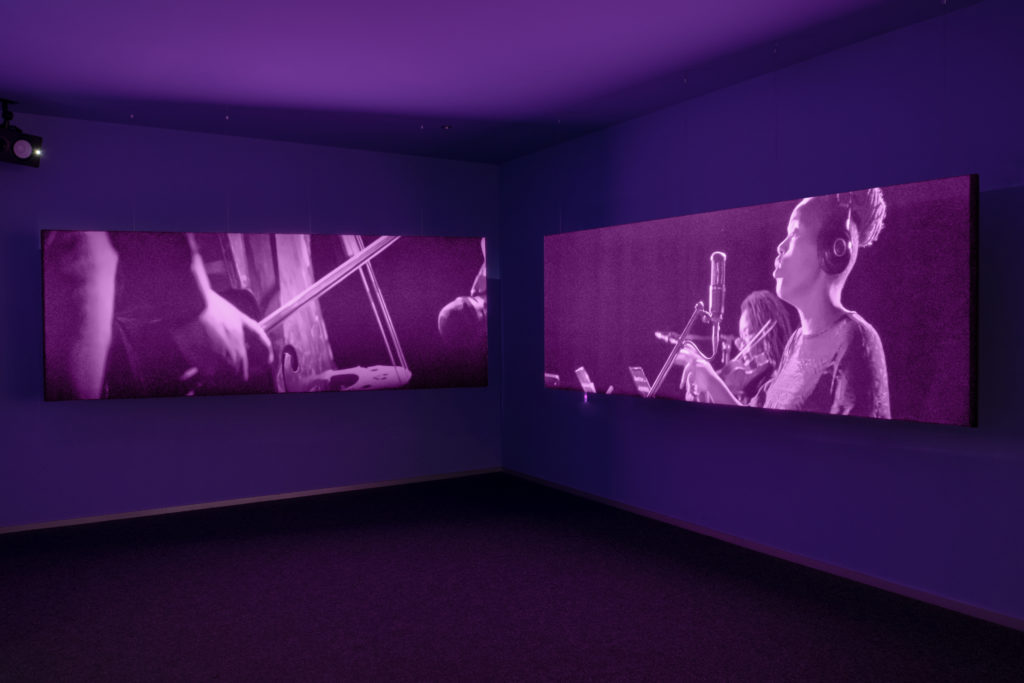
Gabrielle Goliath’s This song is
for… Installation view. Photo: Maksim Belousov. Courtesy
Goodman Gallery.
What made you choose to open in London? Amid the impending
reality of Brexit, did you have any doubts?
No. London will always be an
important center for the arts. For us, it was critical to move to
the UK in order to have closer to proximity to UK and European
institutions. I think it will remain an important center for the
global art world, and we will help fight the good fight to ensure
that we are part of the discourse, and focusing people on diverse
perspectives and social cohesion. It’s important to enter London and Europe at
this time, where there is rising tide of of right-wing nationalism.
We can play a role in confronting it.
Part of your program includes live music performances and
events by artists and musicians. Why is this a priority—is the goal
similarly to widen the public’s perspective on how they can
experience art?
Very much so. Goodman Gallery
Johannesburg is very focused on art in public space, projects that
go beyond the gallery walls. We hope to continue this type of
programming in London. It’s very exciting to be premiering
[Zimbabwean artist and activist] Kudzanai Chiurai’s film,
We Live in
Silence, a work disrupting
what the artist refers to as colonial
futures, with a large
live score during our Frieze Week opening.
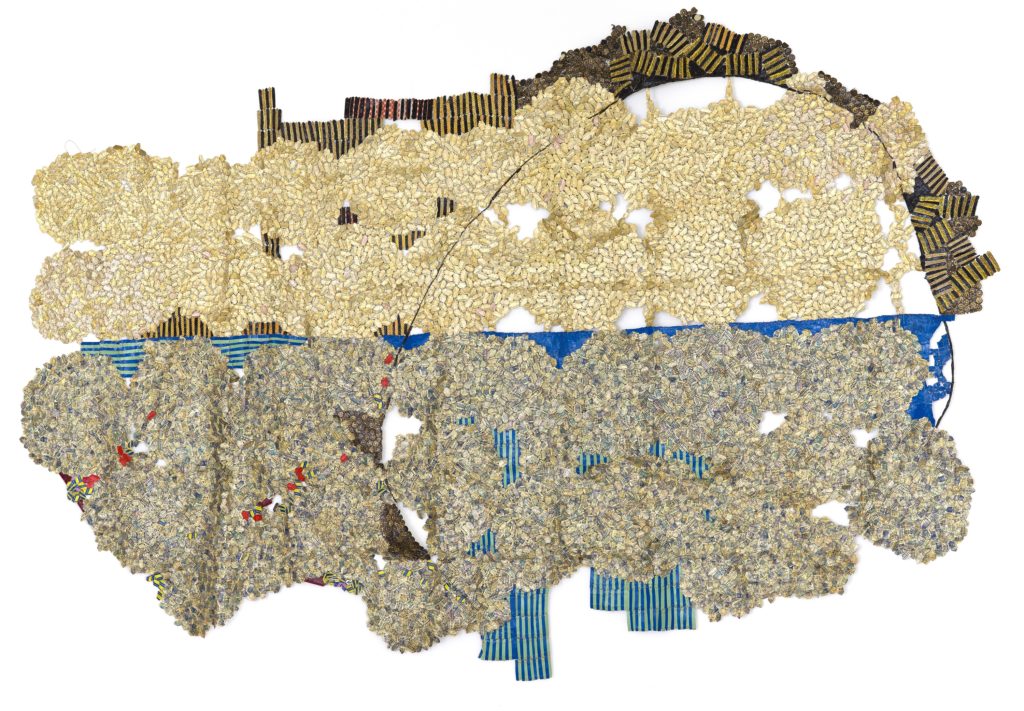
El Anatsui’s Horizon (2016).
Courtesy Goodman Gallery.
I am curious what you think of the rising interest in
identity-based art—art where the work hinges on the individual’s
identity being reflected through its subject matter.
It’s great that you raise that
question. I think that it is really problematic, especially when
the trend is based on political and economic constructs and driven
by market speculation, which is really a counterpoint to what art
is. Art is a global language, and framing artists geographically or
by identity is incredibly problematic. It is also something that I
find comes up all the time, and it’s a matter of constantly trying
to educate people and shift them away from really undermining
political and economic ideas.
You will be changing your booth presentation three times
during the course of Frieze. Why?
We really wanted to show more of
what our program stands for in the art-fair context. Globally, we
have seen that fairs are places to sell ideas and that they can
contextualize a gallery program. This is why we wanted to try a
different approach.
I noticed that you are highly selective about the fairs that
Goodman Gallery attends.
We really are far away. It is
hugely costly for us to do international art fairs, especially with
a weakening South African currency. But I also do feel that the art
fair model as it currently exists, being in every city in the
world, is just totally soul-destroying. I am more interested in
being at home and focusing on our programming locally, which feeds
back into the cultural landscape where the gallery
is.
Of course, fairs are also
critical ways of galleries to engage with international audiences,
particularly when you are from South Africa. So we are very reliant
on the Basels and the Friezes. But also, being a mother and having
a small child, one has to try to create some sort of a
balance.
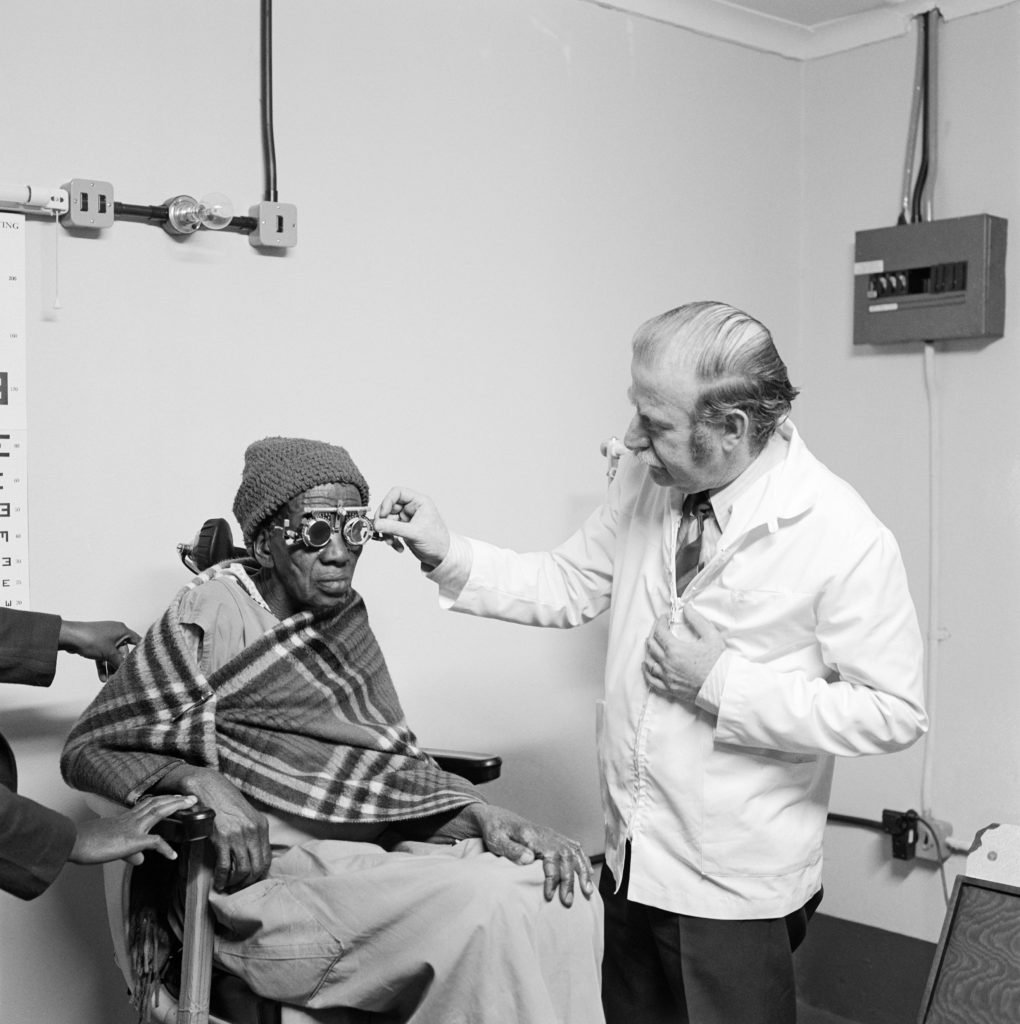
David Goldblatt’s Eyesight
testing at the Vosloosrus Eye Clinic of the Boksburg Lions
Club (2_28640) (1980). Courtesy Goodman Gallery.
How would you describe the market for African
contemporary art? Is there an imbalance in the kinds of
collectors that are now, maybe suddenly, gravitating toward works
from the continent?
More and more, we do have to work to make sure that key artworks
are placed in museum collections or in the right hands to avoid
speculative trade. The art market in South Africa is growing very
rapidly, but it remains relatively small compared to the global art
market. There are an increasing number of collectors on the
continent buying, but there is no question that there are many more
collectors interested globally, so a number of great works do end
up leaving the country.
However, more and more institutions are opening on the continent
that are acquiring important works. And it was extremely exciting
at Art Joburg this
year, seeing such a diverse and new collector base show up at the
VIP preview. There has been a significant shift.
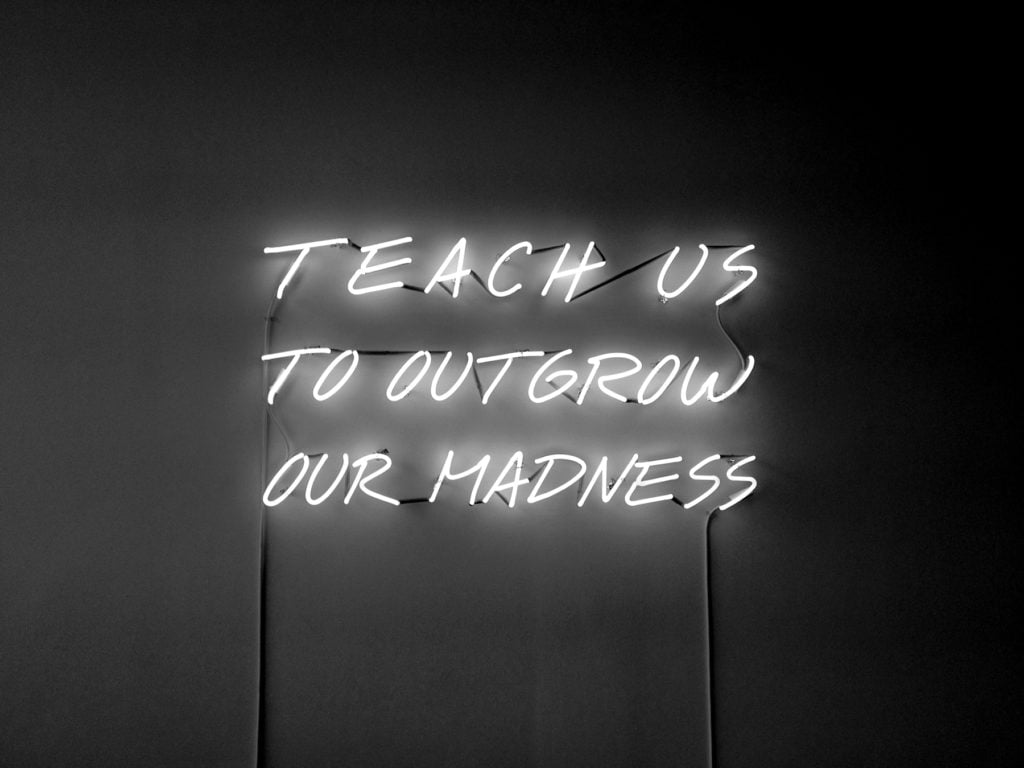
Alfredo Jaar’s Teach Us To Outgrow
Our Madness (1995). Courtesy Goodman Gallery.
Our fall 2019 edition of the artnet Intelligence
Report examines several art hubs that are emerging in
Africa right now. There is a lot of speculation around what these
art scenes will look like on the continent in ten years, and which
might emerge as the global meeting point for the trade,
the way Hong Kong has emerged in Asia. What’s your
take?
There is a massive, growing collector base on the continent and
I think that this will just continue. If I look back at where we
were ten years ago, it becomes clear to me that the market as we
know is really only just beginning. Looking forward another ten
years, it is important to remember that we, too, are at the center
as well and a part of global discourse. Many artists from the
Global South can and will be written into art history for the long
run. It will not just be a passing, fashionable moment.
The art world is facing major challenges. The way that
things have been working are no longer working, and there are
important questions swirling around how the art industry will face
all manner of problems, from climate change to problematic
patronage—the list goes on.
I think the critical surviving tool will be collaboration. There
needs to be shift, because it has been very much about the market
recently, and I think we need to go back to art centered around
making a difference in society. And through collaboration between
artists, galleries, and institutions, we can create a
counterbalance. In that sense, I am really looking forward to
collaborating with as many people as possible in our new
location.
The post ‘It Will Not Be a Passing, Fashionable Moment’:
Goodman Gallery’s Liza Essers on Why the Art World’s Axis Is
Tipping Toward Africa appeared first on artnet News.
Read more https://news.artnet.com/art-world/goodman-gallery-liza-essers-frieze-1663444
Further reading


Leave a comment