
Now You Can See Long-Faded Details in Leonardo da Vinci’s ‘Last Supper’ Thanks to Google and the Royal Academy in London
The Royal Academy of Arts in
London (RA) is the latest institution
to partner with Google Arts and Culture, the tech giant’s platform for the
digitalization of the world’s most famous
artworks.
Over 200 objects from the RA’s
collection are now available for digital exploration on Google,
with works by artists as varied as J.M.W. Turner, Thomas
Gainsborough, and Kiki Smith.
Twenty of the works are
specially presented in Gigapixel clarity, an ultra high resolution
made possible by a proprietary Google camera.
But one artwork in particular
stands out: a copy of
The Last Supper
made by Italian artist (and pupil
of Leonardo da Vinci) Giampietrino. (Some believe that another of
Leonardo’s students, Giovanni Antonio Boltraffio, also worked on
the copy.)
The painting was likely done
shortly after—if not at the same time—as Leonardo’s masterpiece,
which lives at the Convent of Santa Maria delle Grazie in
Milan.
But there are key differences
between the two.
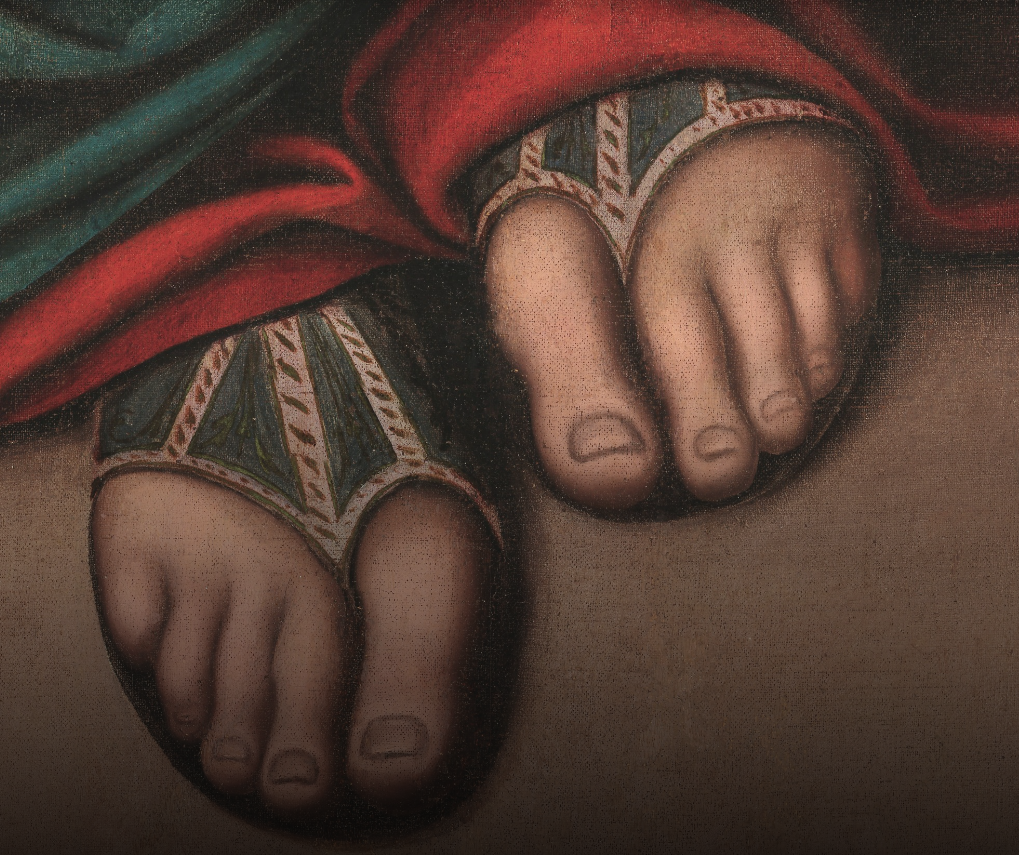
A detail from the copy of Leonardo’s
The Last Supper (c. 1515-20) attributed to Giampietrino and
Giovanni Antonio Boltraffio. Courtesy of Google Arts and
Culture.
Most importantly, whereas
Leonardo’s artwork was painted in tempura and oil on a wall—an
experimental technique at the time—the facsimile was done in good
ol’ fashioned oil paint on canvas. As a result, the latter has aged
much better, lending historians key insights into the long-faded
masterwork in Milan.
And now you, too, can
explore The Last
Supper as if you were
just inches away.
With Google’s augmented-reality
tool, you can zoom in on
details in the pupil’s
painting that didn’t survive the test of time in Leonardo’s, such
as Jesus’s feet, and the raised finger of Thomas—an allusion to the
disciples’ incredulity about the resurrection. You can also see the
cellar of salt knocked over by Judas, foreshadowing his
betrayal.
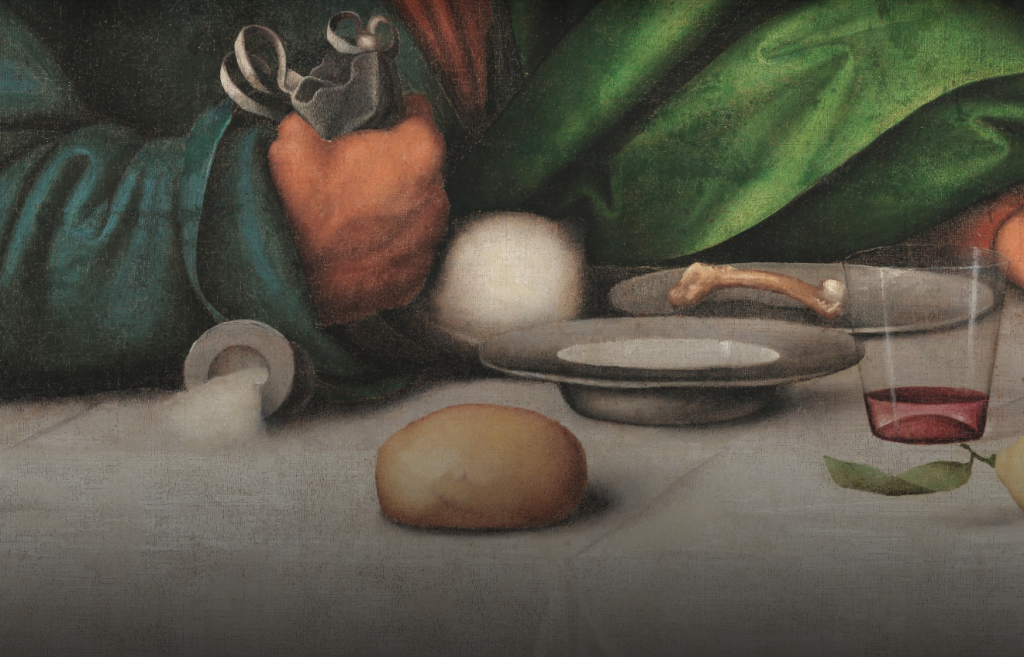
A detail from the copy of Leonardo’s
The Last Supper (c. 1515-20) attributed to Giampietrino and
Giovanni Antonio Boltraffio. Courtesy of Google Arts and
Culture.
The RA bought the copy in 1821
for 600 guineas. At the time, it was by far the most expensive
object in the institution’s collection, and required a special
meeting of its academicians to approve the purchase.
Other notable works in the
school’s collection digitized by Google include John Constable’s
1825 artwork The Leaping
Horse; a biblical scene
painted in 1865 by Edward Armitage; and numerous artworks by
18th-century painter—and former RA president—Joshua
Reynolds.
See the full collection of
digitized artworks here.
The post Now You Can See Long-Faded Details in Leonardo da
Vinci’s ‘Last Supper’ Thanks to Google and the Royal Academy in
London appeared first on artnet News.
Read more https://news.artnet.com/art-world/royal-academy-google-arts-and-culture-1888340
Further reading


Leave a comment