
“Politically Engaged Art” Needs Greater Empathy
There has been a lot of public debate over what anti-censorship advocate Joy Garnett recently describes as “artworks that address the socially volatile issues of police brutality andracially motivated violence”, usually by white artists that use important and racially charged images of oppressed black and brown bodies as subject matter. According to Garnett, “the critique, discussion and outrage surrounding these works have not focused on their quality, their meaning, or the intentions behind them-—it has shifted instead to artists’ racial backgrounds and whether they have the right to tell a story specific to a race or group to which they do not belong [and] accusations of ‘cultural appropriation’ have become commonplace”. Garnett reviews instances in which public outrage has caused museums and galleries to shutter exhibitions of such artworks and concludes that the “cultural atmosphere evidenced by [public challenges to the right of artists to use such images] is chilling to any creative artist or institution that may consider approaching difficult questions around race, sexuality or politics, [and makes] real debate about emotionally charged issues over which we often disagree nearly impossible.”
While I of course agree with Garnett that a cultural atmosphere of routine challenges to artists who use racially charged subject matter might stifle creativity and cow institutions into self-censorship, I find her overall argument tone-deaf to the real issues underlying why such challenges have become more commonplace. We need to advance the kind of debate over emotionally charged issues by artists and artworks that approach difficult questions about race, sexuality or politics that Garnett considers the rewards of artists’ right to free expression. However, the issue is not whether an artist’s race disqualifies then from tackling certain subjects but that the right to free speech is being used as a means of continuing undue appropriation of the history and culture of black and brown peoples in the USA, in a manner that is not reciprocal and totally lacks empathy.
It is certainly useful for all freedom-loving peoples to support artworks that criticize instances in which racial injustice prevail in America but not when that criticism replicates the injury of racial oppression in the first place. Garnett’s reference to the Whitney Biennale controversial exhibition of Dana Schultz’s painting of Emmet Till’s mutilated body as art simply does not recognize the humanity of Till’s relatives who still have to endure news of wanton and indiscriminate slaughter of young black men by racist police officers decades after this iconic murder took place. If we normalize an ersatz criticism of racism that profits by deploying images of racist atrocities then we actually contribute to normalizing racism rather than challenging it.
One could argue for freedom of expression if we actually see any evidence that reactivating such painful images causes any positive changes in society. In that regard, Garnett fails to see the utter lack of empathy in Schultz’s painting. Emmet Till was lynched. In a context of continued literal and metaphorical lynching of blacks, how does a white artist justify reverting to images of lynching in an environment where we are actually seeing a reversal in the small gains made for the freedom of black Americans? Above all, and I have asked this question over and over again, why do these white artists who are quick to use images of black suffering in their art NEVER ever use images of Holocaust victims? When was the last time you heard about a white artist reconstructing an Auschwitz gas chamber as an art exhibition project, or using appropriated images of emaciated Holocaust victims as installation pieces? What do they know about steering away from such material that fails to register when white artists freely reference images of the abominable treatment of black people in all facets of US history? Clearly there is a hierarchy of relevance here, where images of the suffering of certain people matter but that of Africans and their descendants do not. Clearly, the white artists who use images of black suffering are engaged in strategic placement: the notoriety garnered from public controversy often elevates the value of their artworks, which therefore renders their motives suspect.
We need to have a more serious discussion of what freedom of expression means when it seems it only values the efforts of white people to deploy such rights. Militant whites frequently show up carrying dangerous looking guns and weapons in public places without being challenged while black men, women and children and routinely shot by police for carrying even toy guns, not to mention actual guns. White women wear cornrows and braids as a fashion statement but black women who wear blond wigs are seen as crossing a dangerous style barrier. Harlem girls invent the Twerk but Miley Cyrus makes millions of dollars from using that dance move without any acknowledgement of its origins (see also Elvis Presley’s status as “king of rock and roll”). African Americans don’t win “Album of the Year” for Country music, which operates as if black people don’t exist even as many white country musicians continue to benefit from cribbing on black inventions in music. White appropriation of black music, culture and lifestyle therefore goes on unabated and makes millions of dollars for such artists while black artists they crib from continue to live in poverty and obscurity. The crime of stealing and owning black bodies has not been confronted by an America that continues to be in deep denial about the impact of centuries of slavery on generational black poverty. In the contemporary era, this history is now compounded by the theft of black genome. For example, John Hopkins University has made obscene amounts of money from culturing the immortal HeLa cells of Henrietta Lacks, an African American woman whose cells and genome were stolen without her permission, while her family currently lives in poverty.
Freedom of expression is meaningful only if it applies to everyone. Since all of us, black or white, come with the baggage of history, we must always think of whether every American is allowed to express such freedom equally regardless of race or orientation. More importantly, there should be greater sensitivity to the impact of our freedoms on others, since this is the only caveat to those freedoms that matter: we are free to do, think and behave in expression of that right to our freedoms as long as we do not impinge on the freedom of others. Emmet Till’s family have the freedom not to be repeatedly confronted with images of the murderous injustice that snatched away their son before he even had a chance to actualize his own right to free expression (he was killed for supposedly whistling at a white woman). Tamir Rice’s family deserves to be free from constant reminders of his callous murder by a trigger happy policeman in the same country where the white man who shot up a Church and killed nine African Americans at worship was arrested alive by white policemen who then went on to buy him a meal before booking him for his crime. Black people have a right to be free from having the darker facets of their history constantly deployed as a gimmick by publicity seeking white artists.
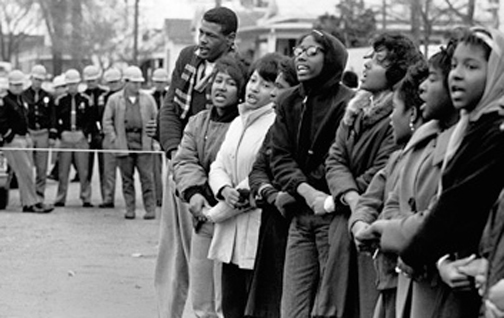
Art seems to be the only social context in which we argue for unfettered freedom of expression, in the misguided assumption that this allows for the greatest good in terms of creativity. However true art has always emerged from careful consideration of the physical, mental and spiritual concerns of artists casting a keen and compassionate eye on their social contexts. We have reached a point of saturation in the ability of things to shock and deprived of easier targets, artists everywhere are resorting to more outlandish efforts to generate “shock” by going for images they know are sure to gin up controversy. Increasingly, white artists turn to images of black bodies and black suffering for this kind of shocking subject matter. However, an artist that appropriates the painful history and struggle of black and brown peoples without compassion and for the notoriety that accrues from such appropriation needs to have both their artworks and actions condemned. For the use of such images by white artists to be credible, we need to see clear evidence in the artist’s oeuvre of an active engagement with efforts to redress black suffering in the contemporary world. And also, the heritage of black American life does not only subsist in images of suffering black bodies. It is telling that you don’t see white artists representing images of black achievement even though such images abound. The death of Emmet Till unfolded along a massive civil rights struggle. White artists seeking to comment on American racism should also be willing to celebrate images that reflect African American struggles for equality and dignity rather than only images of their pain and degradation.
Image: “We Shall Overcome”


Leave a comment