
Who Was the Most Influential Curator of the Decade? Dozens of Art-World Experts Told Us Their Judgment, and Why
As the turbulent and event-filled 2010s come to an end, we
asked more than 100 artists, curators, gallerists, and other
art-world figures to tell us their picks of the most influential
art and art-makers of the decade. Here is a selection of their
responses.
Zoe Whitley
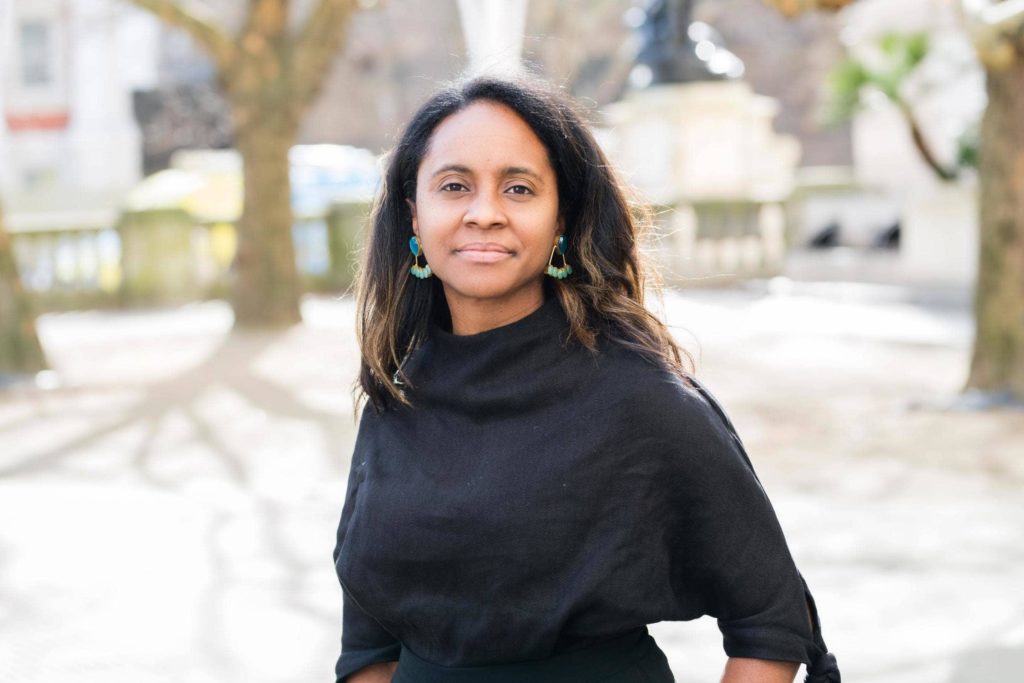
Zoe Whitley. Photo by James
Gifford-Mead.
Zoe Whitley, who was recently named senior curator at the
Hayward Gallery in London. She curated “Soul of a Nation,” which
traveled from the Tate in London to New York and LA. Known for her
risk-taking programming and commitment to spotlighting a diverse
range of artists, Whitley will, without a doubt, organize impactful
exhibitions and programs in the near future.
—Isolde Brielmaier, curator, International Center for
Photography
Klaus
Biesenbach
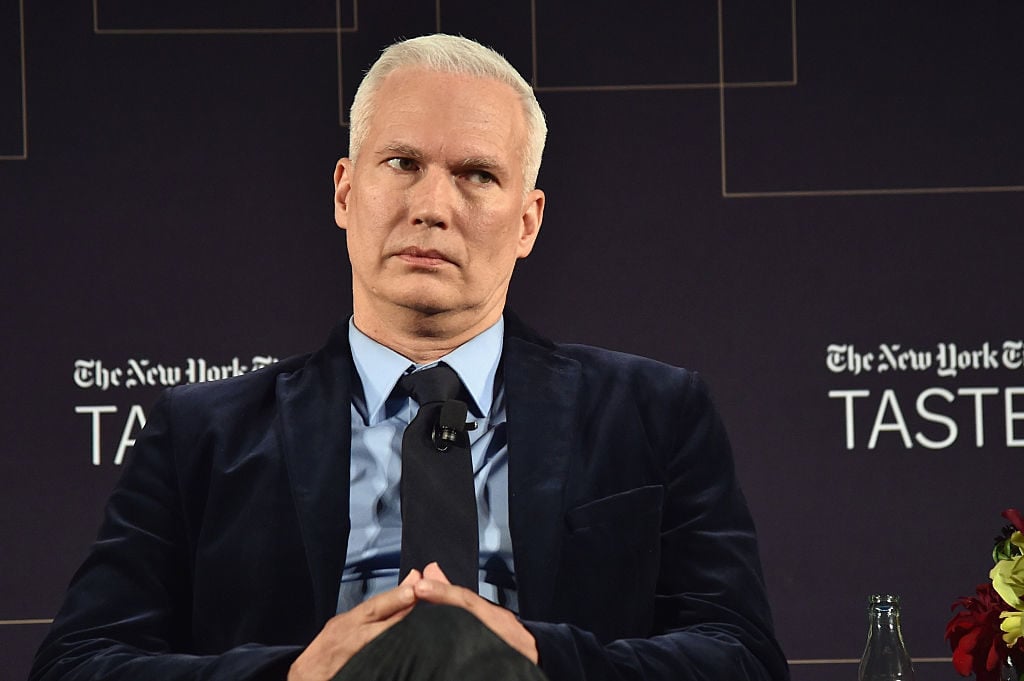
Klaus Biesenbach. Photo by Mike
Coppola/Getty Images for New York Times.
Klaus Biesenbach. He’s clearly
one of the most knowledgeable curators alive and a huge advocate
for fusing cultures and genres in shows, bridging the east and
west. More importantly, he supports and incubates young
contemporary artists across nations, breaking down
barriers.
—Adrian Cheng, founder, K11 Art Foundation
Hilton Als
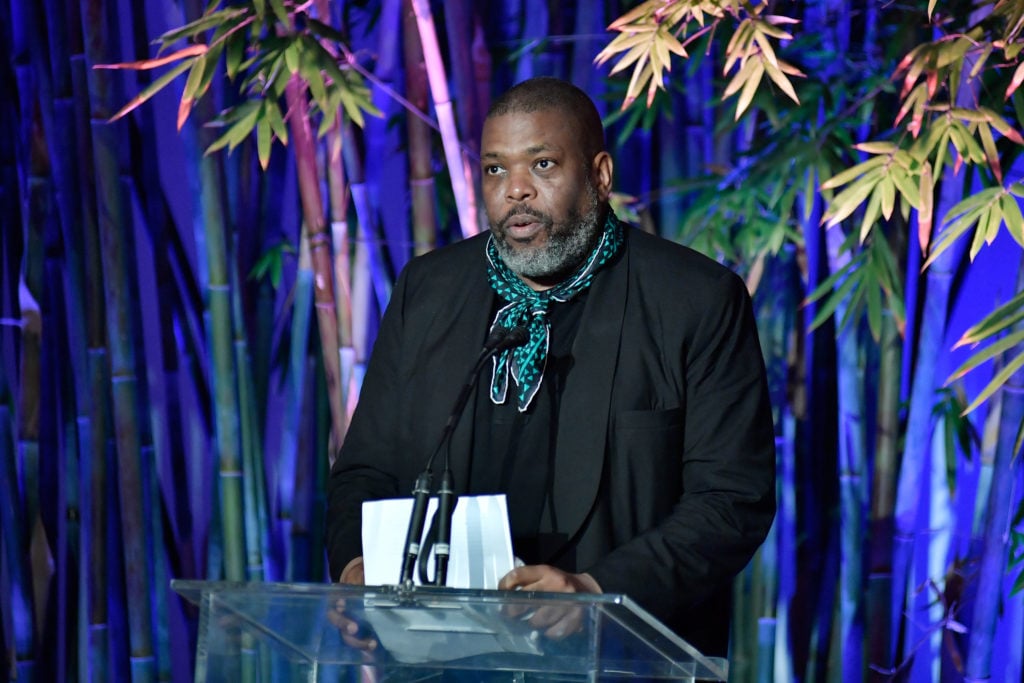
Hilton Als. Photo by Stefanie
Keenan/Getty Images for Hammer Museum.
I know Hilton Als is not a curator in the traditional sense, but
the artist-as-curator, or writer-as-curator, paradigm is really
attractive to me because we get to see the curator’s personal
proclivities and biography get beautifully tangled up with the
art. In the best cases, like in “Alice Neel: Uptown” or “God
Made My Face,” both of which Als curated at David Zwirner, we
discovered that even art we already know and love can be made more
special, more nuanced, when seen through a particular lens. I can’t
think of any other presentation of Neel’s paintings that has had
such a noticeable influence on the public perception of her
work.
—Anna Glantz, artist
Matthew Higgs
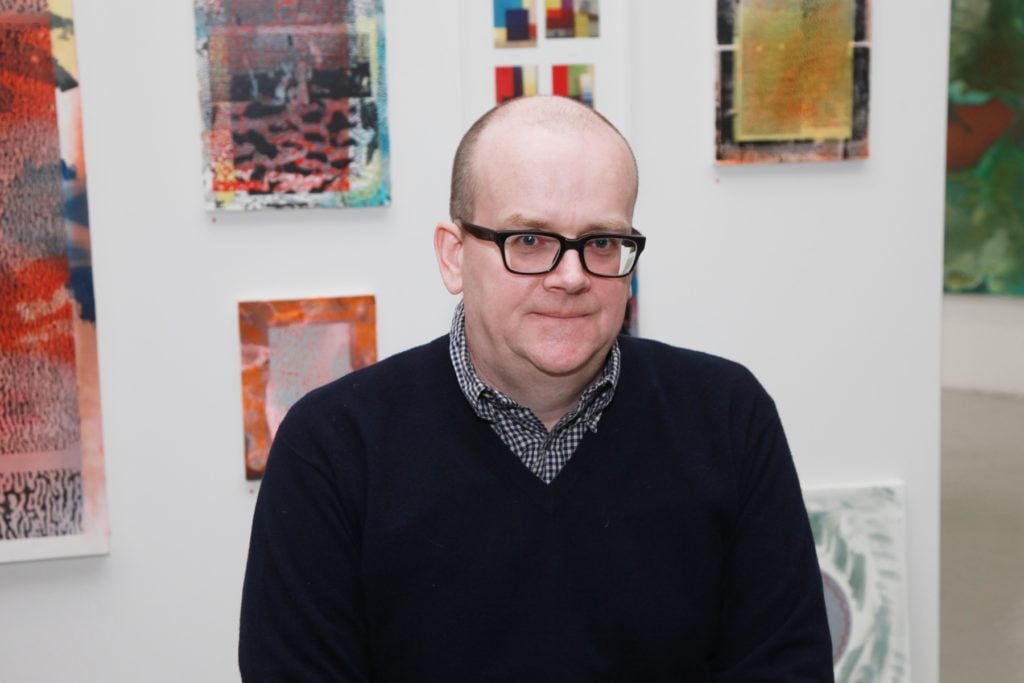
Matthew Higgs. Photo: J. Grassi/PMC, ©
Patrick McMullen.
Hands down, Matthew Higgs, who
sees more than anyone, and has identified and spring-boarded so
much talent through his work at White Columns.
—Elizabeth Dee, art dealer
Carolyn
Christov-Bakargiev
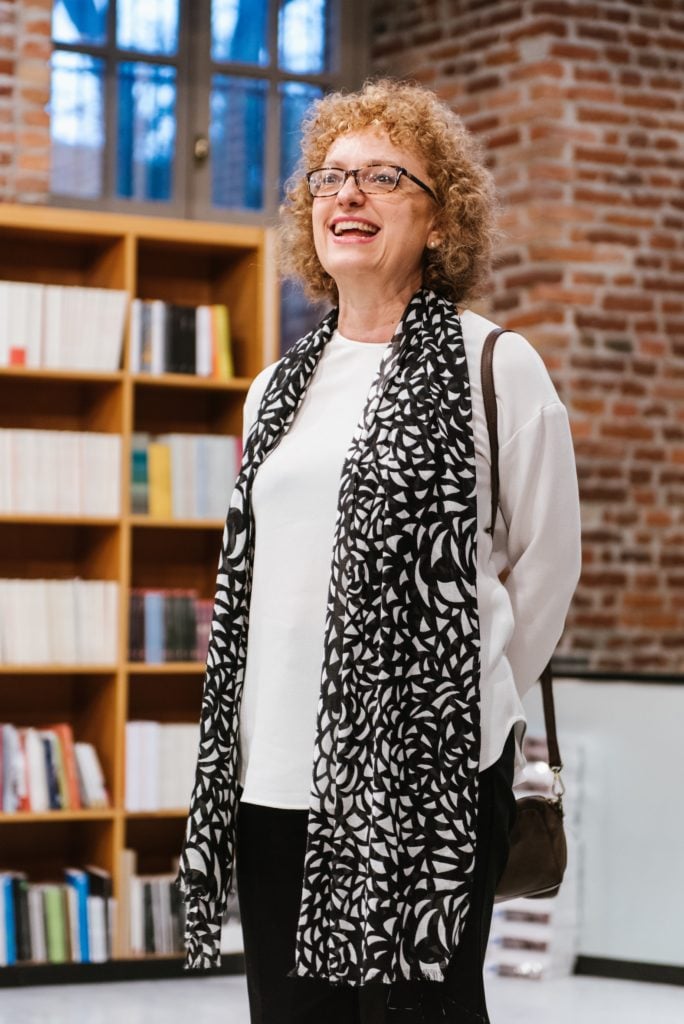
Carolyn Christov-Bakargiev. Photo by
Andrea Guermani.
Carolyn Christov-Bakargiev,
especially in curating Documenta in 2012. She expanded the
intersection of art and other disciplines such as anthropology,
politics, science, and music.
—Estrellita Brodsky, curator, collector, and
philanthropist
Frances
Morris
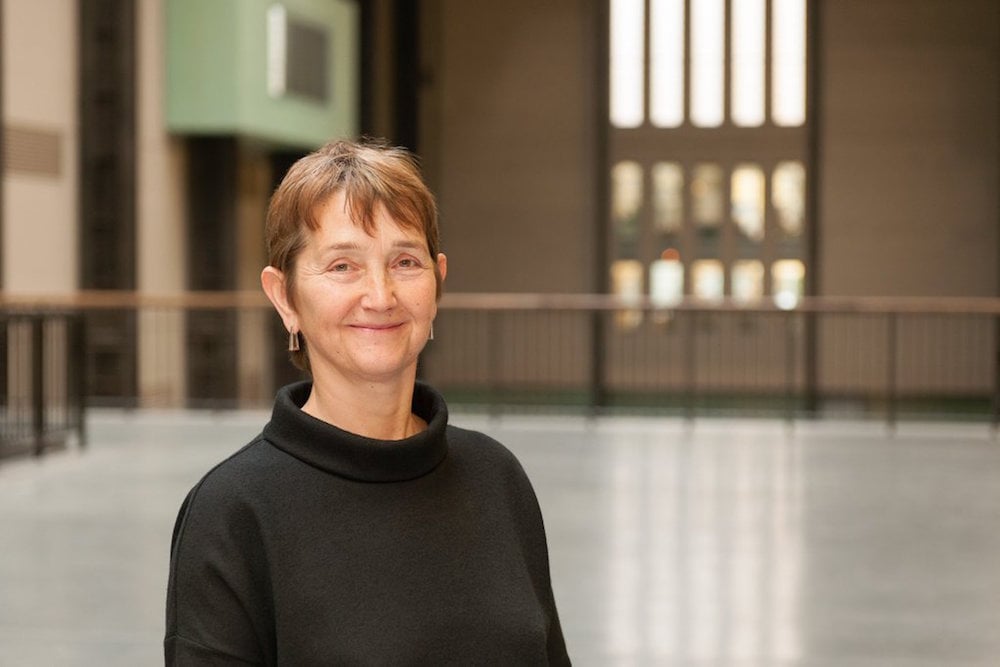
Frances Morris.
Frances Morris, the director of
Tate Modern, not because her role is very visible or obvious at
Tate Modern, but because, as its director, she helps to establish
its program, which gives her an immense amount of authority in the
field.
—Charles Saumarez Smith, chairman, Royal Drawing
School
Jakob Lena
Knebl
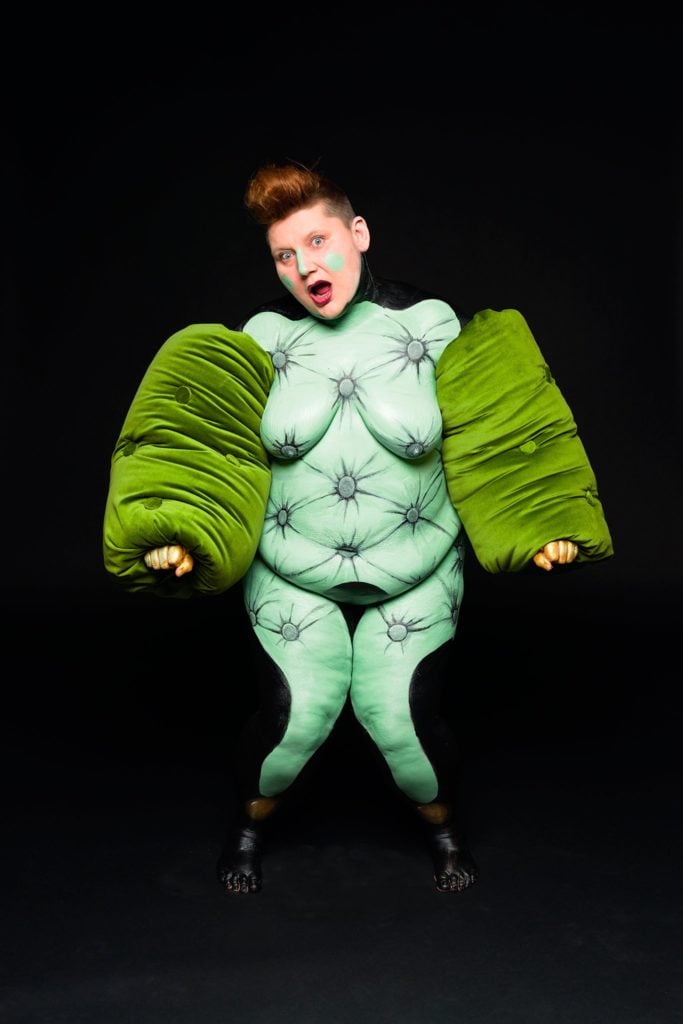
Jakob Lena Knebl, Chesterfield
(2014). Courtesy of Georg Kargl Fine Arts.
Artist and curator Jakob Lena
Knebl curated a fabulous show in 2017 based on works from the Mumok
collection. Knebl has a unique way of dealing with art, creating
almost tangible networks between interior design, modernist
sculpture, textiles, performances, and paintings.
—Marc-Olivier Wahler, curator
Susanne
Pfeffer
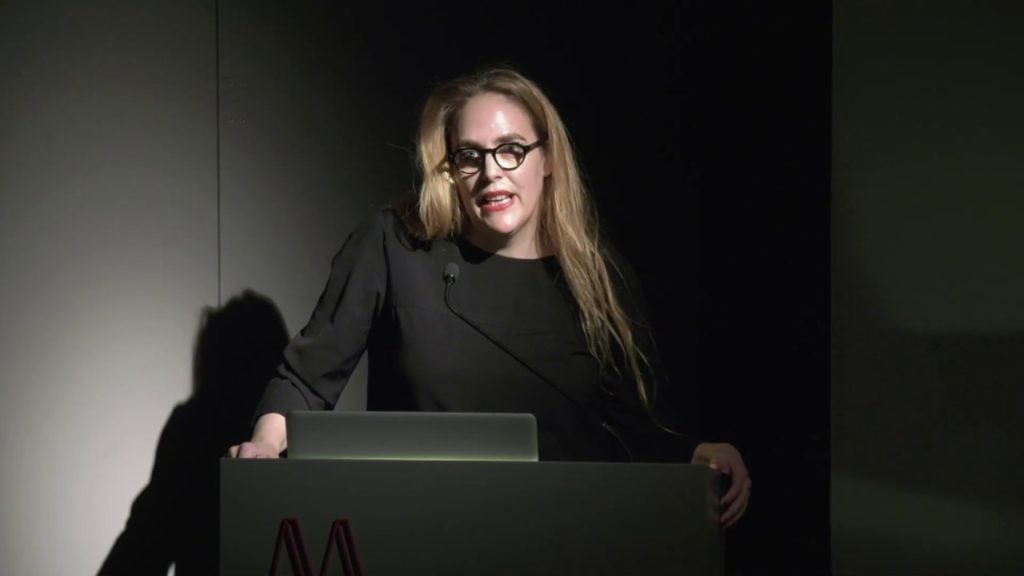
Susanne Pfeffer. Courtesy of
YouTube.
Susanne makes a new generation
of artists from across the globe visible and keeps doing
exhibitions that make me curious. She also shows how stuck all the
curators of my generation are in exhausted formats or institutional
elephantiasis.
—Daniel Birnbaum, former director, Moderna
Museet
Katy Siegel
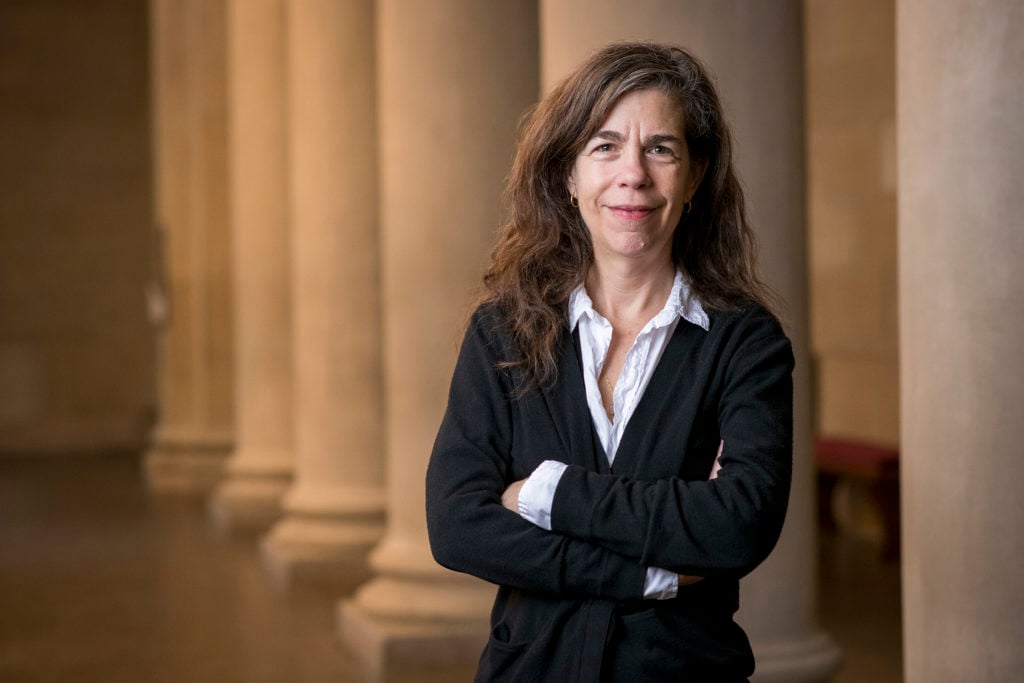
Katy Siegel. Image courtesy of
Christopher Myers Photography.
From her groundbreaking
examination of painting in New York in the 1970s,
“High Times, Hard Times: New
York Painting 1967–1975,” to
her work alongside Okwui Enwezor on “Postwar,” Katy Siegel has merged a commitment to
deep, searching scholarship with a drive towards unearthing new
histories to render a more just and accurate history of
art.
—Christopher Bedford, director, Baltimore Museum of
Art
Katy Siegel and Chris Bedford.
Between the Mark Bradford exhibition at the 2017 Venice Biennale
and their efforts to redefine American art at the Baltimore Museum
with Bedford’s daring choice to sell works in the permanent
collection to purchase art by people who look like Baltimore’s
demographics, Siegel and Bedford put provocations into play about
the permeable line between inside and outside the
museum.
—Bridget Cooks,
professor, University of
California, Irvine
Thelma Golden
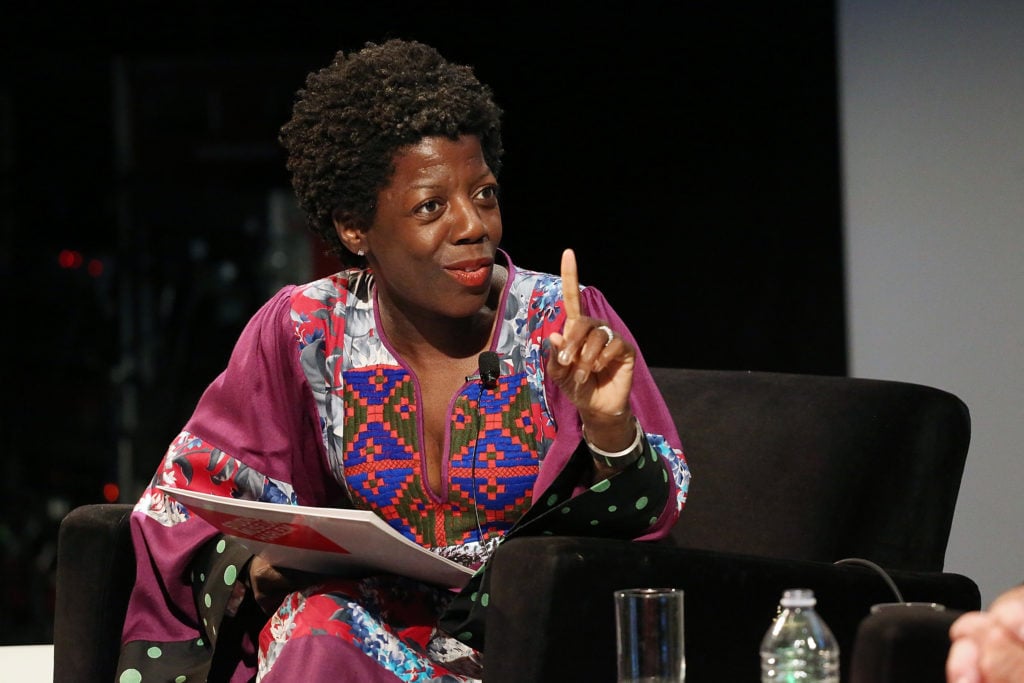
Thelma Golden. Photo by Mireya
Acierto/Getty Images.
Thelma Golden, who has nurtured
and supported a cadre of curators who have gone on to do important
work with widespread influence across this country and
beyond.
—Cara Starke, director, Pulitzer Arts Foundation
Thelma Golden for her leadership and dedication to reaching out
beyond the art world.
—Manuela Wirth, cofounder, Hauser & Wirth
Hans Ulrich
Obrist
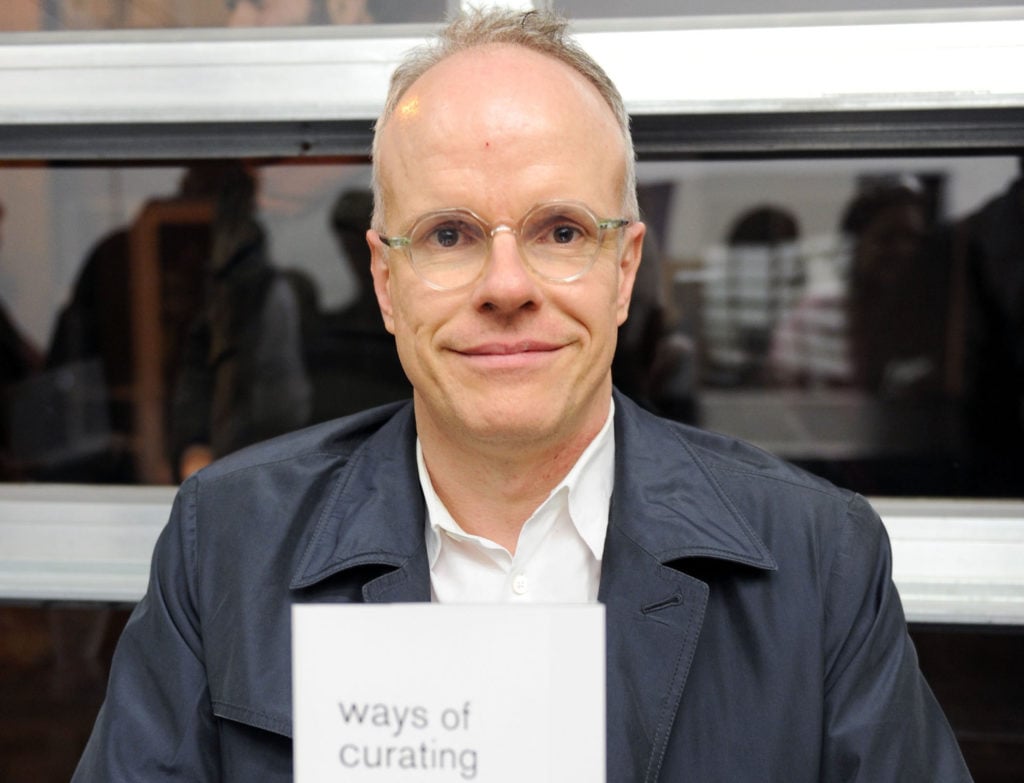
Hans Ulrich Obrist. Photo: Craig
Barritt/Getty Images for Surface Magazine.
Hans Ulrich Obrist might be
emblematic of how many roles a curator plays today: writer, editor,
curator, etc. He is incredibly prolific, which seems unique, given
that curators in past decades seemed more plotted and
methodical.
—Jason Stopa, artist
Hans Ulrich Obrist is the most
tireless, dedicated, and passionate curator I have ever met. Every
waking moment of his life—he barely ever sleeps—is given over to
artists. He offers his time, attention, ideas, and brand towards
the goal of sharing what they most want to share.
—Alexander S. C. Rower, president, Calder
Foundation
Hans Ulrich Obrist. His love of
conversation and introductions between artists always
surprise.
—Sarah Morris, artist
Hans Ulrich Orbist is a
phenomenon, a titanic brain with an immense appetite for knowledge
and an insatiable desire to embrace a multitude of disciplines.
Through his eyes, it is possible to have access to the world that
surrounds us, including, but by no means limited to, the
arts.
—Julia Peyton-Jones, director, Thaddaeus Ropac
Gallery
Bisi Silva

Bisi Silva. Courtesy of Wikimedia
Commons.
Bisi Silva. The late Nigerian
curator had an enduring impact on the creative scene on the
continent. Not only did she establish the Centre for Contemporary
Art in Lagos, she also founded Àsìkò in 2010, a radical arts
education program that had nearly 200 individuals participating
over its six editions in five cities on the continent. Seeing where
and what these creatives have gone on to achieve has been
incredible and is a testimony to Bisi’s resounding
impact.
—Touria El Glaoui, founder, 1–54 Contemporary
African Art Fair
The late Bisi Silva and the late
Okwui Enwezor are
constant inspirations, examples of curators who truly made a
difference in our field
and changed the rules and standards of the European- and the
US-centered contemporary art world by rewiring critical theory and art,
reconnecting global and local narratives, and creating networks and platforms
across the world.
—Nina Zimmer, director, Zentrum Paul Klee
Okwui Enwezor
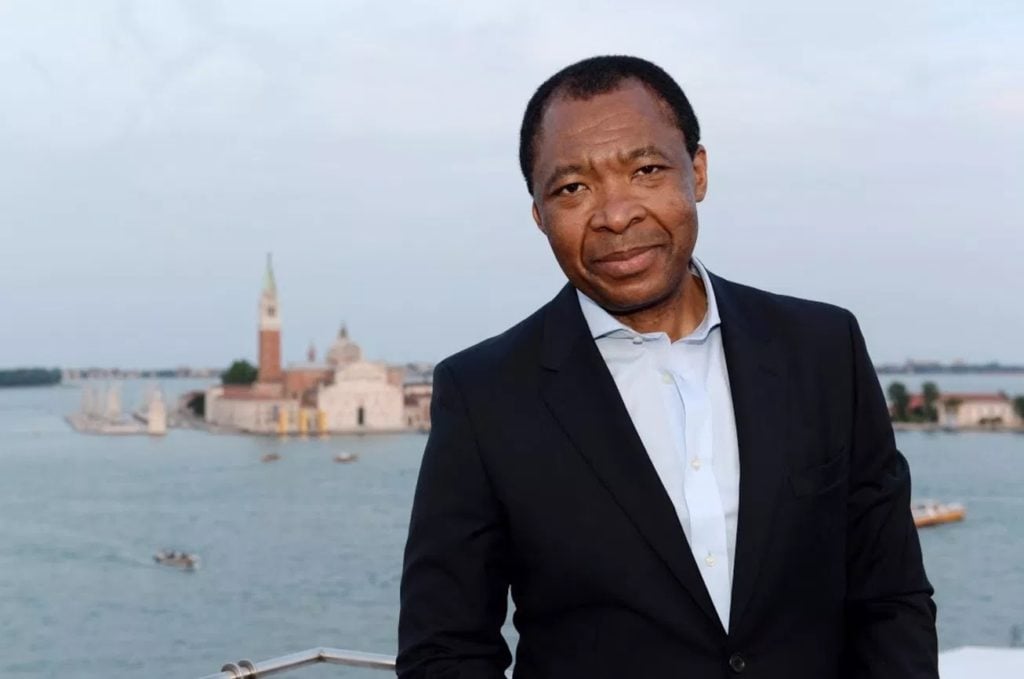
Okwui Enwezor. Courtesy of Giorgio
Zucchiatti.
Okwui Enwezor. Without his
efforts and his vision, we would all still be operating in a racist
and Eurocentric art world.
—Coco Fusco, artist, writer, activist
The purpose of exhibitions is to
write the future of art history. Over the past decade no curator
has done this with greater intellectual power and warmth than Okwui
Enwezor. Influence is
all about the present and, although he may no longer be with us,
Enwezor’s exhibitions without a doubt will keep on extending into
the future.
—Lisa Le Feuvre, executive
director, Holt/Smithson Foundation
I can’t think of any curator who
has looked at more art from more places with such rigor and empathy
than Okwui Enwezor. By doing so through platforms such as the 2015
Venice Biennale, he ensured that modern
and contemporary art
from beyond Europe and North America could no longer be excluded
from serious
discussions about the art of our times.
—Michael Brand, director,
Art Gallery of New South Wales
The 2010s marked the close of
the career of a curator who profoundly shaped international
exhibition-making over three decades. Okwui’s 2015 Venice Biennale
was the culmination of a lifelong change-agenda to rewrite the
canons of art history.
—Olga Viso, former director, Walker Art Center
He has been influential for
decades, of course, but his passing offered the opportunity to
assess the far reach of his work, which dethroned Western European
and Northern American narratives of art to make way for artists
from all over the world, particularly those from the global south.
His influence is everywhere—the new MoMA is just one example—and
his spirit is alive in the work of many curators today, including
Eungie Joo, Candice Hopkins, Mami Kataoka, and Gabi
Ngcobo.
—Eva Respini, chief curator, Institute of Contemporary Art,
Boston
The late Okwui Enwezor. An
original thinker, he did much to reorient curatorial practice
beyond a Euro-American axis. His Johannesburg Biennale in 1996 and
his more recent Venice Biennale in 2015 heralded a new focus on
identity politics, one that we are witnessing now.
—Melissa Chiu, director, Hirshhorn Museum and Sculpture
Garden
No one has done more to shift
art-historical thinking and curatorial practice towards a more
comprehensive, complex, and nuanced global perspective than Okwui
Enwezor.
—Alexis Lowry, curator, Dia Art Foundation
Enwezor’s large-scale
exhibitions displaced western art from the center as he presented
contemporary art juxtaposed with world history and cultural
exchange.
—Salvator Salort-Pons,
director, Detroit Institute of Art
Okwui Enwezor represented the
best curators have to offer: challenging, global exhibitions in
which the artists and their work really sing. Even though some of
his most influential curatorial projects happened outside the last
decade, his vision and leadership allowed for a new generation of
curators who were mindful of and invested in decentered curatorial
practices. Enwezor changed the art world for the
better.
—Justine Ludwig, executive director, Creative Time
Okwui Enwezor, but he could have been my answer also for the
previous decade. Especially today, after his premature death, we
must acknowledge his pivotal role in enlarging the horizons of the
art world and in forging a new approach for our global age.
—Arturo Galansino, director, Palazzo Strozzi
Okwui Enwezor is probably the
most influential curator of the last two decades, and perhaps the next two as well.
Beyond his immense overall impact throughout his career, three of
his most era-defining exhibitions took place in the 2010s:
“Rise and Fall of Apartheid:
Photography and the Bureaucracy of Everyday
Life”; “All the World’s Futures”;
and “Postwar:
Art Between the Pacific and the Atlantic,
1945–65.” Each was
influential for a different reason, but what links them and
Enwezor’s work overall is his wide-ranging intellect and curiosity,
and his commitment to rigorous study, expanded art histories, and
the stories and peoples of the African
diaspora.
—Rujeko Hockley, curator, Whitney Museum of American
Art
The post Who Was the Most Influential Curator of the Decade?
Dozens of Art-World Experts Told Us Their Judgment, and Why
appeared first on artnet News.
Read more https://news.artnet.com/art-world/most-influential-curators-2010s-1729779
Further reading


Leave a comment