
A Marvelous New Exhibition Argues that Verrocchio, Leonardo da Vinci’s Mentor, Deserves Far More Credit Than He Gets
Unless you’re an art history
major, there’s a good chance you’ve never heard of the Florentine
Renaissance painter and sculptor Andrea del
Verrocchio. But you’ve certainly heard of his greatest
pupil, Leonardo da
Vinci.
Though his star student would go
on to outshine him in the art historical canon, Verrocchio is
nevertheless regarded as one of the most influential artists of his
generation, one whose technical and conceptual contributions to the
arts paved the way for the High Renaissance in the early 16th
century.
And now, for the first time
ever, a survey of his work has landed in America.
On view now through January 2020
at the National Gallery of Art in Washington, DC,
“Verrocchio: Sculptor and
Painter of Renaissance Florence” brings together more than 50 of the master’s
artworks, including drawings, sculptures, and
paintings.
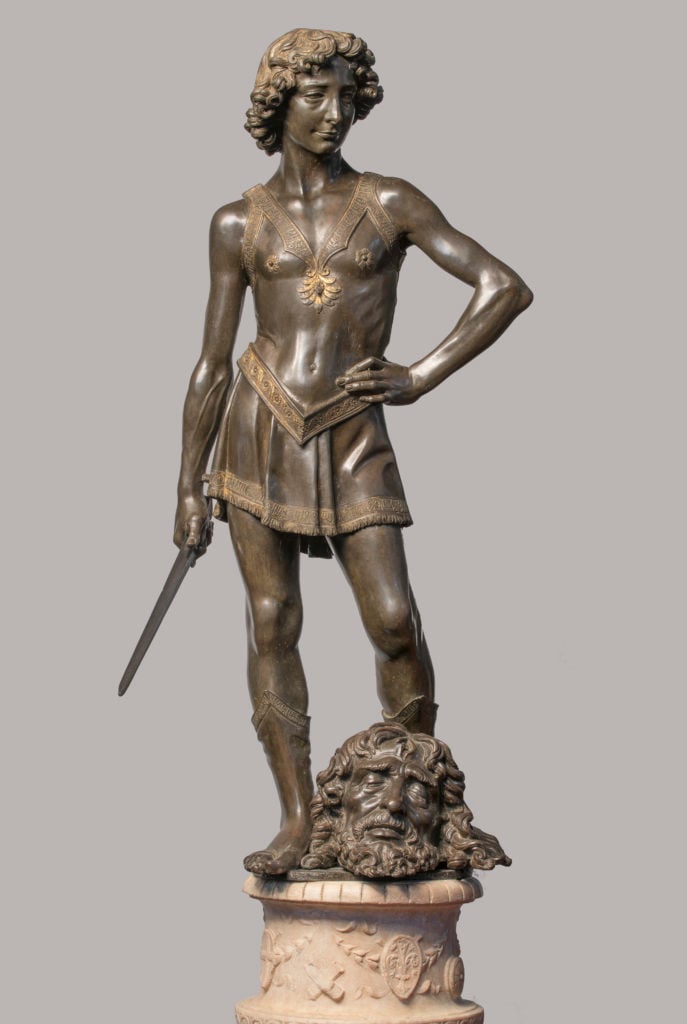
Andrea del Verrocchio David with
the Head of Goliath (c. 1465). Courtesy of the National Gallery
of Art.
Never have so many of
Verrocchio’s works shared the same room in the US, giving
viewers a proper opportunity to appreciate what a Renaissance man
he really was.
“Verrocchio was one of the first
major multidisciplinary masters,” Andrew Butterfield, the curator
of the exhibition, tells artnet News. “There was a high degree of
cross-fertilization of the arts in his mind. This is the first
exhibition where we can see the fruits of that.”
Verrocchio was born in Florence
around 1435. First trained as a goldsmith, he eventually picked up
painting and sculpture, likely studying at the workshop of Filippo
Lippi. By the time he was 30, Verrocchio was recognized as a master
of the first rank, a position that lead to a number of high-profile
commissions from the Medici family, who governed cultural and
political life in Florence.
He also operated a prominent
studio with a number of assistants, including Leonardo, who is
thought to have worked and lived with Verrocchio from a young age
until he was 26 years old.
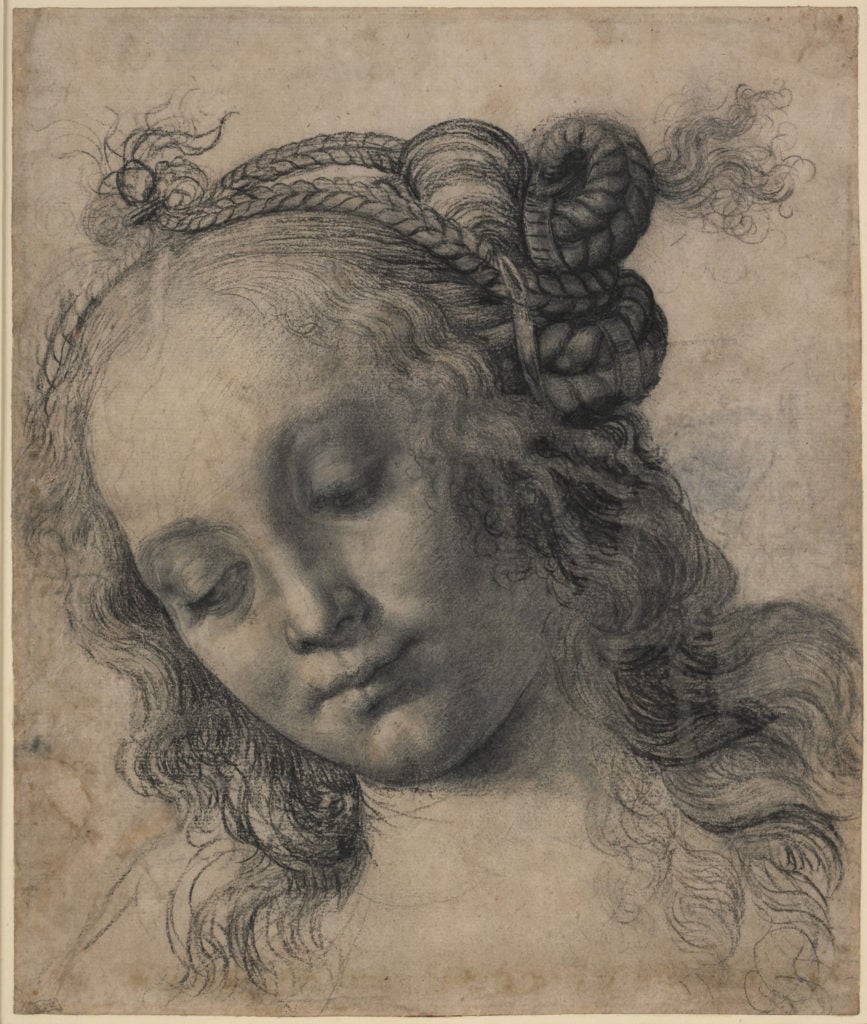
Andrea del Verrocchio, Head of a
Woman with Braided Hair (c. late 1470s). © The Trustees of the
British Museum. All rights reserved.
Butterfield, one of the world’s
leading experts on Verrocchio, does not shy from superlatives when
talking about the artist.
“He is of extraordinary
importance,” he says, noting that Verrocchio was particularly
progressive in drawing and sculpture. “His achievements really did
change the history of art, both because he changed what was
possible conceptually; and technically, and because of his
influence on the next generations of artists.”
Evidence points to Verrocchio
being the first artist to successfully use black chalk in his
drawings. Though today such a development seems quaint, it was a
significant contribution in the 15th century, opening up degrees of
tonal range that were previously difficult to imagine. Butterfield
points to one of the show’s central drawings,
Head of a Woman with Braided
Hair (c. 1475–78), which
is done with a great deal of depth, revealing what a master
draughtsman Verrocchio was.
The artist also brought
technical sophistication to bronze casting in an age when few
artists had the know-how to work in such a medium, which at that
time had been long dormant. In 1467, he was commissioned to create
a bronze work depicting Christ and Saint Thomas in a church in the
center of Florence. When the work was unveiled 16 years later,
Butterfield says, it was regarded as a “wonder of the
world.”
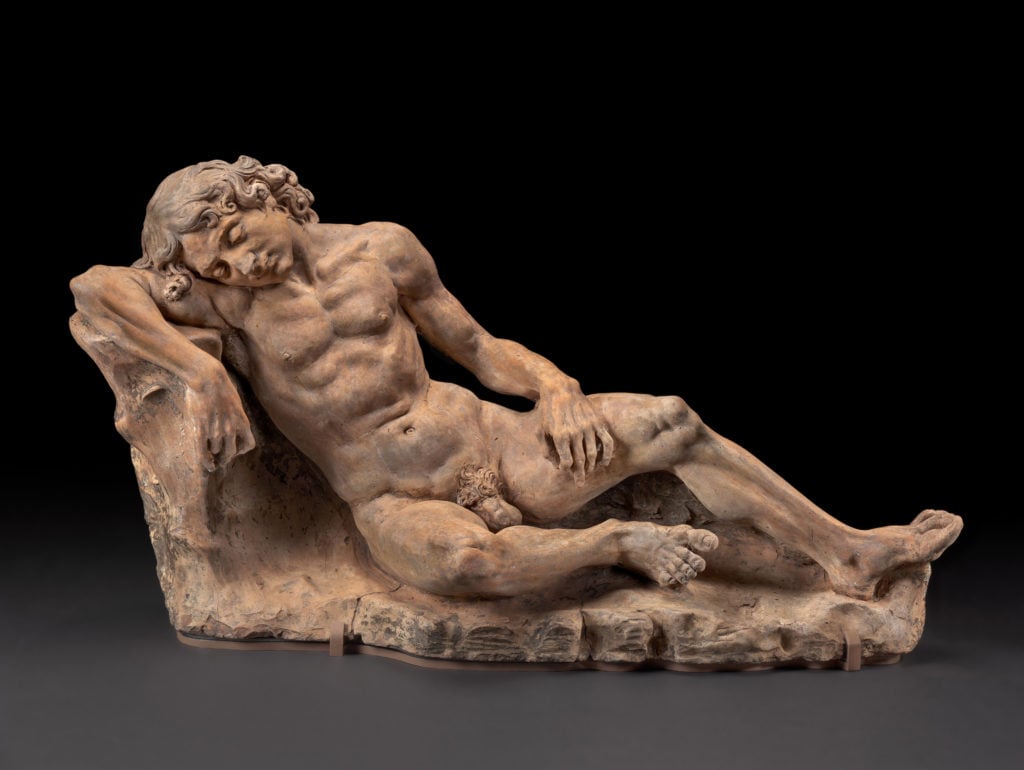
Andrea del Verrocchio,
Sleeping Youth (c. 1470–1480). Courtesy of the National Gallery
of Art.
With such a distinct influence
on the story of Renaissance art, one has to wonder: Why isn’t
Verrocchio mentioned in the same breaths as Leonardo, Michelangelo,
Raphael, or Donatello?
It’s a question of narrative,
Butterfield argues. Giorgio Vasari, the Italian thinker long
considered to be the godfather of art history, whose own
scholarship largely still defines the Renaissance canon, didn’t
favor Verrocchio.
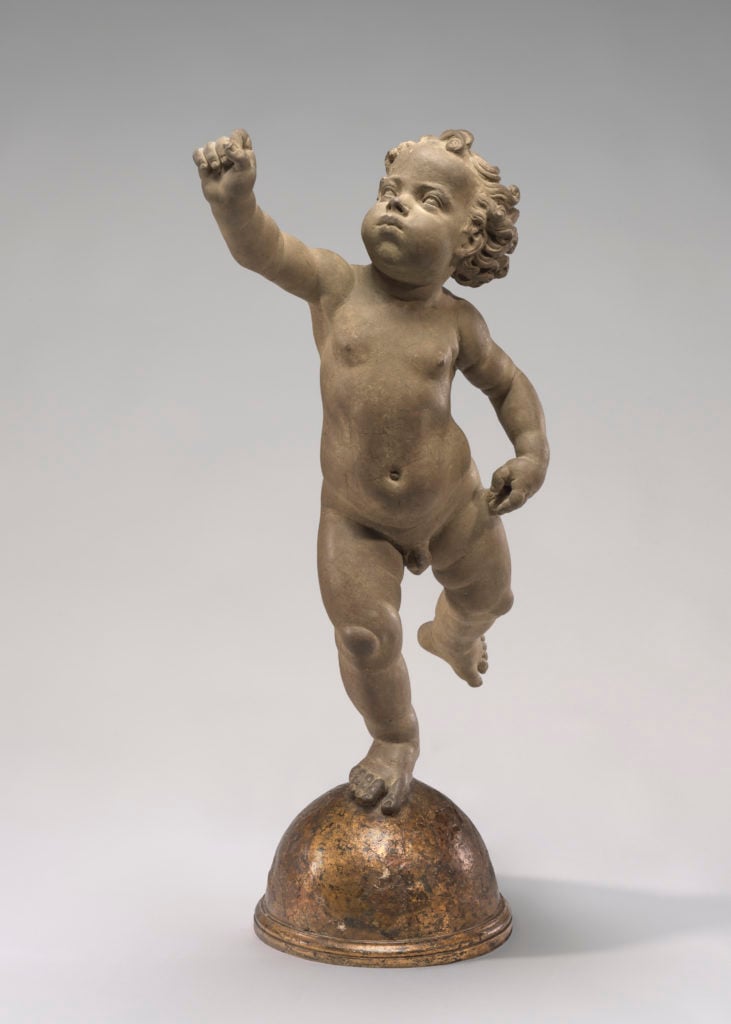
Andrea del Verrocchio, Putto Poised
on a Globe (c. 1480). Courtesy of the National Gallery of
Art.
“Vasari chose certain artists to
be the heroes of a generation, and in order to promote those
artist’s importance, he often downplayed other artists’
achievements,” Butterfield says, explaining that over the course of
the few decades in Renaissance study, scholars have learned to use
the “most important source for Renaissance history with a great
deal of caution.”
“Verrocchio: Sculptor and
Painter of Renaissance Florence” is on view now through January
12, 2020 at the National Gallery of
Art.
The post A Marvelous New Exhibition Argues that Verrocchio,
Leonardo da Vinci’s Mentor, Deserves Far More Credit Than He
Gets appeared first on artnet News.
Further reading


Leave a comment