
Artist William Powhida Doesn’t Have Room to Store All His Work—So He Wants You to Borrow It, For Free
A couple of years ago, the
artist William Powhida had just downsized to a smaller Brooklyn
studio when his West Coast dealer returned a bundle of works that
had been sitting in the gallery’s storage. The works immediately
annexed a corner of his workspace, where real estate was already
tight.
“These boxes came back and I
realized that this work had been sitting boxed up, unseen for
years,” the artists tells Artnet News. “It opened up this idea of,
‘Well, what if I was able to place this work with somebody, but
without giving up hope that there might be some potential resale
value for the work or some economic value to it?’”
His answer came in the form of
both a practical solution and a new, quasi-conceptual artwork unto
itself.
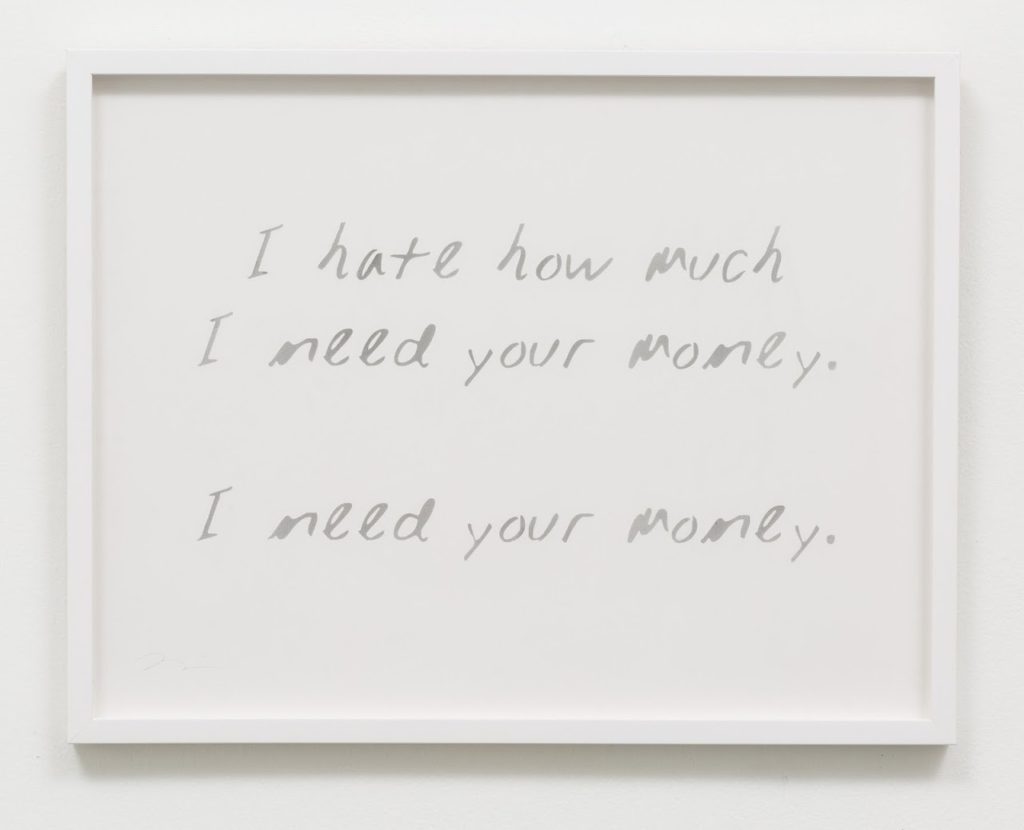
William Powhida, I Statement 3
(2015). Courtesy of the artist.
Through a newly-launched
initiative called Store-to-Own, Powhida is inviting strangers to freely
borrow artworks from his personal inventory to keep in their homes
or offices. For the artist, the project offers free storage for his
work in a place where it will actually be seen and appreciated. For
borrowers, it’s free art that might otherwise come with four- and
five-figure price tags at his galleries, like Postmasters and
Charlie James. All borrowers have to do is take care of
it.
Known primarily for his
illustrations that merge Raymond Pettibon-like graphics with cheeky
institutional critique, Powhida doesn’t have the storage concerns
of, say, a sculptor working in Corten steel. But his inventory of
old works took up valuable space, both physically and
emotionally.
“Storage is an issue that we
don’t often discuss in the art world,” Powhida writes on his
website. “Unsold
inventory represents a heavy financial and emotional burden for
artists and galleries tied to the potential, perhaps
theoretical, value of the works.”
“I am proposing something
between letting go of work for free and trying to sell it on
consignment.”
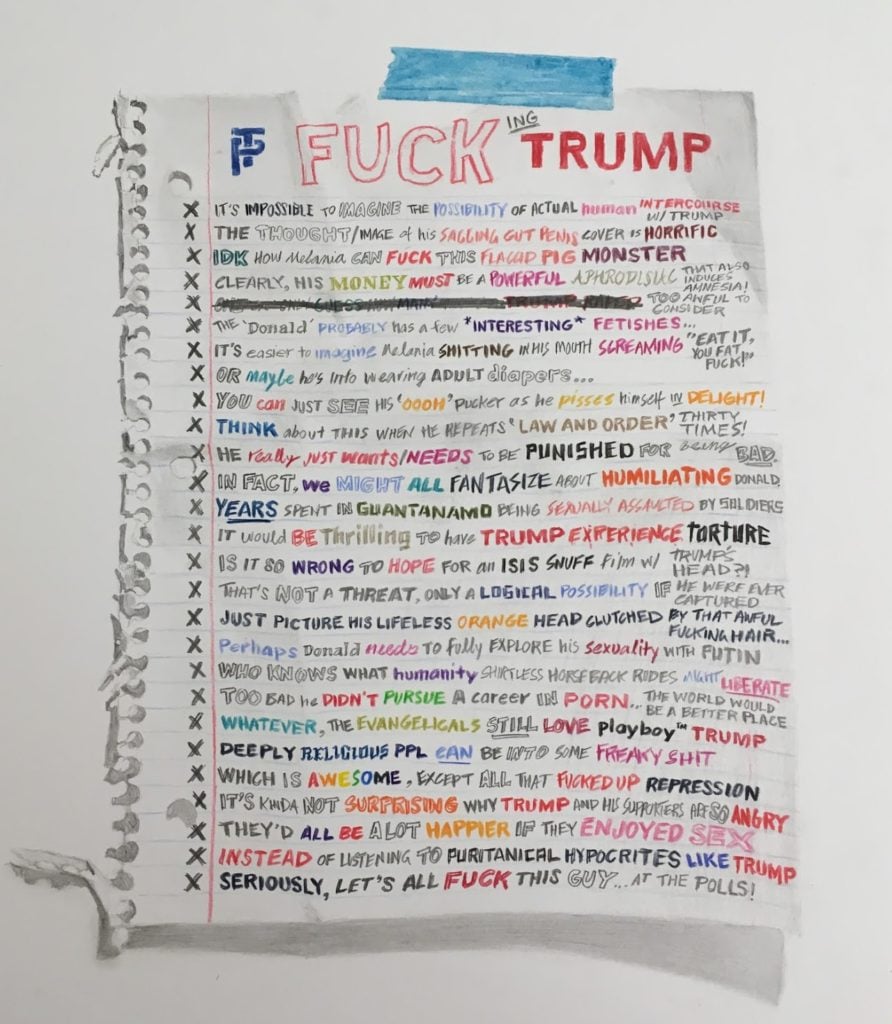
William Powhida, Fuck Trump
(2015). Courtesy of the artist.
To borrow one of Powhida’s
works, you simply apply through an online inquiry form. If
accepted—and so far, just about everyone who has applied has been
accepted—the artist will shoot you back a contract that he put
together with fellow artist Alfred Steiner and writer-professor Amy
Whitaker.
It stipulates that the borrower
is responsible for caring for, storing, and insuring the artwork.
The borrower may at any time purchase the work, and the price to do
so will go down by 20% with each year they’ve held onto it. After
five years, outright ownership of the artwork will be transferred
to the borrower.
The borrower may also sell the
artwork at any time—and for any price—though Powhida will be owed
50 percent of the profits. The contract also includes a 10 percent
resale royalty clause, meaning that should the artwork appreciate
in value, the artist will continue to make money on it.
“Being confronted with boxes and
boxes of stuff in this unsold inventory prompted me to think about
how I can actualize some of these ideas I’ve been thinking
about—about how we value art through price points and how ownership
is one of the prime conditions of contemporary art.”
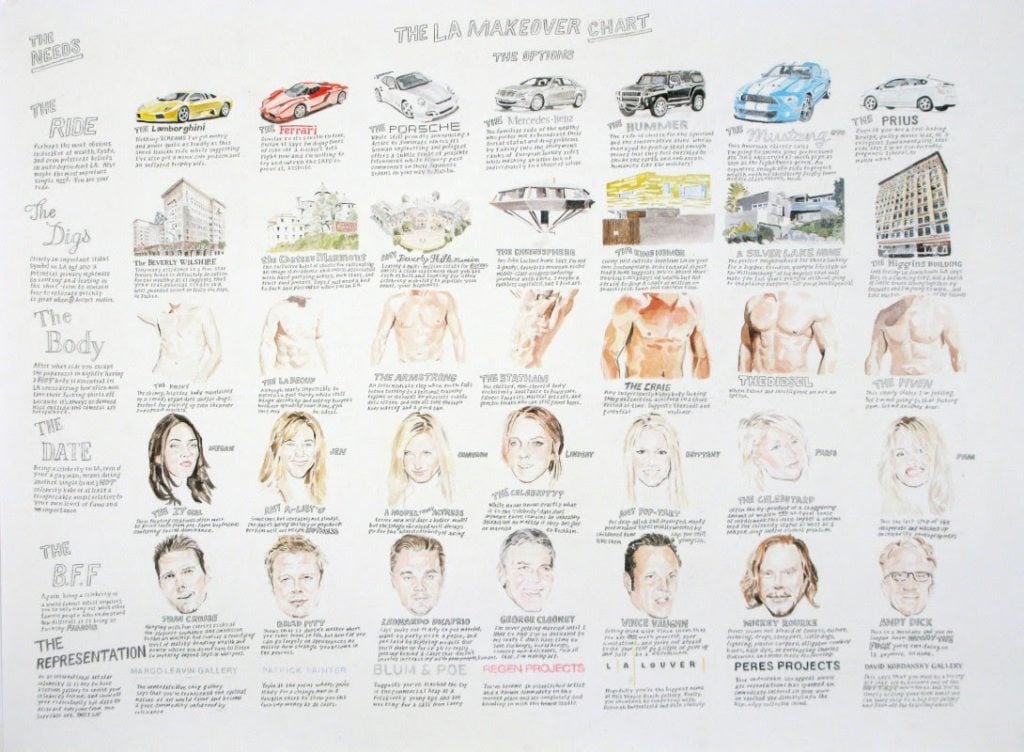
William Powhida, L.A. Makeover
Chary (2015). Courtesy of the artist.
A free, alterable version of
Powhida’s contract is available for download on his website, and he
encourages other artists to use it for their own work. It helps, he
says, in preventing one from being sucked into “believing you’ve
not succeeded if you have a significant
inventory.”
“I think that’s part of the
reason people don’t want to talk about this,” he explains. “It’s
like, ‘Hey, do you want to look at my stack of unsold toasters over
here?’”
See the full inventory of
Powhida’s borrowable works here.
The post Artist William Powhida Doesn’t Have Room to Store
All His Work—So He Wants You to Borrow It, For Free appeared
first on artnet News.
Read more https://news.artnet.com/market/william-powhida-store-to-own-1790187
Further reading


Leave a comment