
As Jobs in the Creative Industry Dry Up, Some Arts Professionals Are Turning to Food Services and Other ‘Essential Work’ to Make Ends Meet
When I moved apartments a couple of weeks ago, I couldn’t help
but admire a tattoo on one of the movers. His name was Joey Rosado, he told me, and he had
previously worked as a tattoo artist. Rosado, who is 32, was back
at Brooklyn’s Sven Moving, where he had worked before completing
his tattooing apprenticeship, while the studio where he worked,
Chinatown’s No Idols Tattoo, was
closed.
Rosado’s situation isn’t unique. As the coronavirus
pandemic swept across the US, many artists and other professionals
in the industry found themselves turning to essential work to keep
financially afloat.
Across the country in Seattle, curator John Wesley, who is 36,
was expecting to celebrate the opening of his new art gallery this
past spring. Instead, he found himself taking a janitor job at
Whole Foods, before transitioning yet again to running a food
bank.
Newark street photographer Kurt Boone has moonlighted as a foot
courier, a job now considered “essential,” for 20 years. But
even that experience didn’t prepare him for working in the age of
coronavirus. “I’ve seen the city in crisis numerous times. But
people are dying every day out here. This is serious stuff,” Boone
told Artnet News. “As a street photographer, I’m documenting it
because that’s what I do, but it’s tragic on a lot of levels.”
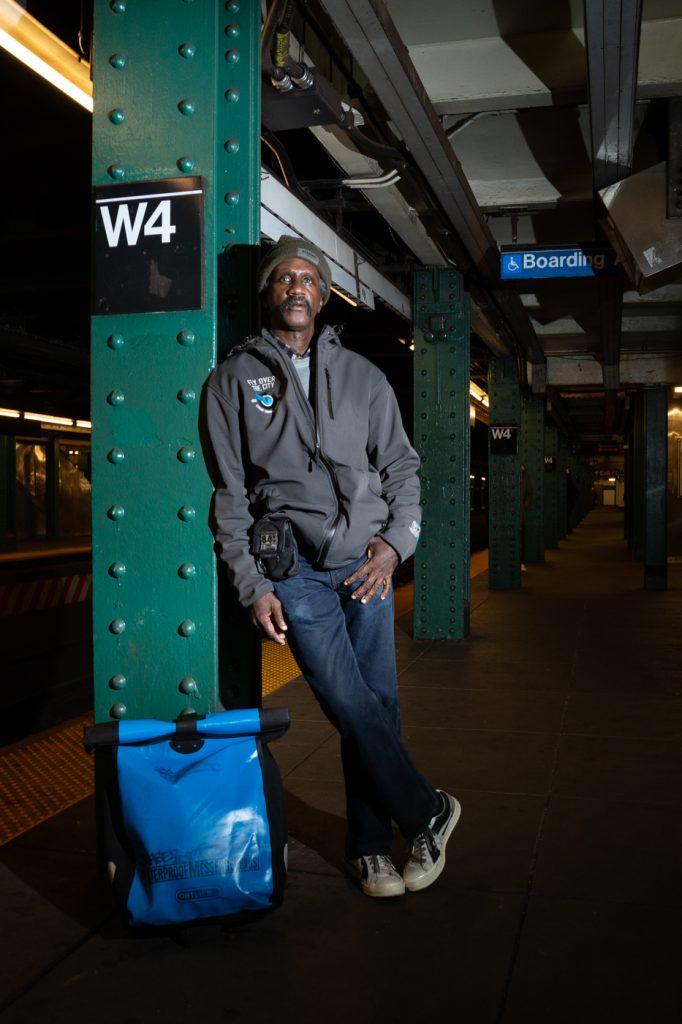
Photographer Kurt Boone working as a
courier during the coronavirus pandemic. Photo by Nick Sansone.
Individual Challenges
The professional situation that each worker finds himself in
comes with personal tolls too.
“I’d been wanting to tattoo since I was a little kid. It was a
dream job,” said Rosado. “It was pretty heartbreaking that I
wouldn’t be able to do something that I worked my whole life
for.”
The tattoo industry won’t be able to resume business in New York
until the beginning of phase three of the reopening. Even then,
customers will need to prove that they’ve tested negative for the
virus, and have their temperatures taken. Everyone will wear masks,
and there will be protective barriers between stations. But the
shutdown’s effects have already been devastating.
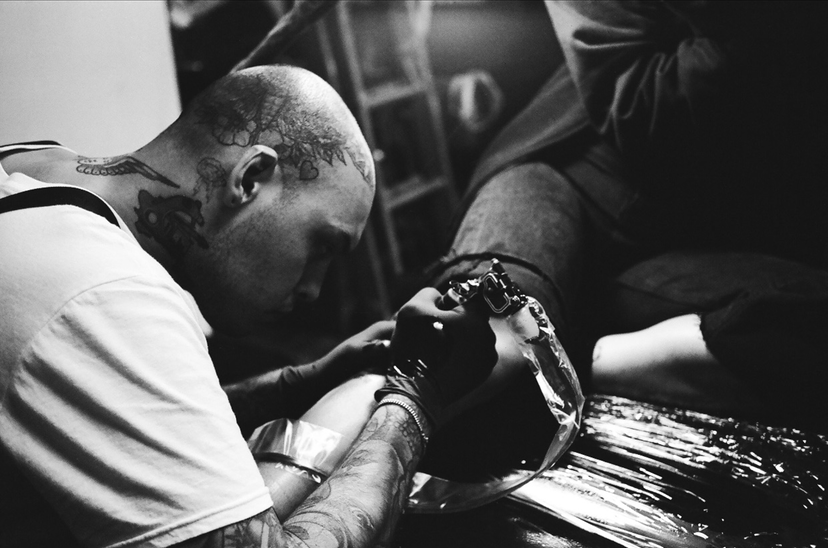
Joey Rosado tattooing. Photo courtesy of
the artist.
“New York tattooing is screwed,” Rosado said. “Some shops have
closed permanently. Some of the tattoo artists I know have gone to
other states to guest spot because they can’t afford to stay
here.”
Meanwhile, the Square, the gallery and co-working space Wesley
had founded with Kymani Thomas, was set to open in April, until the
outbreak hit. “We cried innumerable tears,” Wesley said. “We had
both dropped every single thing that we were working on and every
other thing that was generating us money and put all of our time
and all of our money and all of our heart into the gallery.”
Still, he managed to make some art sales even while working at
Whole Foods. “I actually sold a painting from the restroom, while I
was cleaning,” h said. “Someone DM’d me ‘I’m interested in this
painting.’ I sent them the info and I sold it right
there!”
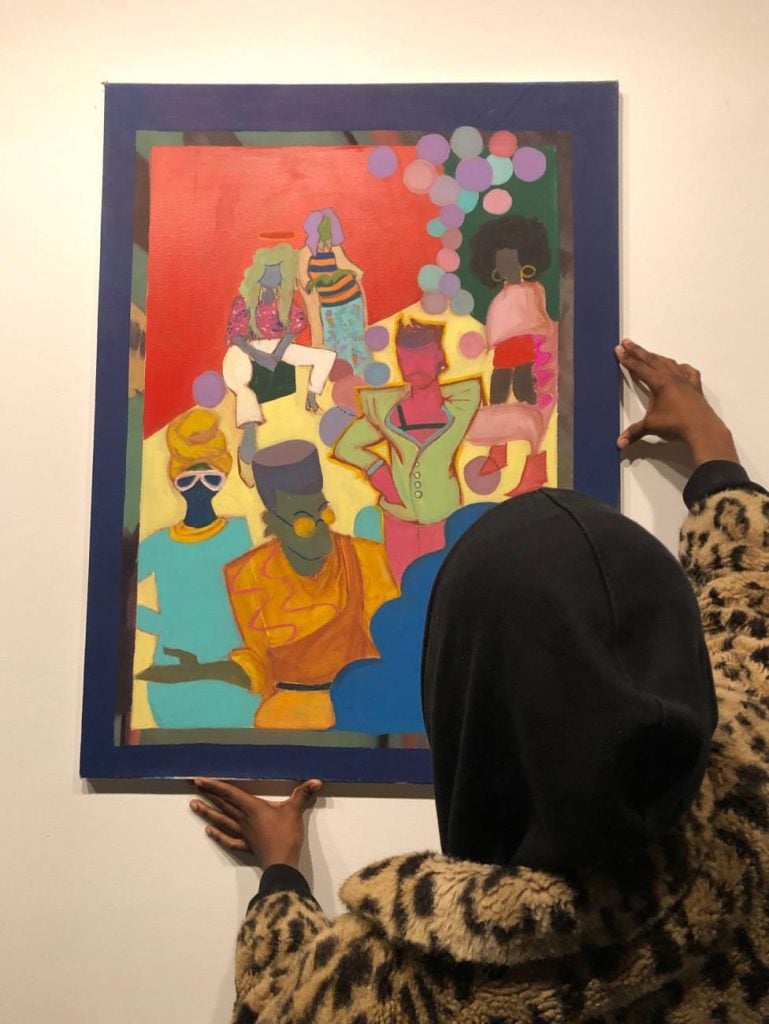
Curator John Wesley hanging ART
PROM, a painting by AFRO SPK, at an art and fashion event in
2019. Photo by Yanina Sokolovska.
Boone, who is 60 and suffers from a chronic lung condition, has
been worried about how working would increase his risk of exposure
to the virus, but felt he had no choice. “If I lose my
savings, I have nothing else—I’d be homeless,” he said.
But he’s not earning much of a living at the job these days
either. A dramatic decrease in the number of jobs booked, led to
his courier income falling from between $300 and $400 a week a
month ago to just $50.
New Beginnings
Wesley’s six-week stint at Whole Foods inspired him to stay
involved in the food industry, but in a new charitable role. He is
now forming the nonprofit Seattle BIPOC Food Bank, which aims to
ensure clean water and organic food for every person in Seattle.
The project, which will purchase CSA boxes from farms and
distribute them to community members in need, has so far raised
$36,000 on GoFundMe.
He also still plans to open his gallery. “The art gallery is the
administrative and cultural and spiritual center of the food bank,”
Wesley said. “We can still make art and we can still support
the artistic community, but we have to feed people too.”
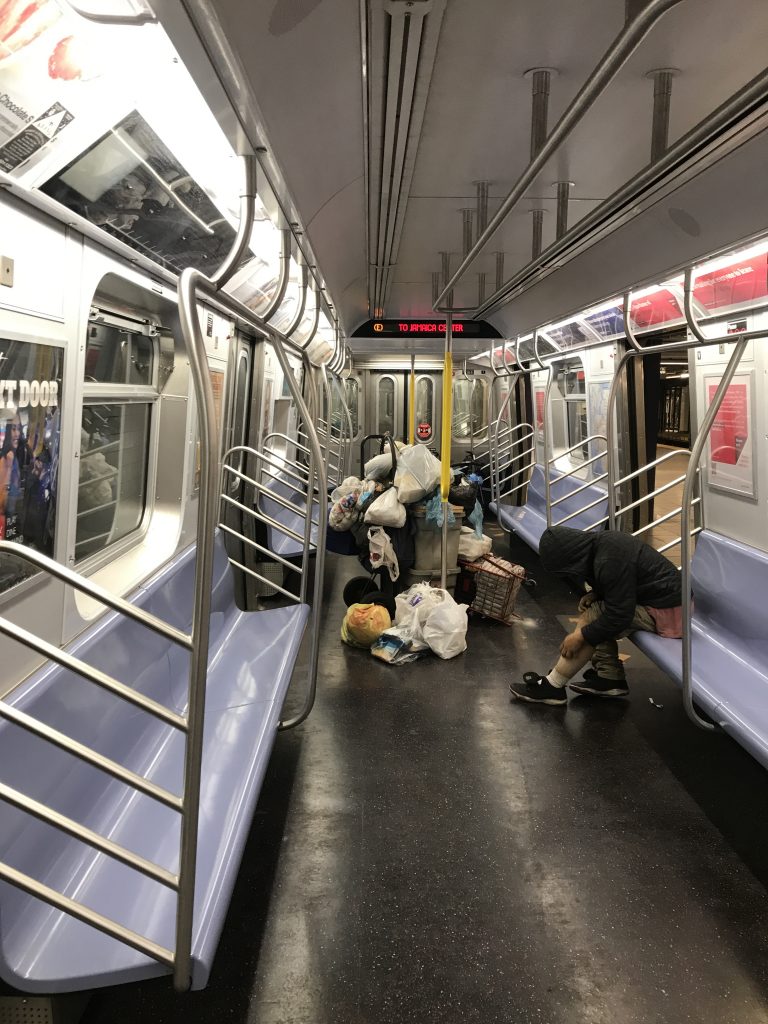
Kurt Boone has photographed New York
during the pandemic, including homeless people on the subways.
Photo by Kurt Boone.
“The pandemic was the first time that a lot of middle-class and
upper-middle-class people started feeling like ‘Hey, ‘I too am
vulnerable,’” Wesley said. “We have to build models where we
can rely on each other, because we can’t rely on jobs,
corporations, or the government.”
The past few months have also been eye-opening for Boone, who
has been photographing some of the homeless people on the subway,
and otherwise documenting the lockdown. “I would not have had those
images if I wasn’t an essential worker. I wouldn’t have been out
there,” Boone said. “The whole city shut down. I’d never seen
anything like that.”
The Photography Collections
Preservation Project is working to get Boone’s work into
permanent collections like those of the New-York Historical
Society, the Smithsonian’s National Museum of African
American History and Culture, and the National Museum of American
History. He will self publish his latest book, Aerosol
Culture: A Day at Graffiti Hall of Fame, next month.
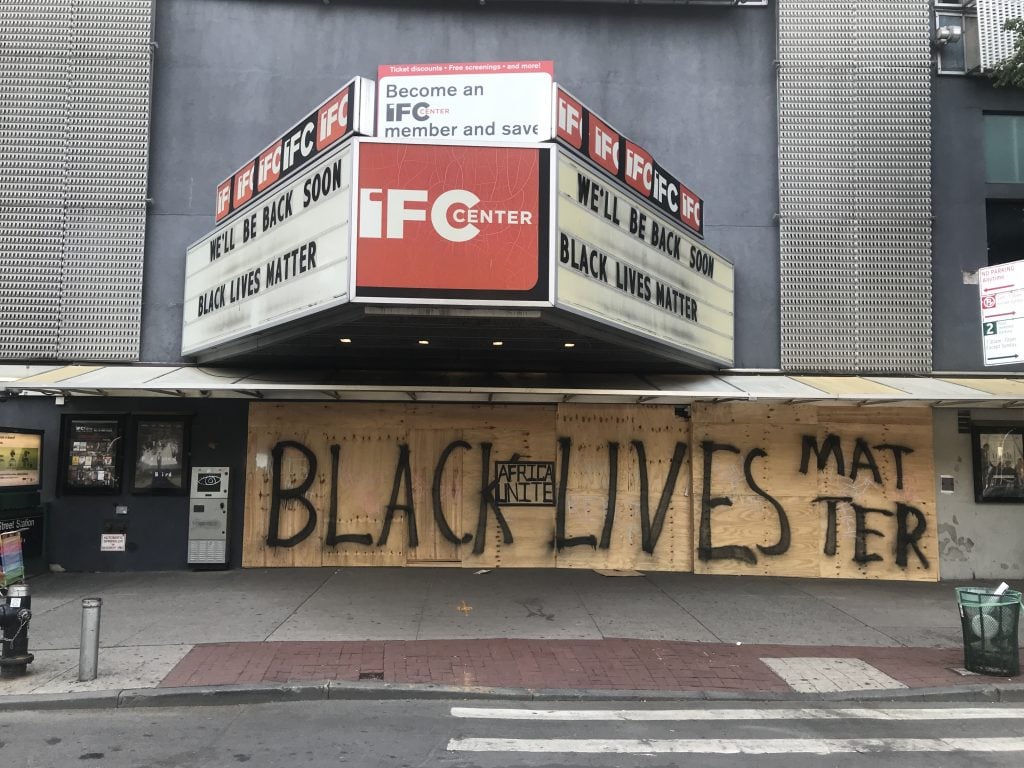
Kurt Boone has photographed plywood
barriers covered in graffiti during the George Floyd protests in
New York. Photo by Kurt Boone.
Rosado, meanwhile, has developed a new artistic practice after
he figured out that he could load a pen into his tattoo gun and
draw in a pointillistic style. “I’m also drawing flash to have
stuff prepared for when I get back,” he said. “I have a bunch of
ideas that I want to do that are inspired by the pandemic and
everything that’s going on with Trump.”
Despite the lip service paid to essential workers in the news,
Rosado, Boone, and Wesley all said they don’t always feel customers
appreciate the risks they’re taking while on the job. “The
media has tried to give us respect, but on the ground, not so
much. Making my deliveries, I wasn’t getting tips or any extra
thank you’s,” Boone said. “I’m used to it. I block out all feelings
when I’m on the street—if I look to get respect, I’m going to hurt
myself.”
The post As Jobs in the Creative Industry Dry Up, Some Arts
Professionals Are Turning to Food Services and Other ‘Essential
Work’ to Make Ends Meet appeared first on artnet
News.
Read more https://news.artnet.com/art-world/art-professionals-turned-essential-workers-1887568
Further reading


Leave a comment